Białowieża: Ebay Meditation Room

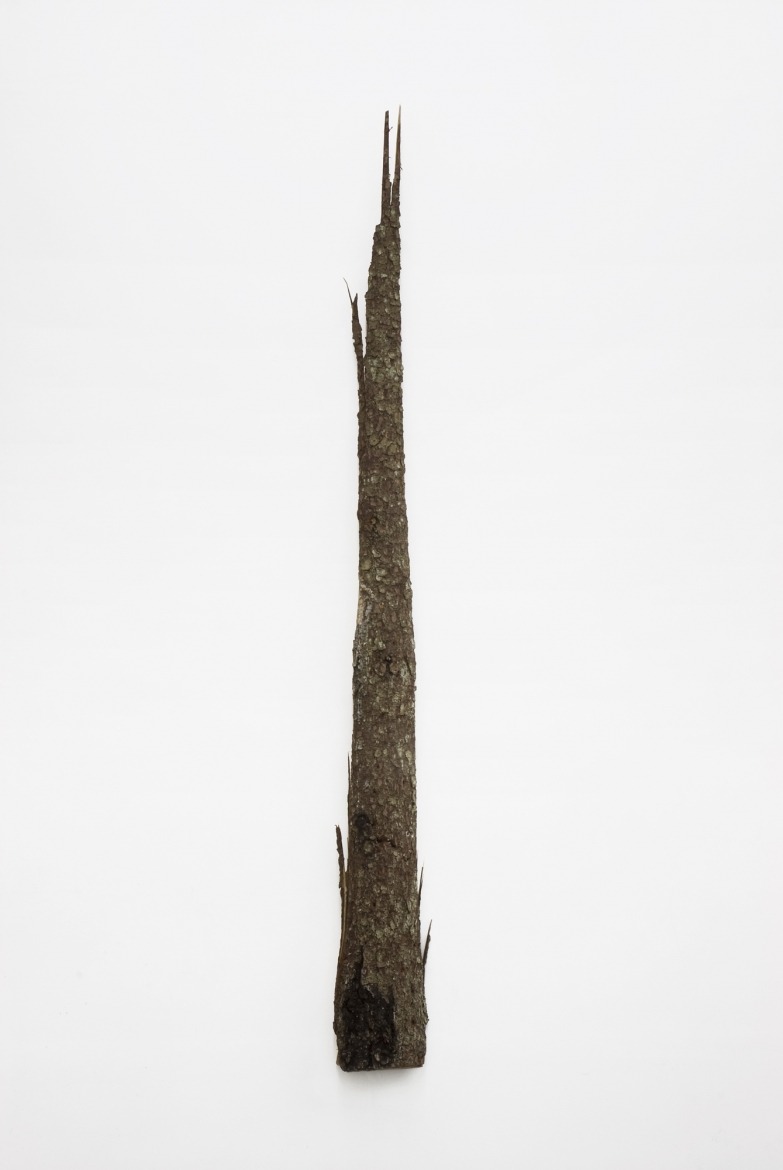
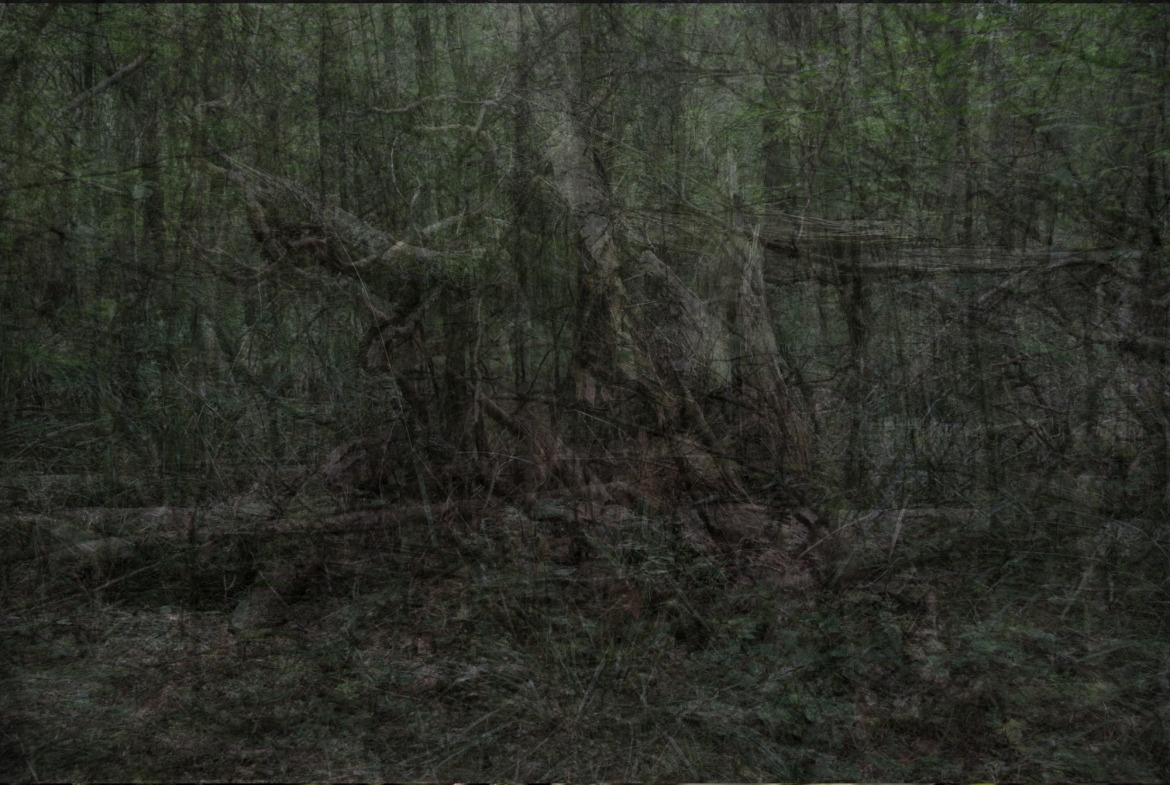
Białowieża, is one of the last and largest remaining parts of primeval forest in Europe, and historically a place of many violent occupational histories, the most recent being the German occupation during WWII. At a size of 141,885 ha it extends across the border between Poland and Belarus, and today, it is a designated UNESCO World Heritage Site. A primeval forest, such as Białowieża, is a forest that has attained great age without significant disturbance by humankind and thereby exhibits unique ecological characteristics. One of the most noticeable characteristics of a primeval forest is the amount of dead and decaying wood, which undisturbed provides, in the case of Białowieża, a habitat for approximately 50% of the estimated 12,000 species found in the forest.

Primeval forests have the potential to be extremely lucrative for many industries, especially the logging industry. The deforestation of these forests has been a point of contention between the logging industry, national politics and environmentalists. In 2016, Poland’s State Forestry Board approved a three-fold increase in logging, argued as an unavoidable preventive measure against an invasive infestation by the European spruce bark beetle, a controversial measure that has been contested by many environmentalist. The trees which are labeled as infested are cut, processed, and sold locally as firewood or as flooring.

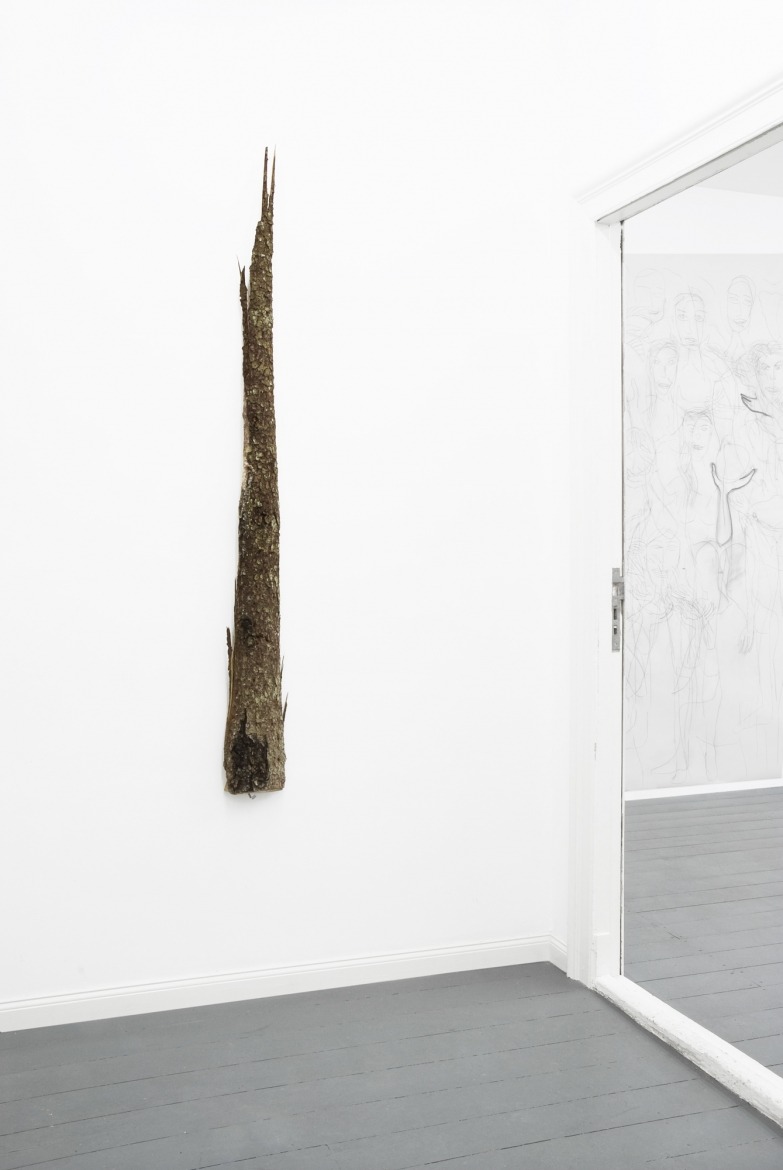
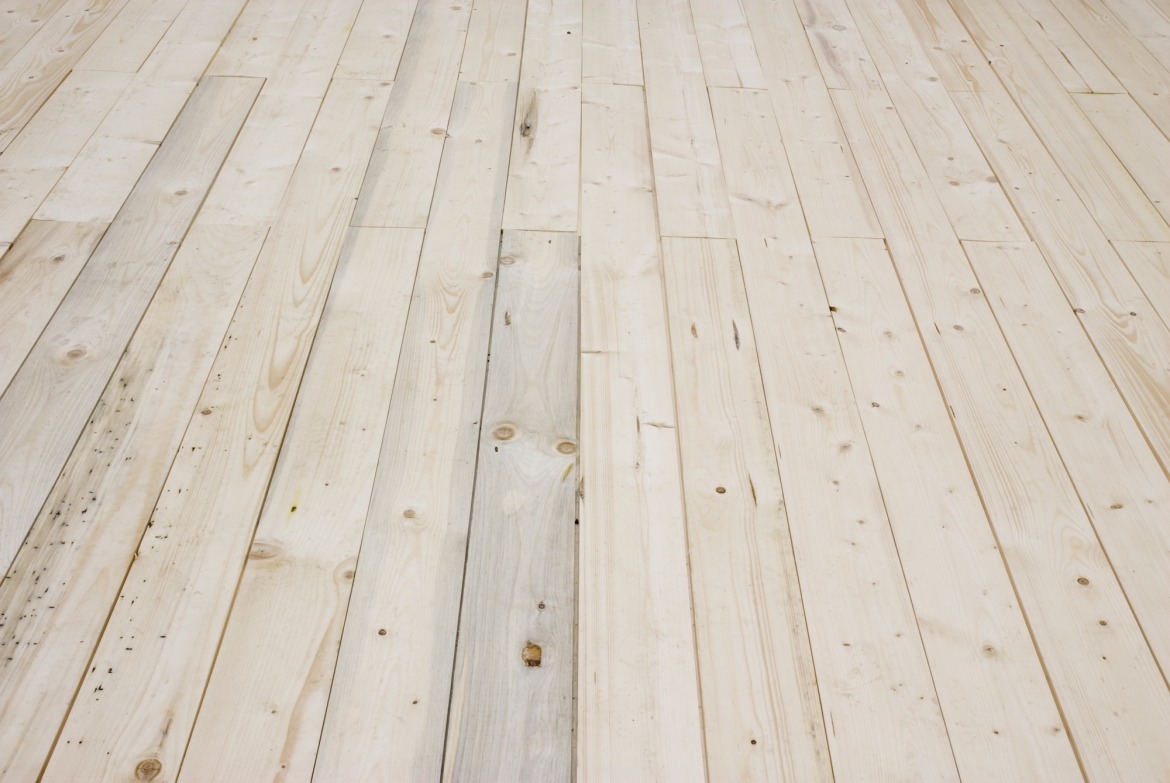
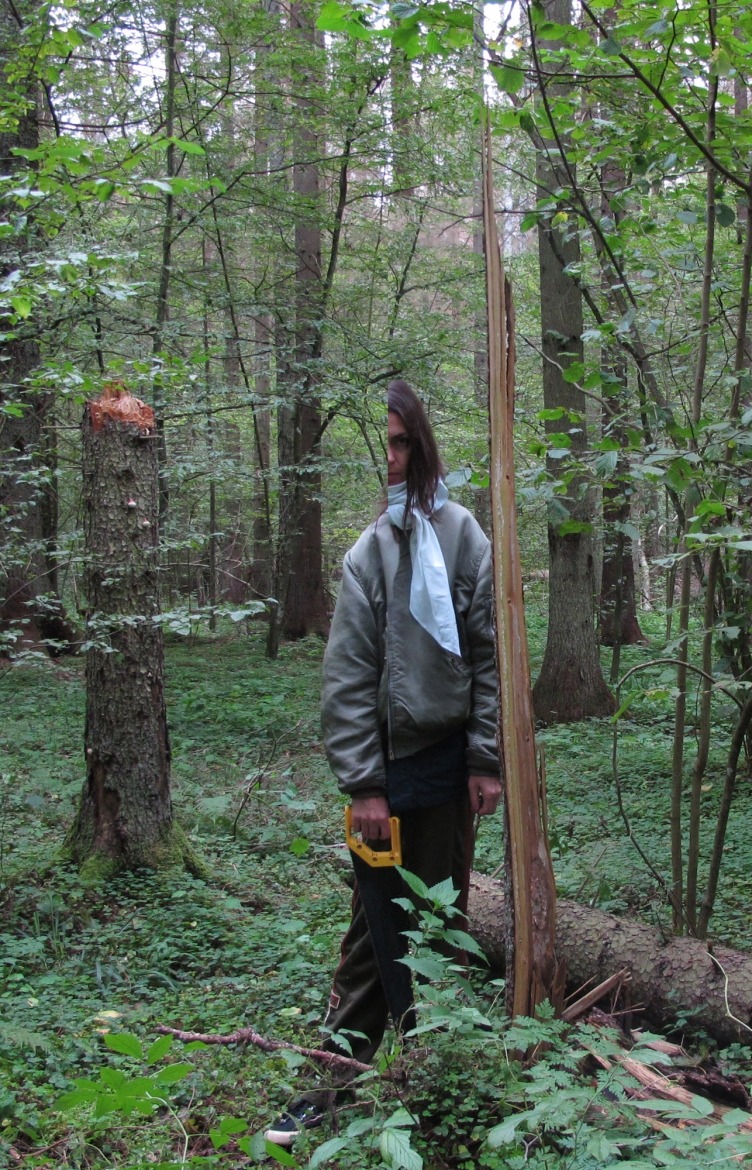
The exhibition, entitled Białowieża, by Kinga Kiełczyńska, pays homage to this threatened primeval forest. The installation further utilizes the wood as a metaphor for recent right-wing movements in Polish and global politics. Set in relationship to her own body, the floor is meant to connect private and personal body politics and their attempted erosion in a regressive political climate; a tree’s purpose is to live, die, decay, and finally create new growth. This progression is set in context to micropolitical freedom of choice and expression.

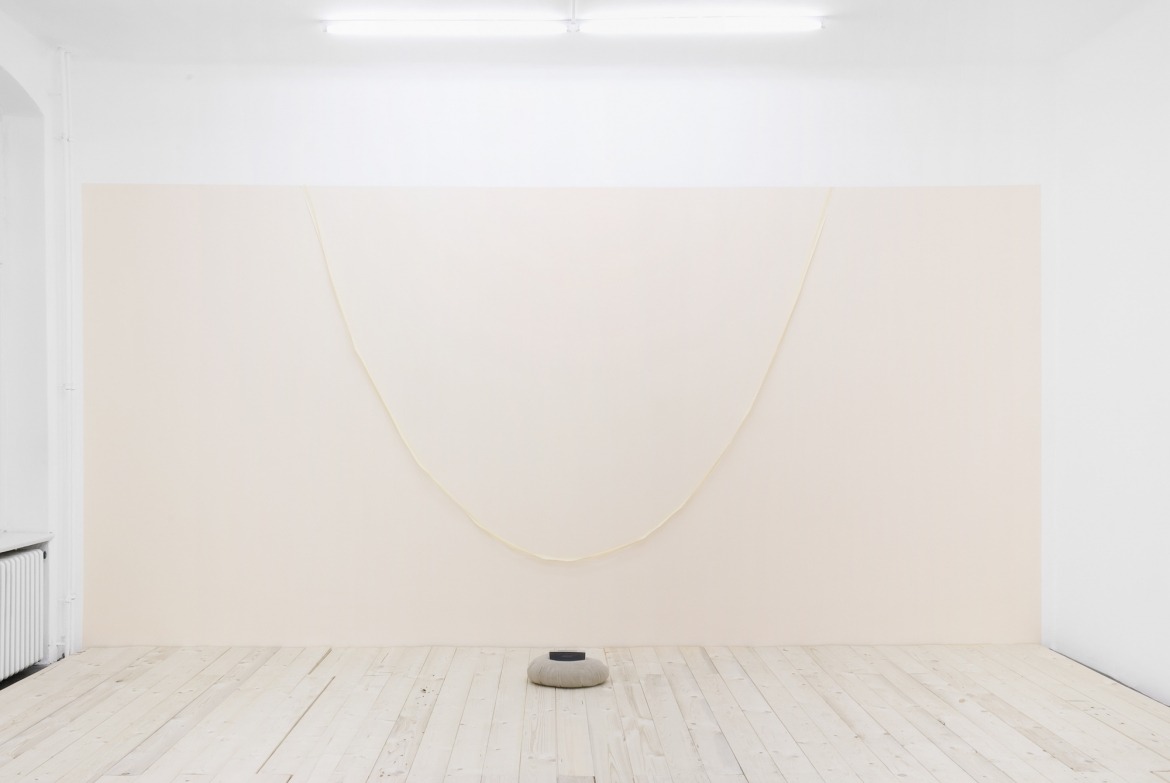
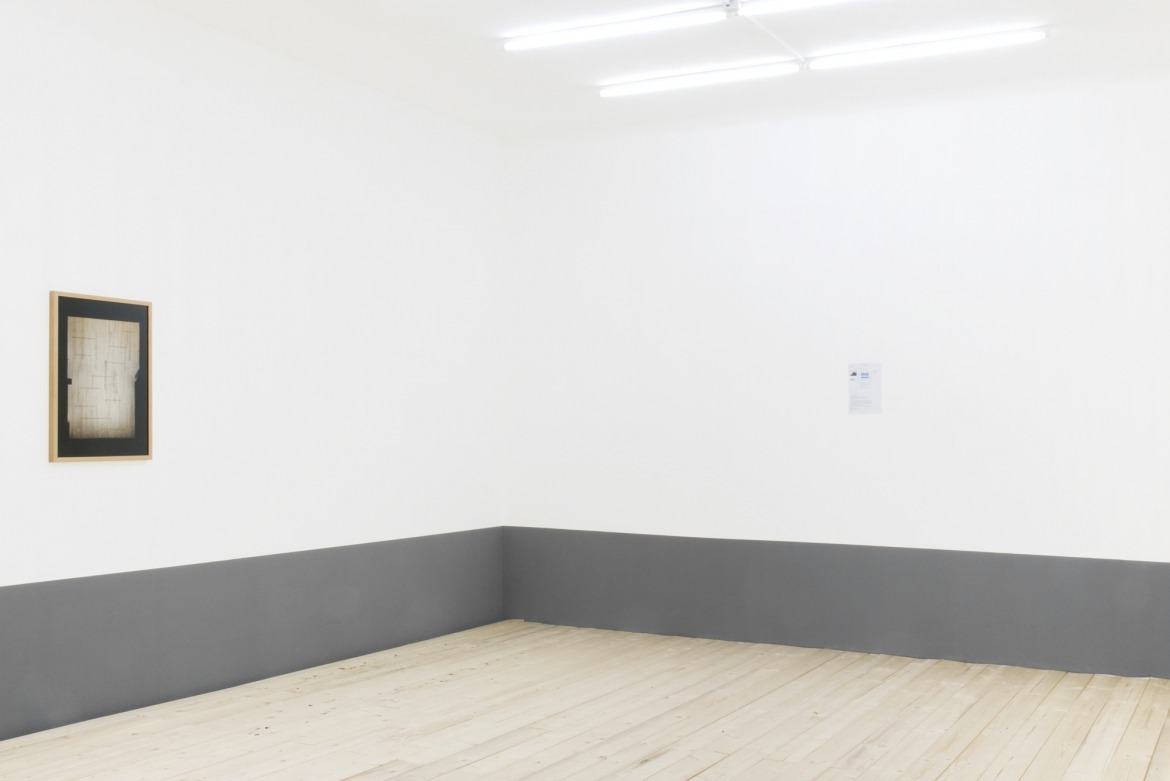
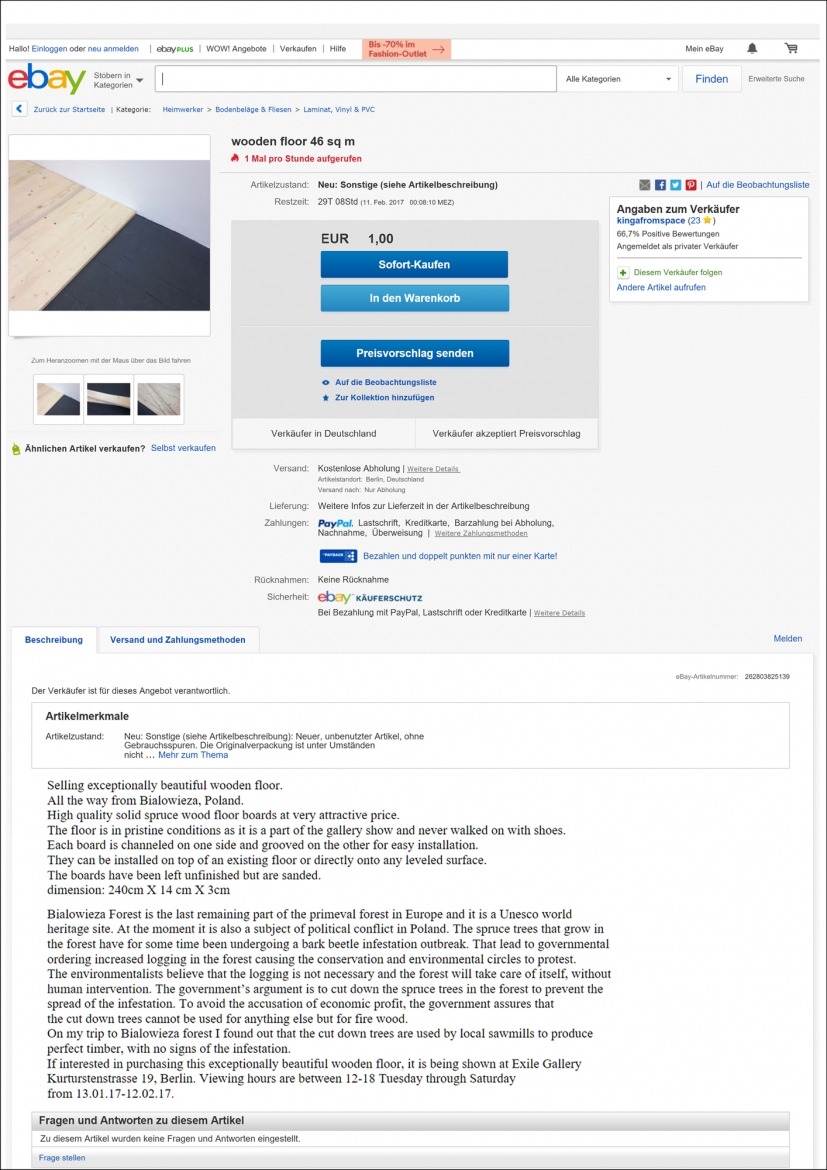
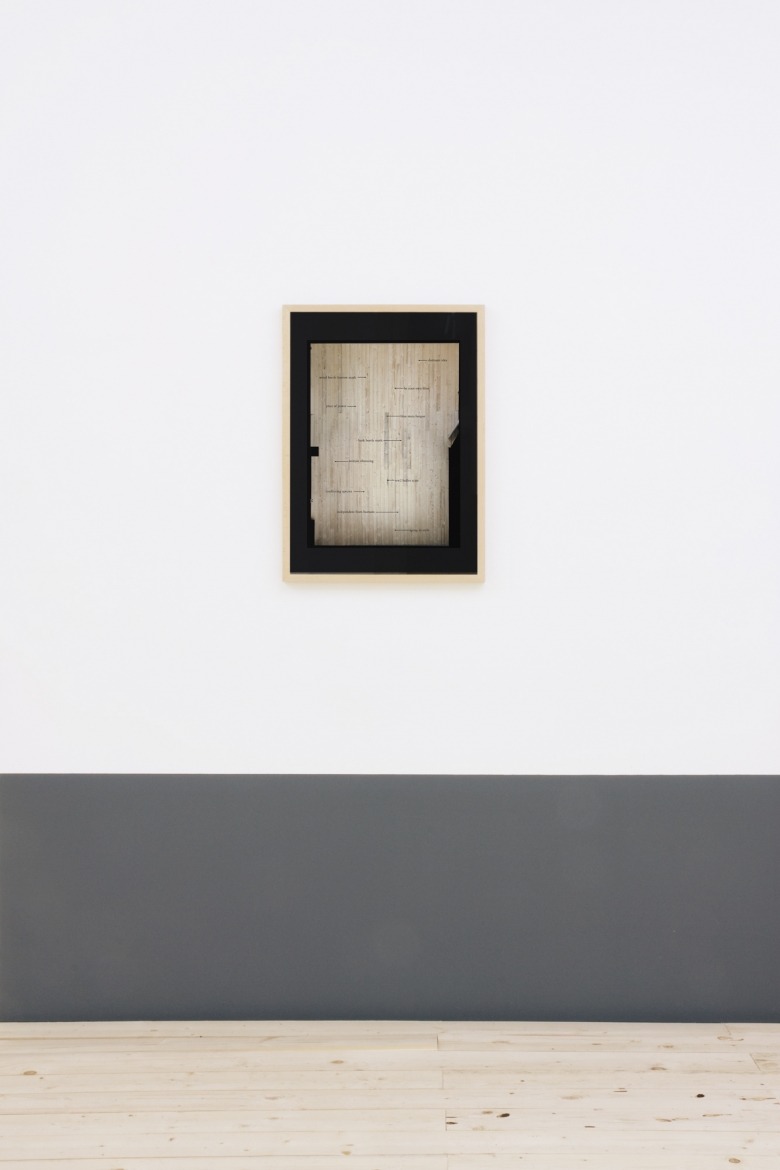
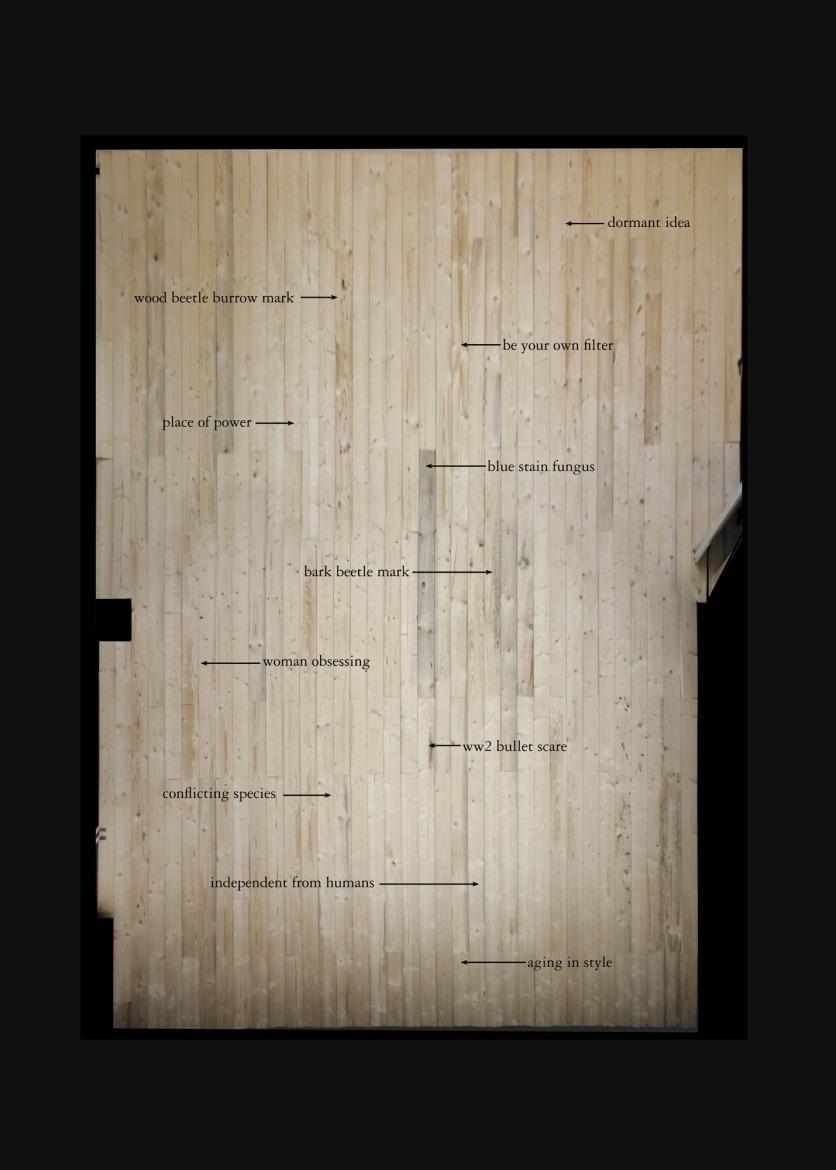
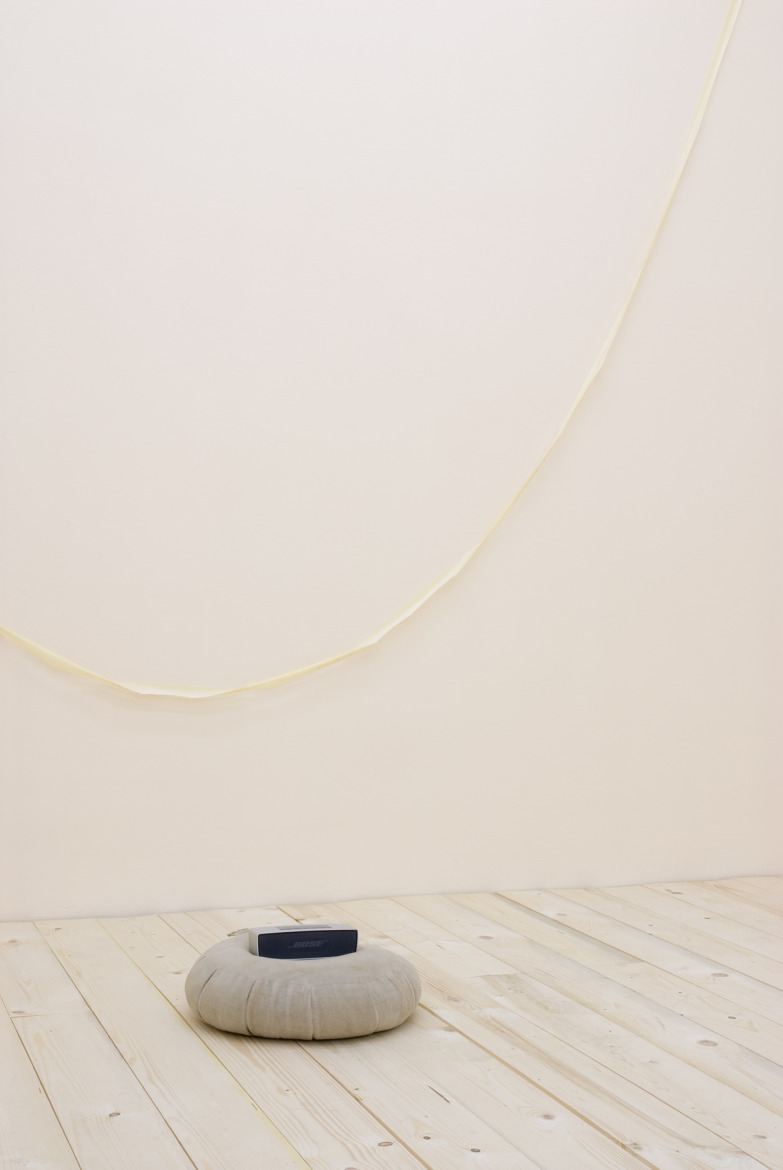
The gallery’s front room is entitled, Ebay Meditation Room. Wearing clinical polypropylene shoe covers, Kiełczyńska invites the viewer to enter the room and walk upon a cut-down, imported, primeval tree from Białowieża, which now functions as temporary flooring for the gallery space. A detailed plan of the floor is placed on the wall. Each element within the space is the consequence of the previous one; a tree is cut down, processed, made into floorboards, shipped from Białowieża and installed in the gallery space. Post show, the wood will be sold once again, through Ebay; the Ebay advert appears within the space opposite a mediation pillow. The pillow hosts a speaker playing a meditation on connectivity and decay. A sample color taken from the wooden floor is extended onto the wall behind the pillow. Atop of the painted wall hangs a line of masking tape that was used to mark the border of the wood-color against the gallery’s white wall.

These deceivingly minimal gestures of Kiełczyńska’s, Ebay Meditation Room, point to a dramatic cause-and-effect beginning with a mundane, but consequentially profound, act of cutting down a tree. Such conflicting use of resources ignites a potentially tragic, irreversible chain-reaction in which each individual body, as instigator, is confronted with its own downfall. Kiełczyńska’s, Ebay Meditation Room, becomes a mediative space for many relevant social, political, as well as ecological problems.

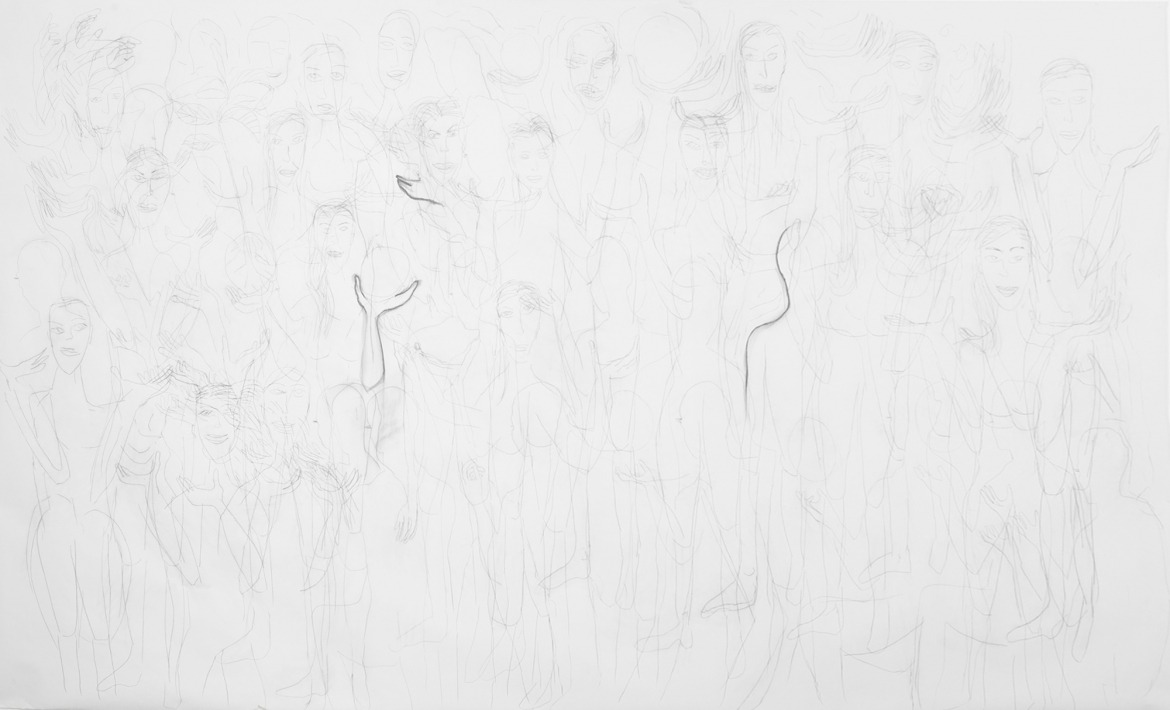
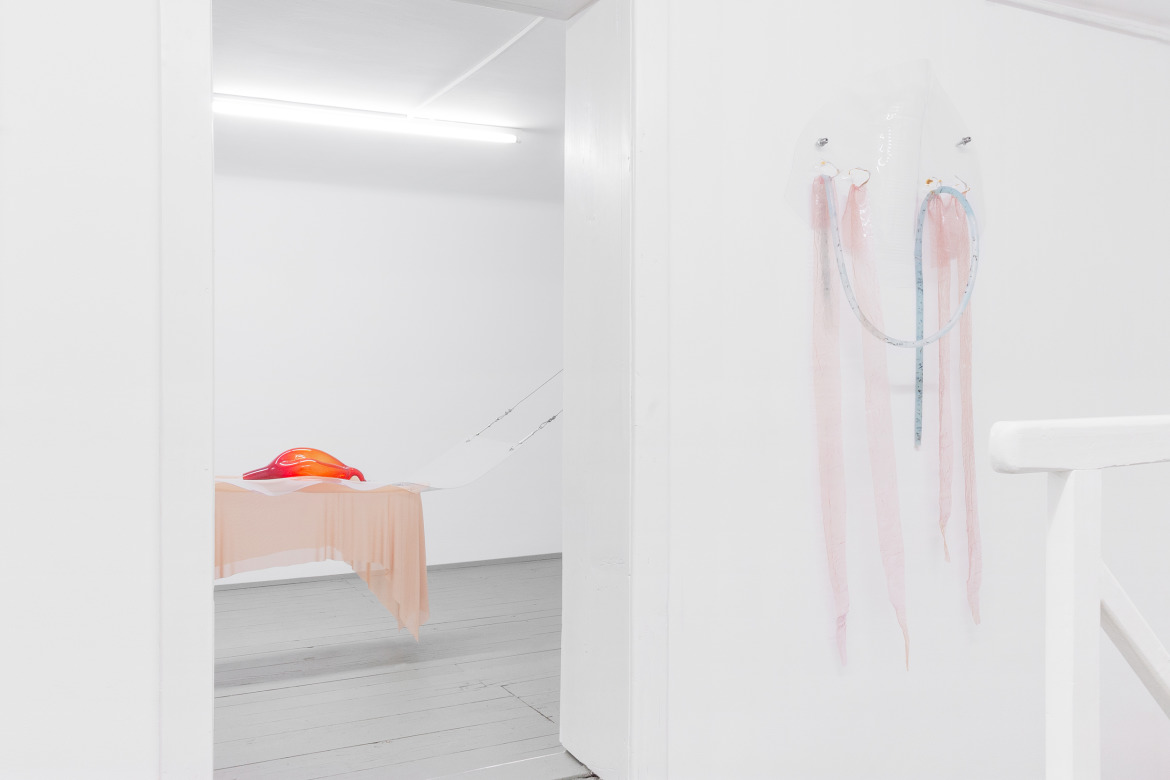
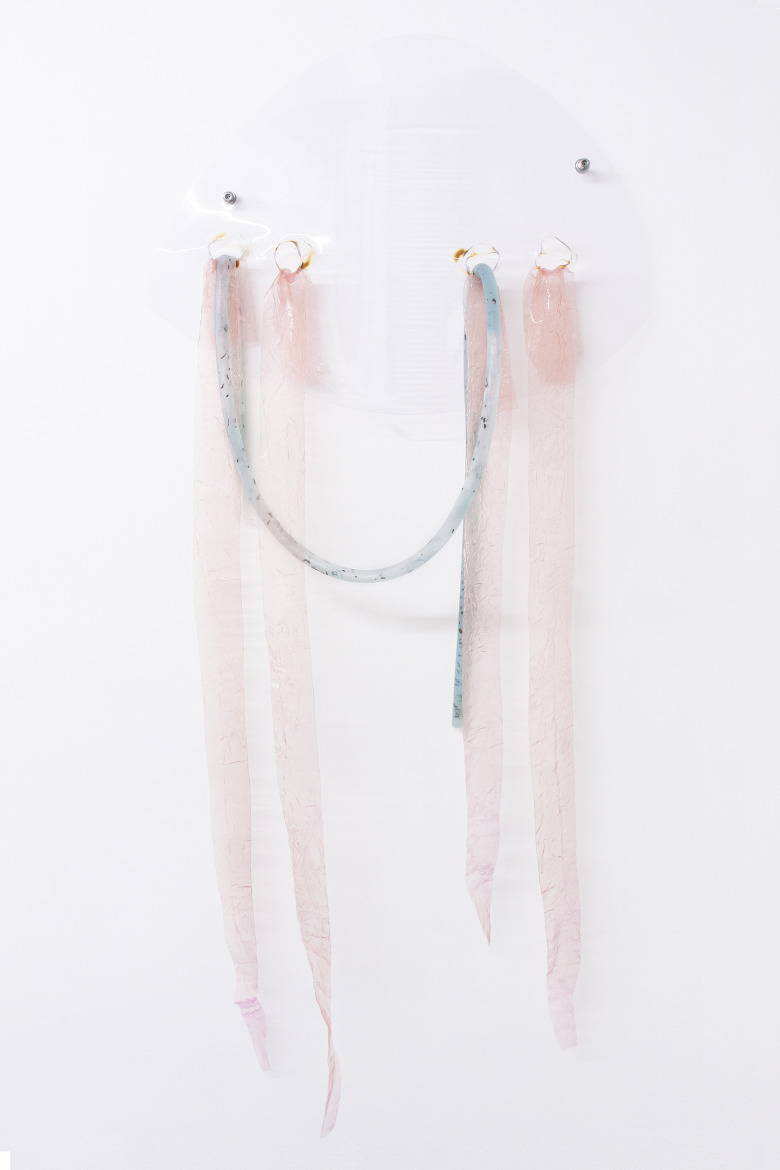
The single wall-sized charcoal drawing in the opposite gallery space depicts a net of inter-connected lines and of looping motives that appear in form of overlapping human figures. For the artist, this drawing is the result of an extensive meditative process based on personal feelings and memories of being present in the forest of Białowieża.

The borders between each single element vanishes. Nothing can be perceived as an isolated event, the cyclical motions of growth and decay provokes a strong sensation of connectivity and complicity. The border between each element’s identity vanishes and can no longer be perceived as an isolated event.

Text by Christian Siekmeier

Białowieża: Place of Power / Miejsce Mocy. Chapter 2/3

Białowieża Chapter 3


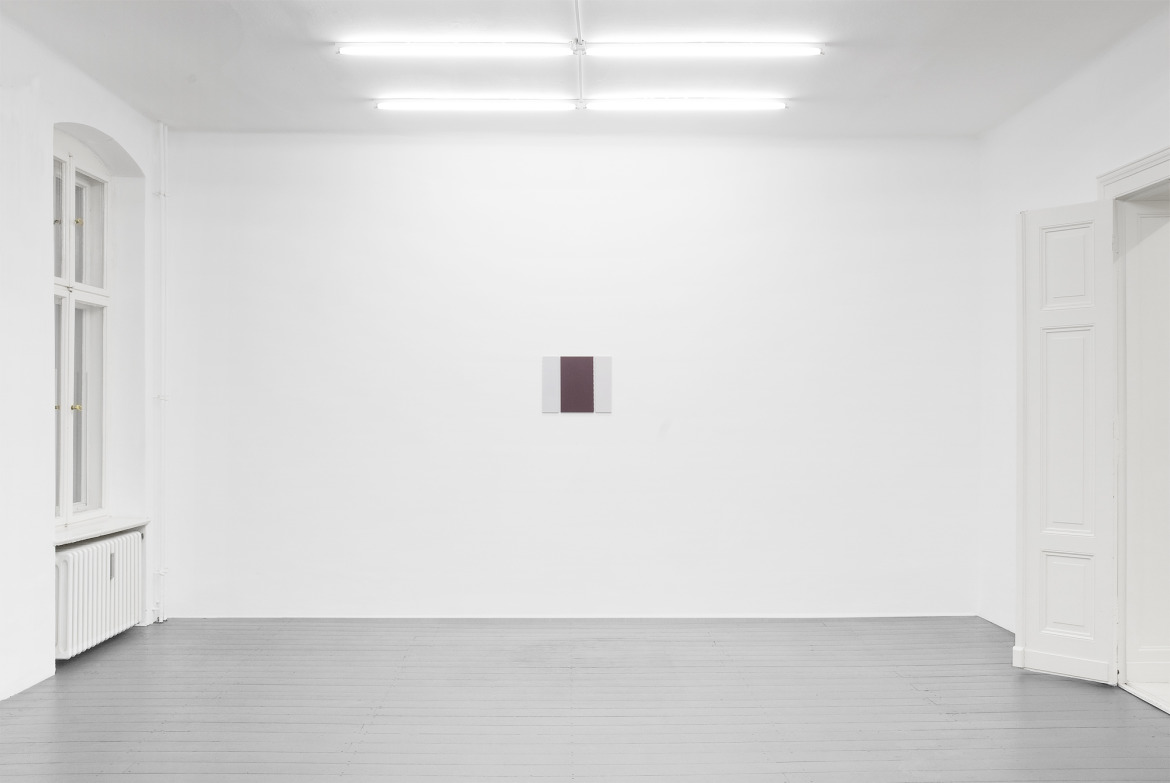
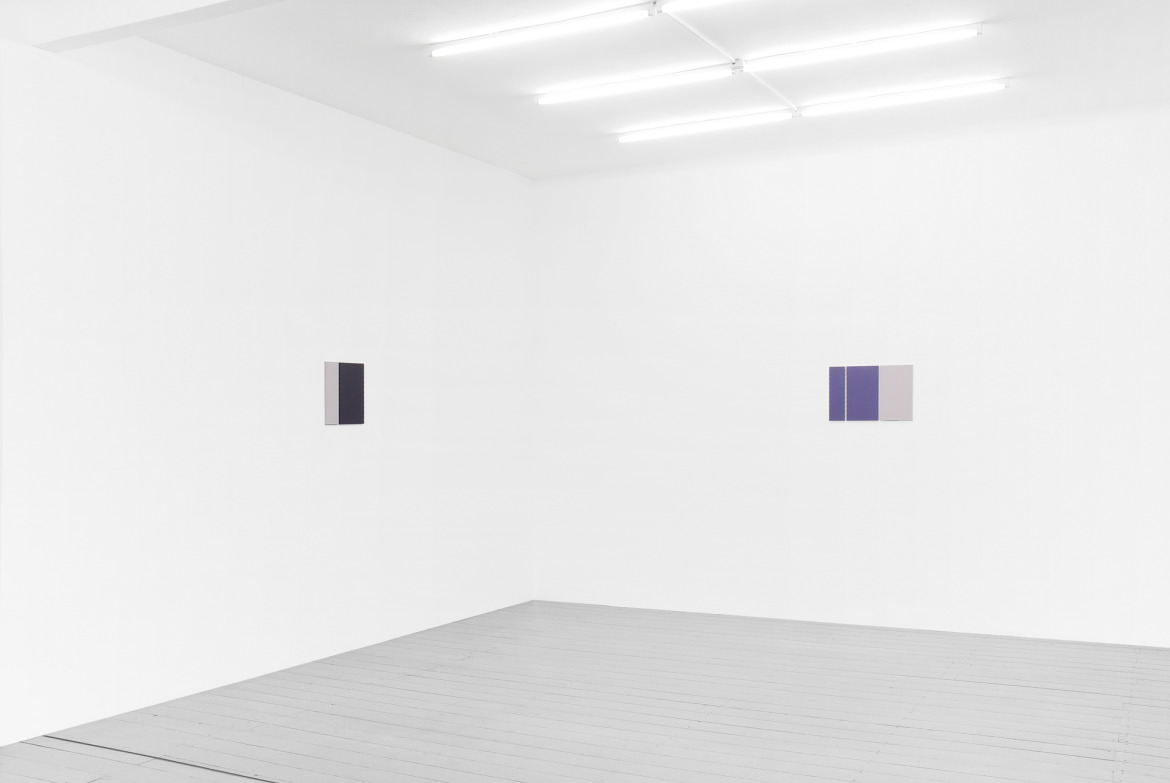
Aleppo

EXILE is pleased to present a solo exhibition by London-based artist Tess Jaray entitled Aleppo. Jaray, born 1937 in Vienna, has investigated architectural structures and ornamental patterns in her work since the 1950s. A building’s particular structural rhythm, for example the patterned tiling of the roof of the Stephansdom in Vienna, remains a core inspiration and driving force for the artist’s visual translation into painterly abstraction. Yet Jaray’s perception of architecture frees its specific forms from their contextual site and elevates them towards a universal moment of aggregation and transcendence.

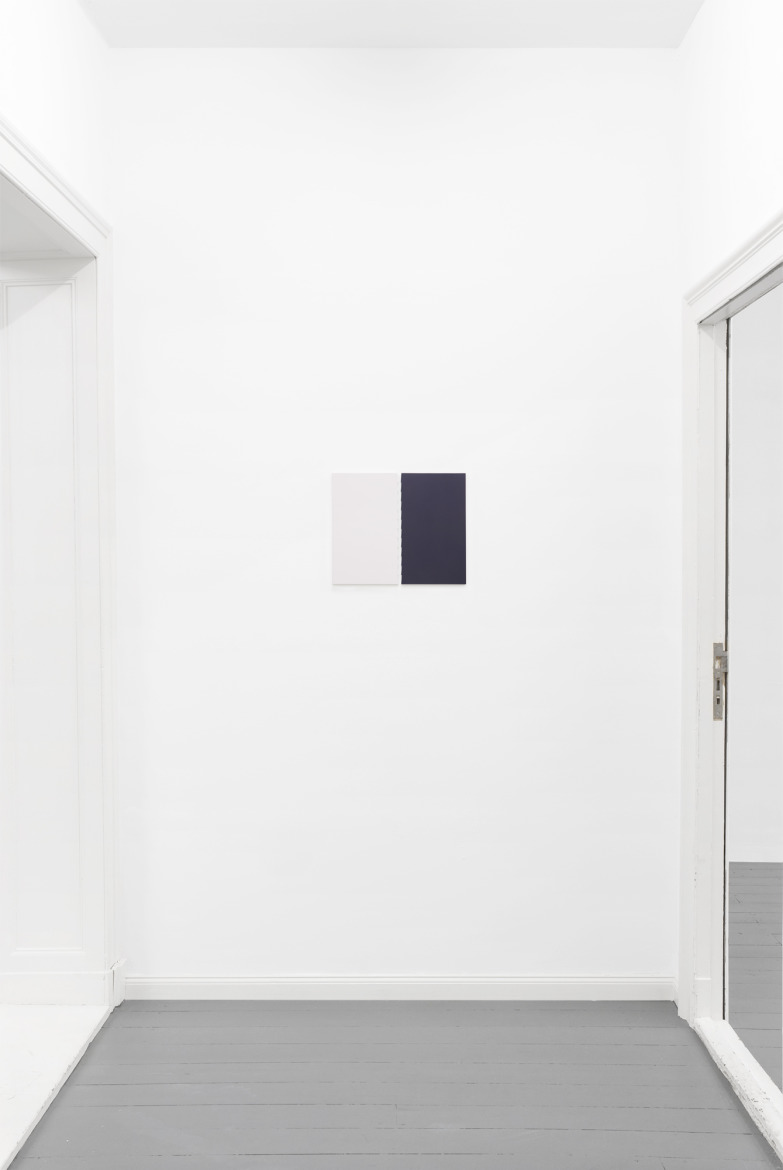
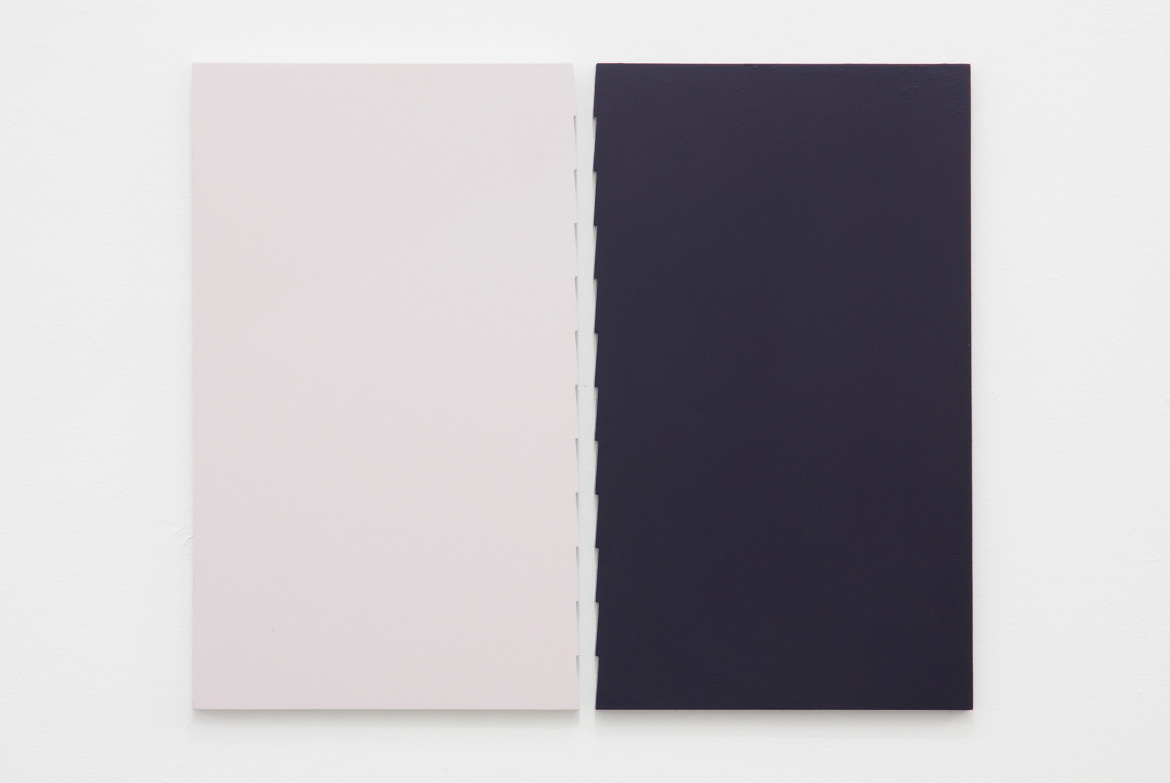
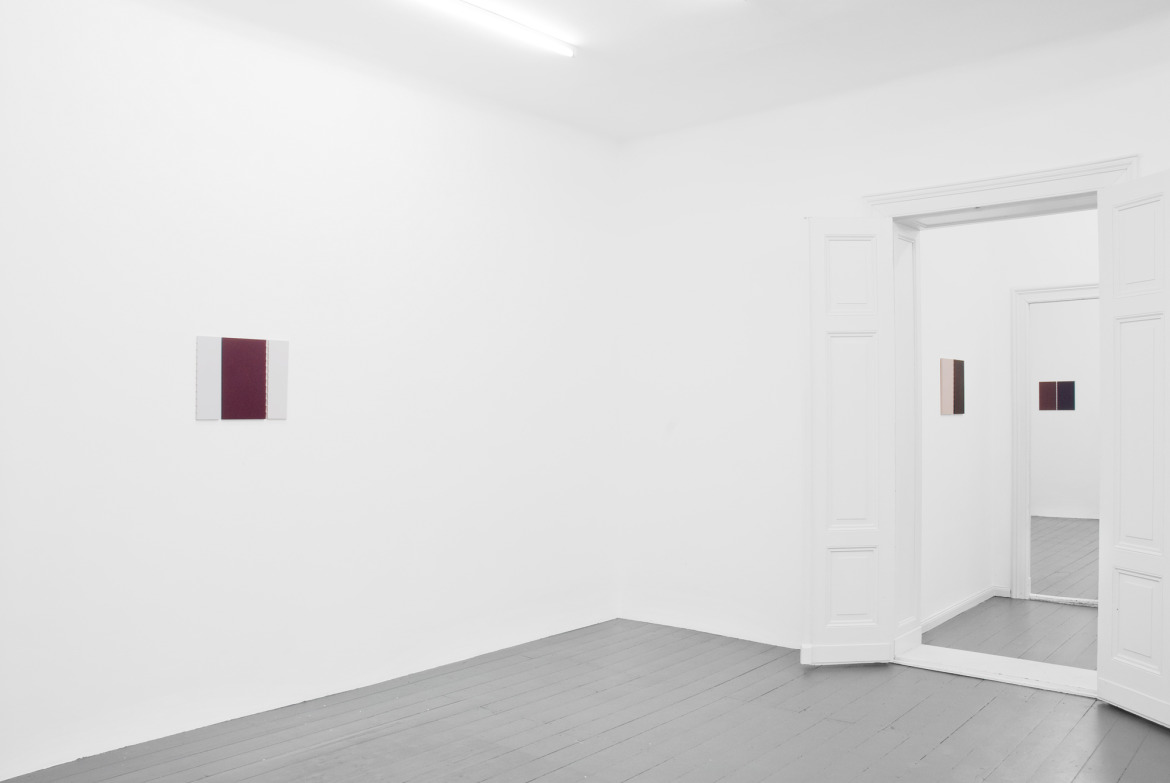
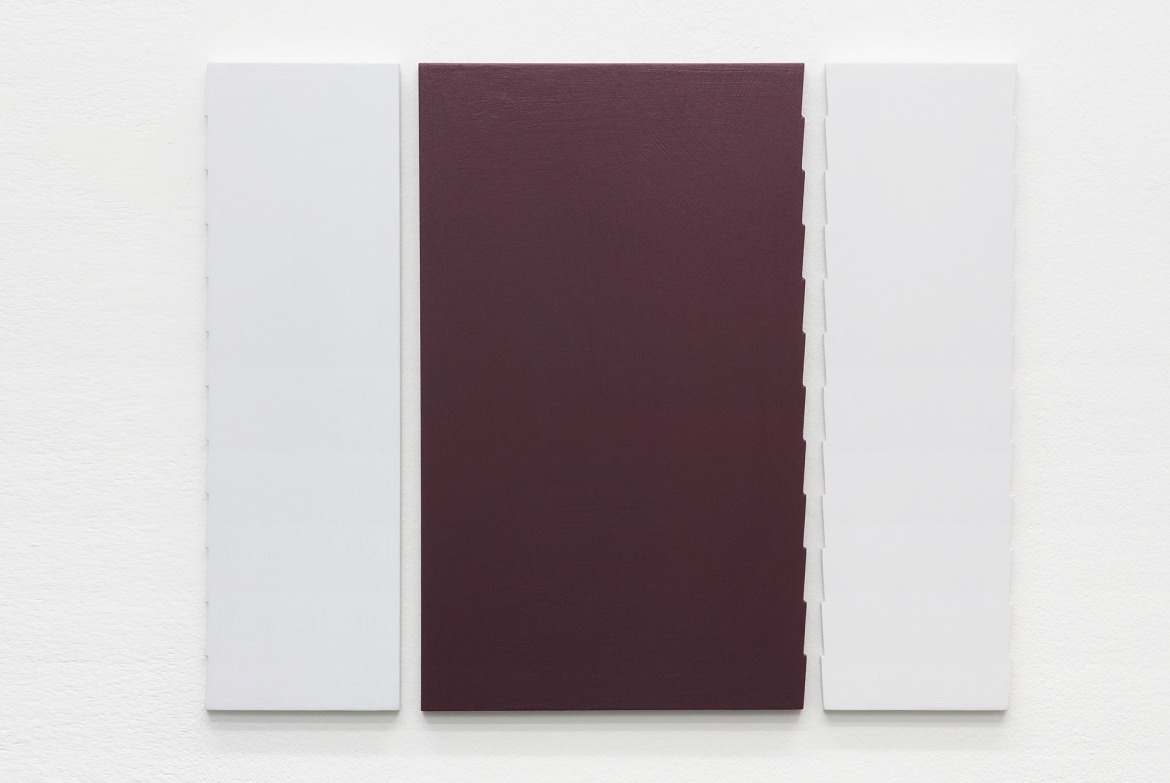
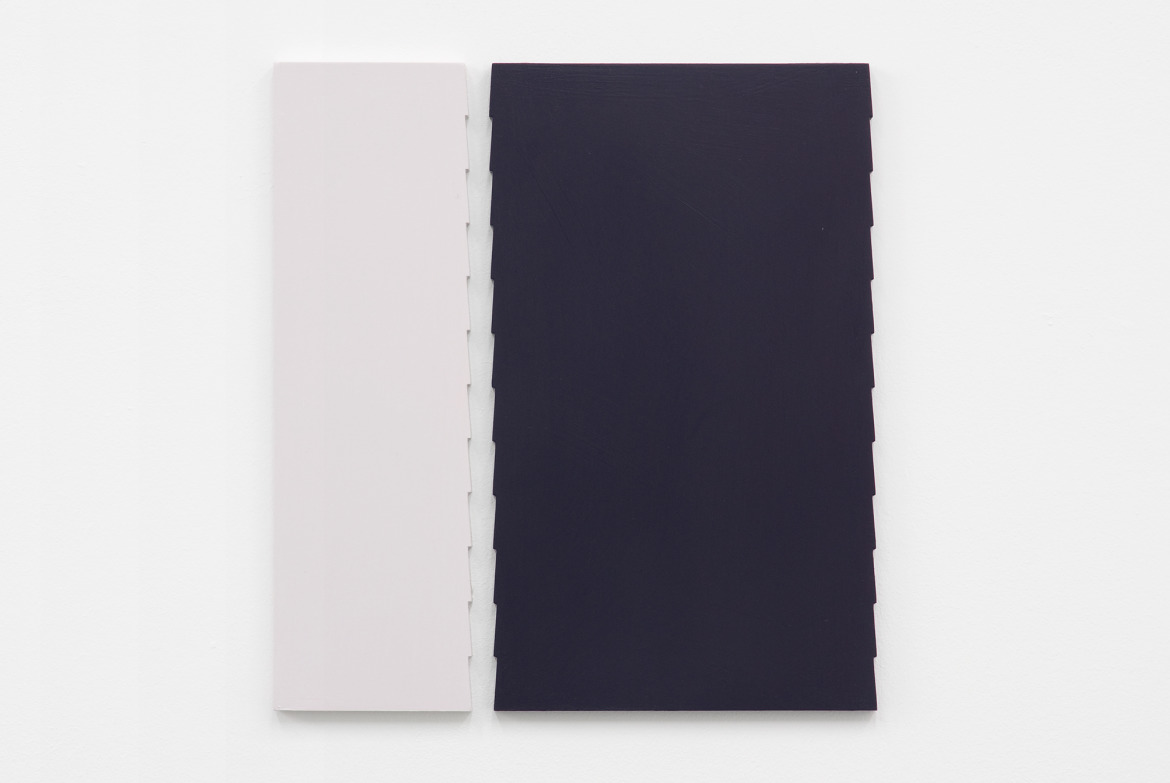
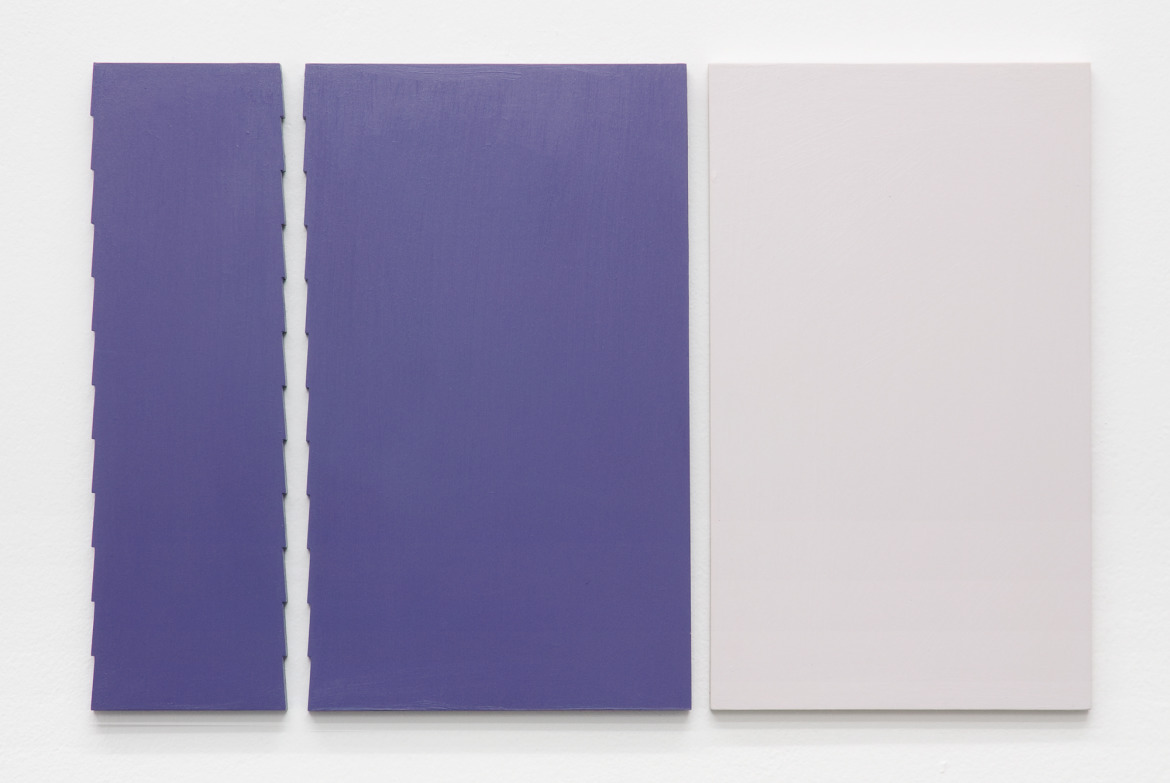
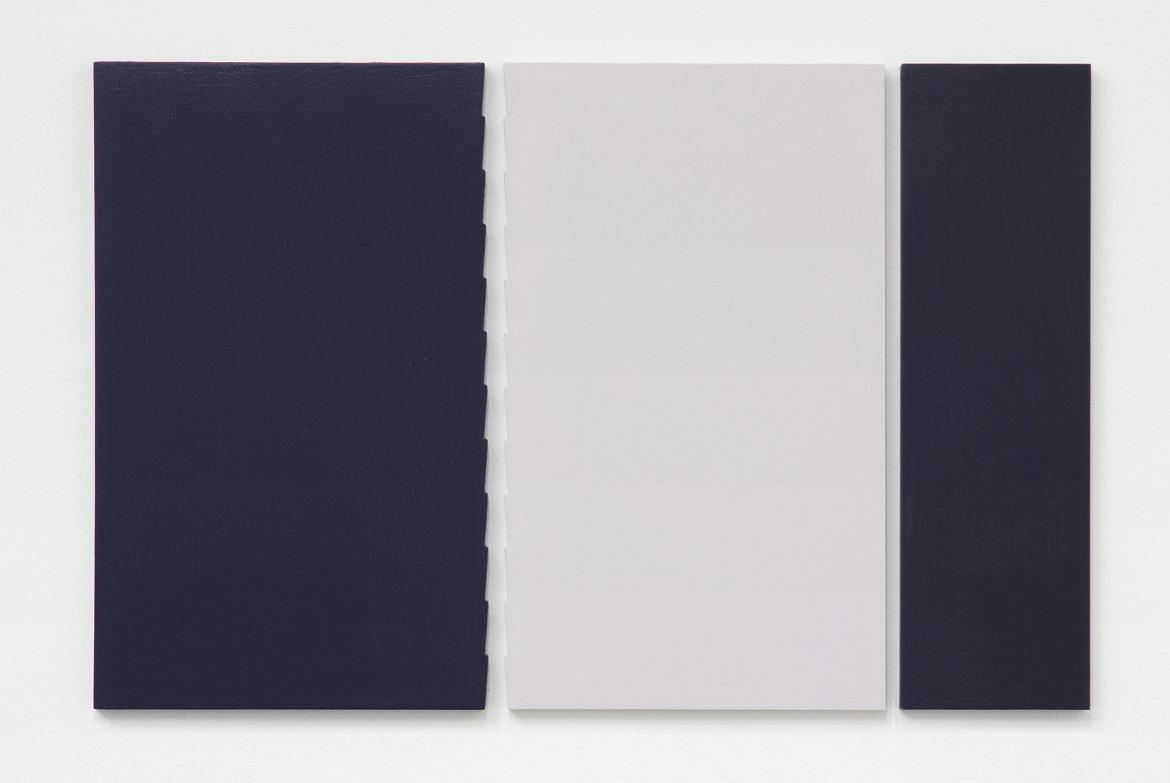
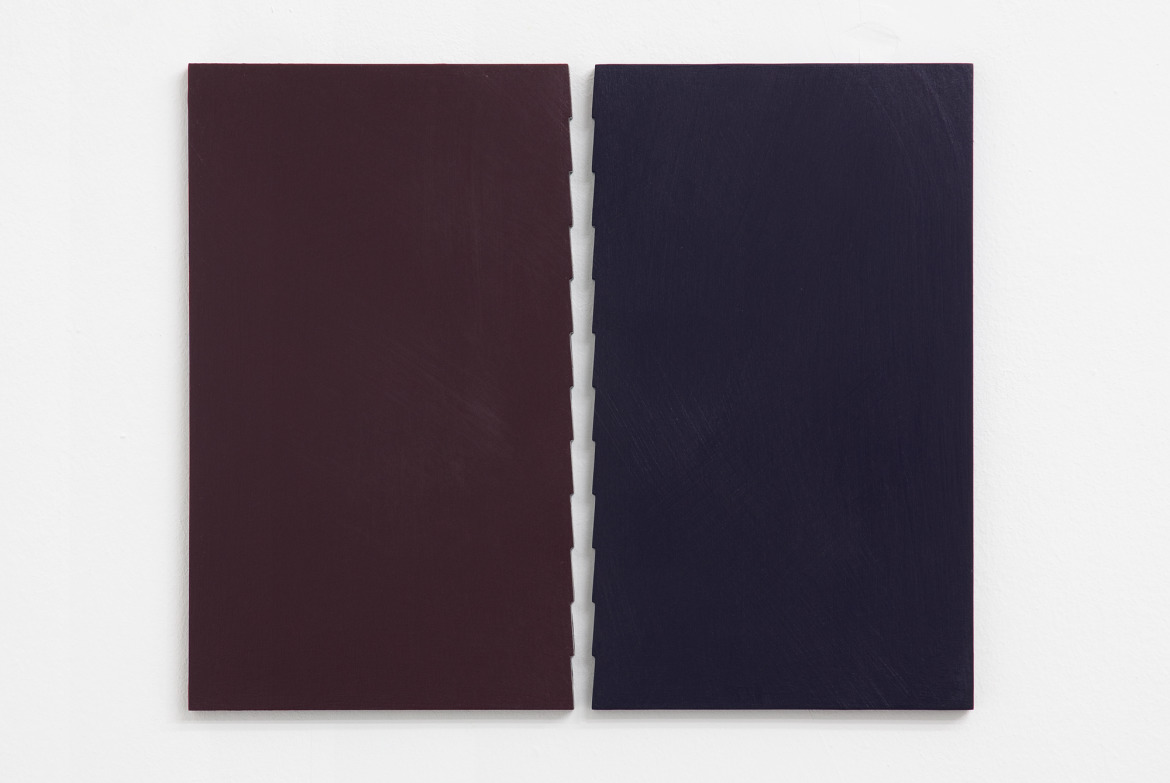
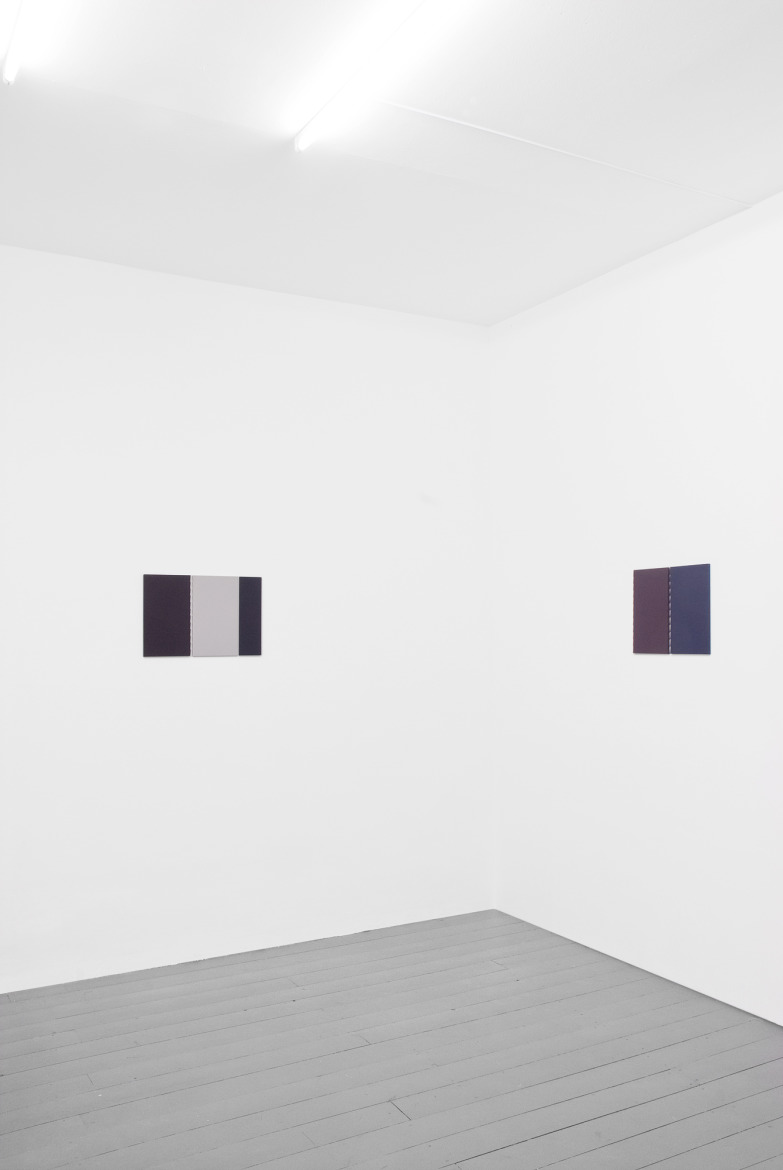
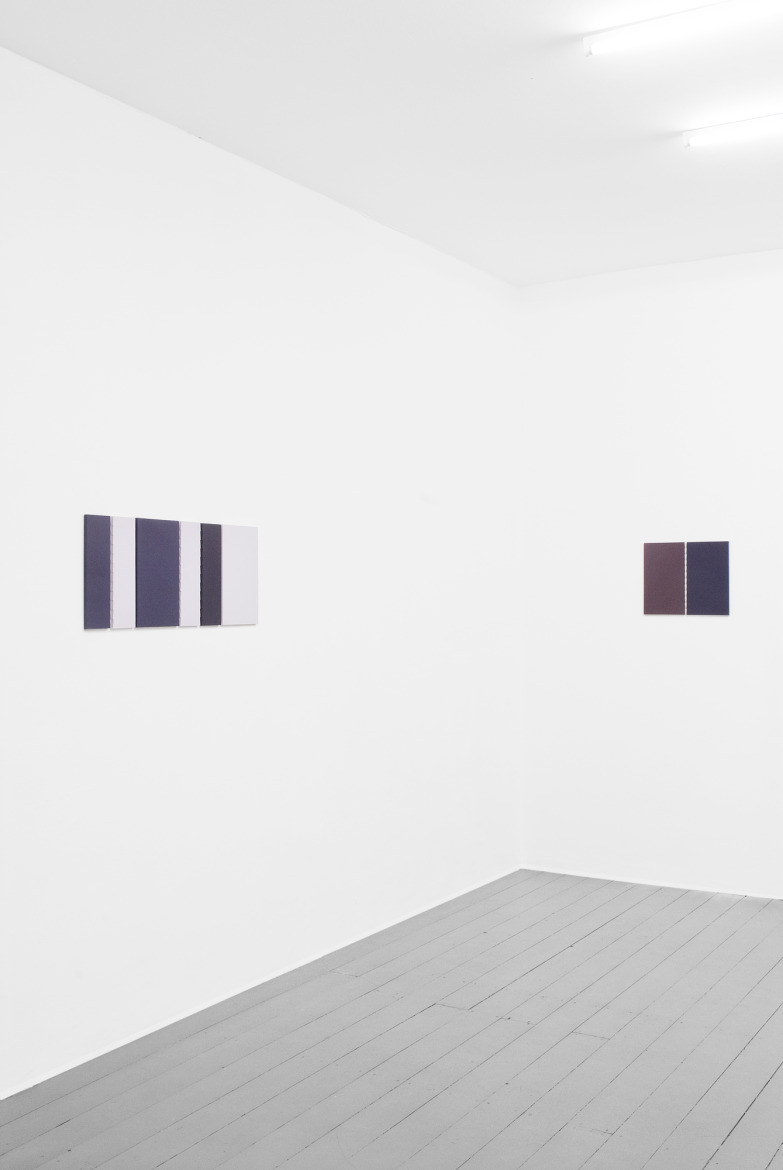
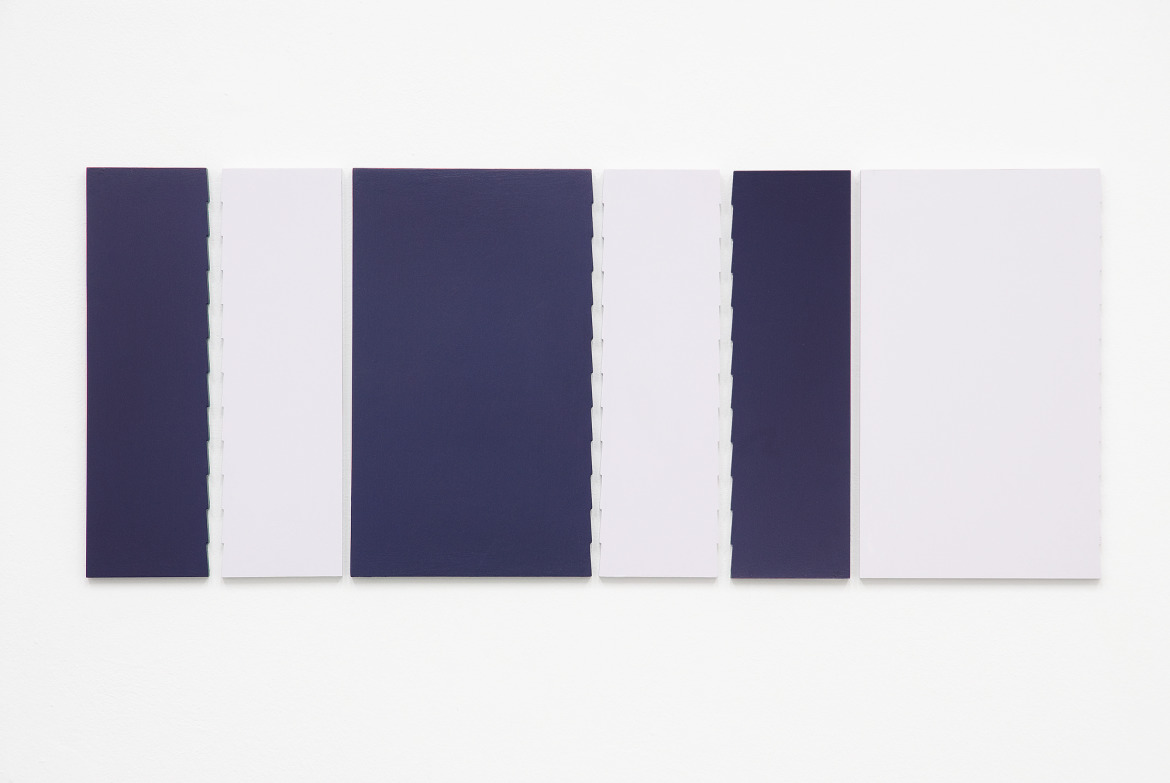
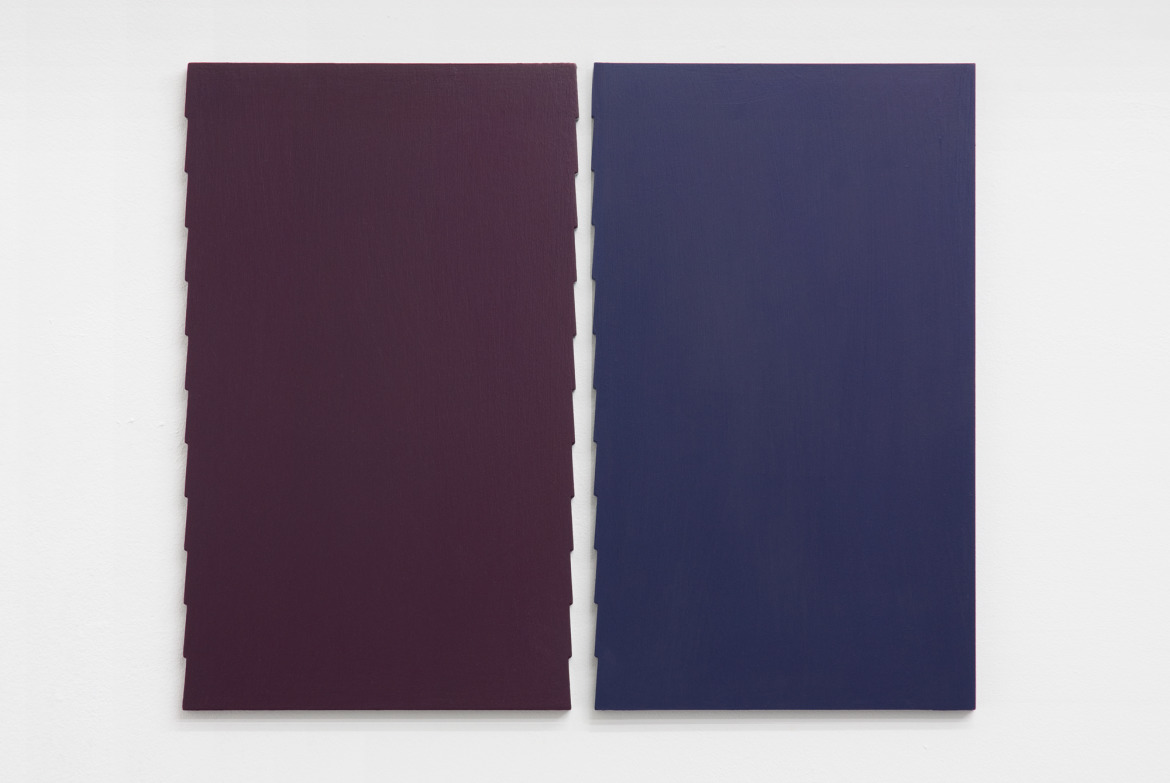
In the late 1990s Jaray was able to visit the city of Aleppo in Syria. Here, Jaray was fascinated by the particular contrast created between alternating light- and dark-colored stones that constitute the arches over the entrances to ancient local mosques. Though only in 2016, did Jaray revisit this specific pattern and turned it into the source and inspiration for a new body of work. Entitled Aleppo, Jaray created a series of wall-based works, each consisting of various flat wooden panels painted in muted, often pastel, monochrome hues. At irregular intervals, these precise laser-cut panels, have a zig-zag shaped vertical edge, formally reminiscent of the arches Jaray saw during her visit to the mosques of Aleppo.

With Aleppo Jaray pays homage not only to the specific Islamic Architecture experienced in Aleppo but urges the viewer to become aware of our own fragility, temporality and internal disjuncture. Between 2012 and 2016, the ancient Islamic Architecture of Aleppo was perceived as inappropriate religious content. Within the minutest historical second, an estimate of 33.500 buildings and historical monuments were destroyed through the hands of the IS regime. Aleppo, its architectural heritage and people were brutally shelled in front of a paralyzed world audience watching.

An initial response to the reductive quality of Jaray’s Aleppo series might be based on its pleasing formal composition. All works are of the same height, different alone in color rhythm, amount and combination of panels. However, within its reductive formal language, the works of Aleppo assume a radical shift. Each panel’s shape, when set in relation to one another, holds a vital tension capable of connecting and constituting different, often opposing gestures. There appears a particular tension, a kind of constant disconnection between presence and absence, between being and non-being. Considering the panels subtle three-dimensional volume, the attention is furthermore drawn away from the panels’ painterly surface to the spaces in-between them.

The Aleppo works can in fact be defined by these voids. Like canyons cutting deeply into a landscape, these voids speak of time, of absence, of memory and of loss. They allow for these works to be vast, to extend infinitely as they silently absorb the spectator in an impalpable atmosphere. At times, when in irregular compositional intervals two such zig-zag shaped panels meet, their collective gap forms not only a dividing canyon but creates a specific shape itself. This new shape not only resembles the architectural pattern seen by the artist in Aleppo but can also be seen as a reference to the Endless Column by Brancusi (1938) created as a memorial to fallen soldiers in Târgu Jiu, Romania.

These trapezoidal void shapes within the Aleppo series, also reminiscent of a human spine, presents a moment of infinite silence and of monumental stillness to the dramatic effects of destruction and forceful loss. There seems no possibility of reconciliation between each of the works separated parts with these seemingly simple formal ruptures generating numerous visual as much as emotional responses due to their core root in emptiness and vacuity as continuous efforts of memory recall.

Similar to Maya Linn’s Vietnam Veterans Memorial in Washington D.C. (1982), Jaray’s Aleppo series constitutes an immaterial memorial to all of humanity’s violent losses and despairs. Yet through the subtlety of the surface and formal composition the Aleppo works reflect back in hopeful motifs, personal response and collective experiences. Colors as non-verbal language thus can reach and penetrate the unconscious. Historical and individual memory for long being repressed can be experienced through this intensity and purity of trans-temporal shapes and volumes.

Born 1937 in Vienna, Tess Jaray moved to the UK in 1938. In 1954 Jaray moved to London where she continues to live and work. The artist studied at Slade School of Fine Art, University College London (1954-57) and later at Slade School of Fine Art, University College London (1957-60). Her works are included in numerous private and public collections, amongst others the Tate, the British Museum, the Victoria and Albert Museum, the Sainsbury Center, Norwich, the Museum of Modern Art, Szépmüvészeti, Budapest, and the Museum of Modern Art, mumok, Vienna.

Text by Christian Siekmeier


Konstruktionen der Neunziger

EXILE is pleased to invite you to the inaugural exhibition of our new exhibition space in the German city of Erfurt, Thuringia on March 18, 2023 presenting a solo exhibition by German artist Jobst Meyer (1940-2017) entitled Konstruktionen der Neunziger. The exhibition focuses on works created by the artist during the eponymous decade that reflect upon the fundamental socio-political changes predominantly experienced in the East German states of the former German Democratic Republic (GDR) as a result of German unification.

Bouquets of unpredictable implications

Still-life painting as an independent genre first flourished in the Netherlands during the early 1600s. Various fruits, vegetables as well as insects, dead game or precious items were painstakingly arranged on wooden table tops most commonly in front of dark, monochrome backgrounds. Immaculately executed and at first sight just formally decorative, these arranged objects represented more than what meets the eye. Each flower, fruit, vegetable, animal or object could hold an inscribed symbolic value beyond its painterly surface. Reflecting upon the growing autonomy of the bourgeois class, these paintings, themselves luxury objects, were commissioned to represent the social status and moral integrity of mercantile traders in an increasingly connected and urbanized society.

A common thread in the predominantly Dutch or Flemish floral still-life paintings is the assemblage of flowers from different countries or even continents in one vase and at one impossible moment of collective blooming. Still-life paintings became constructions of reality according to a client’s requests that communicated moral codes as well as social status through the painted arrangements of objects. Today, many of these specific meanings or codes are unknown to the majority of viewers, hence what might have appeared obvious to the elusive circles these paintings were originally aimed for is today left to specialized art-historical knowledge.

The 1990s, the decade in which Jobst Meyer painted the seven works exhibited in the exhibition, was characterized by substantial socio-political changes in East and West Germany. Following large scale protests in the German Democratic Republic (GDR) and the subsequent fall of the Berlin Wall in 1989, both east and west German societies entered a complex process of transition. What seems as a historical given today, the German unification under a predominantly West-German capitalist system, was by no means certain in the early 1990s and even past unification further positive as well as negative social transformations impacted both parts of the newly unified Germany.

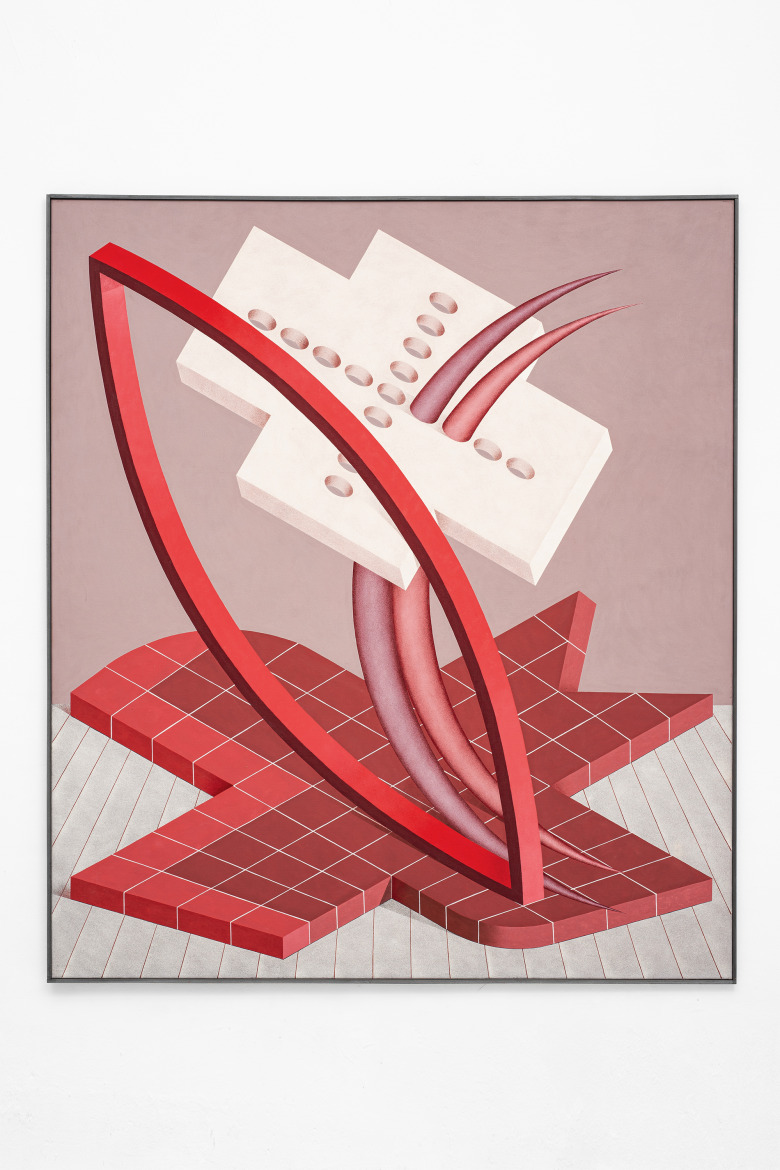
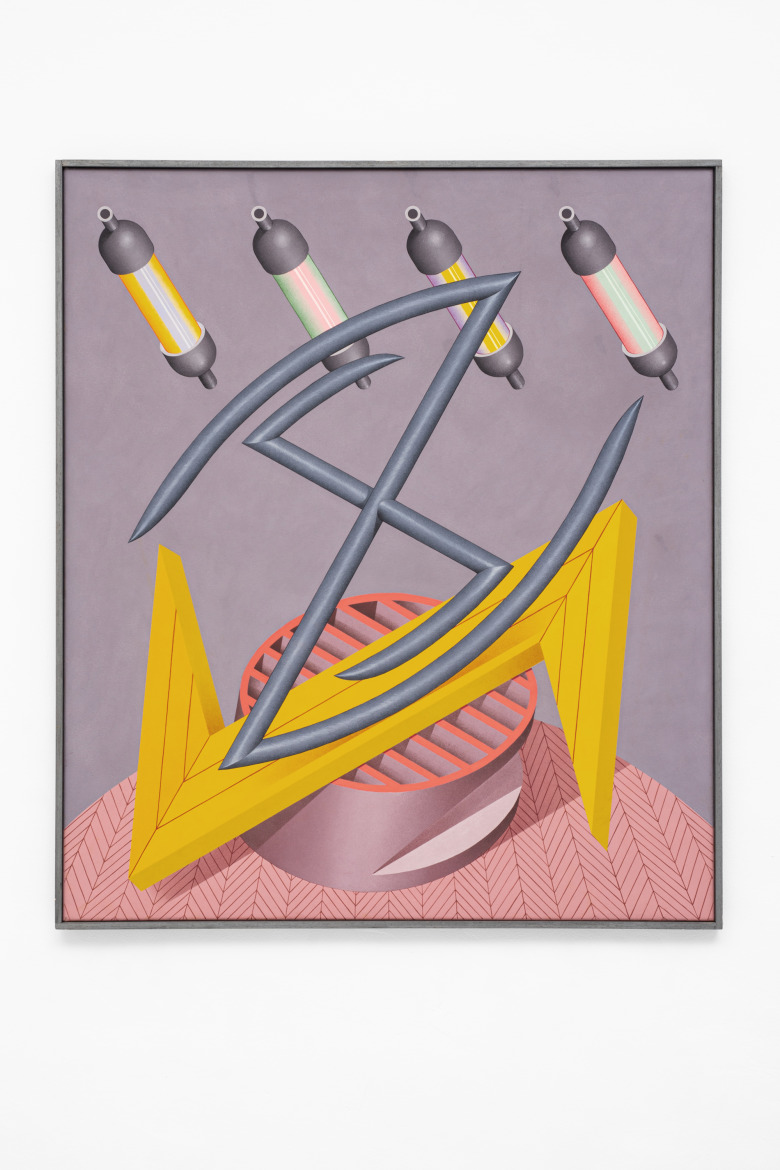
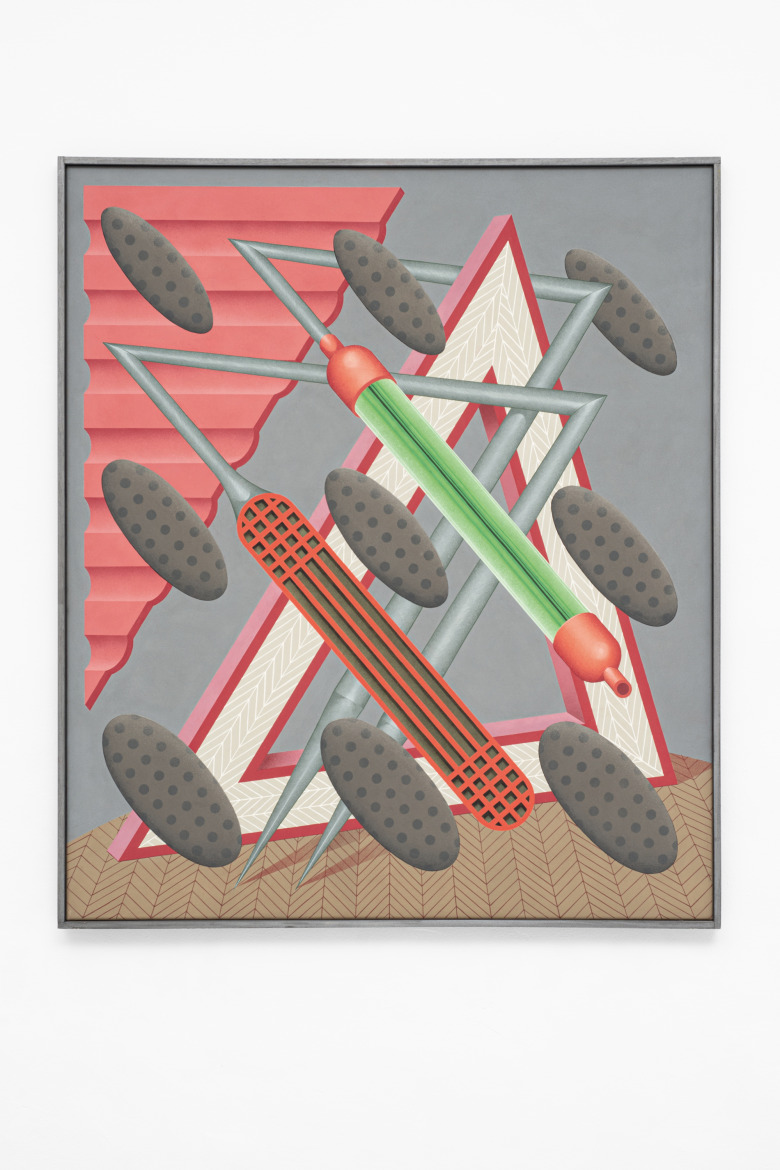
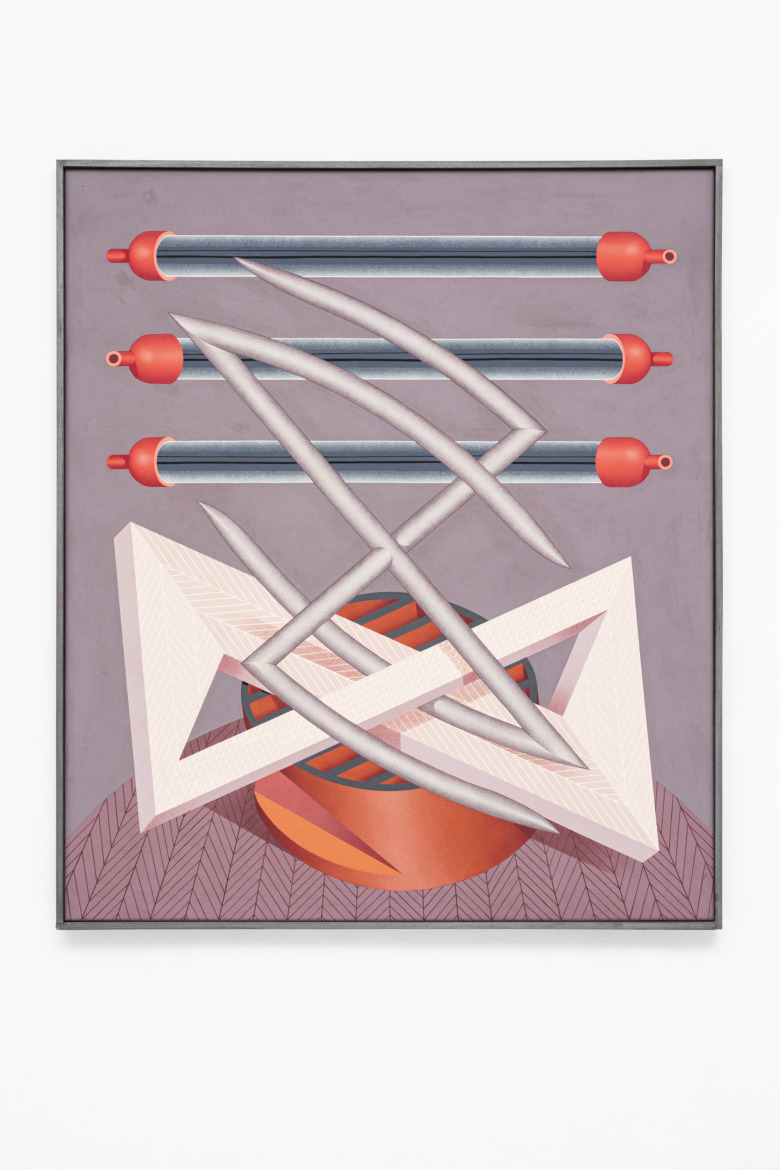
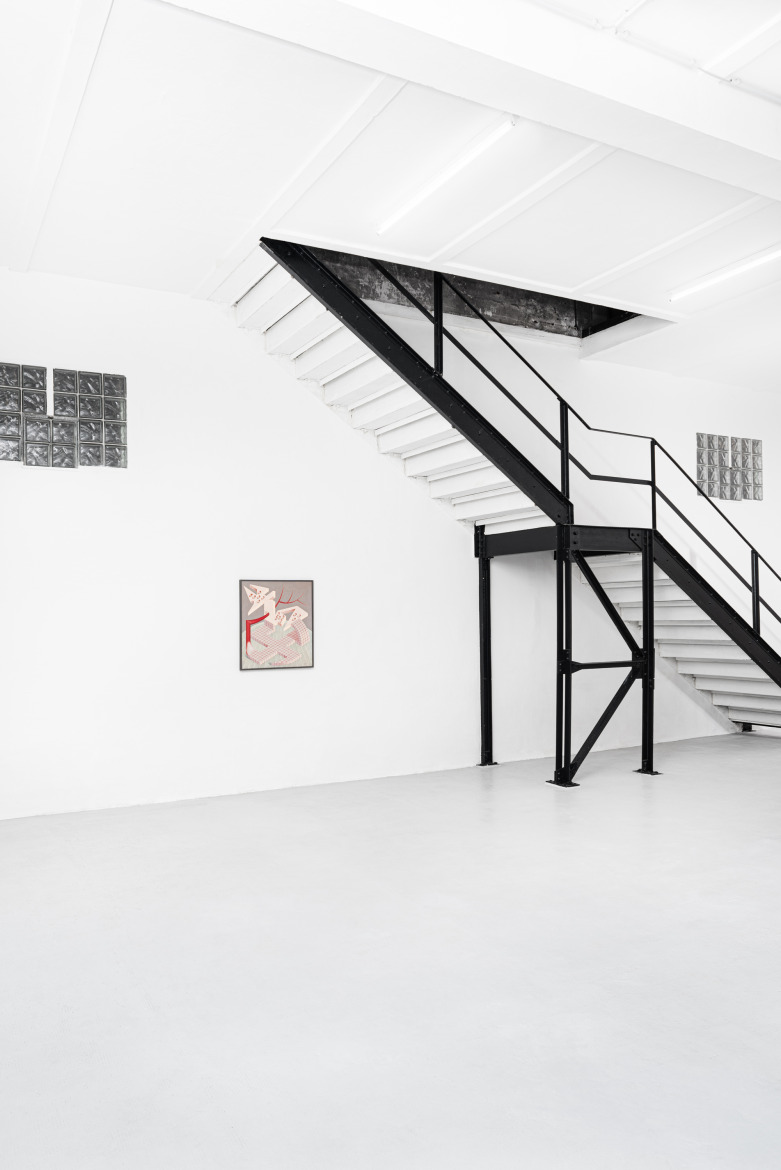
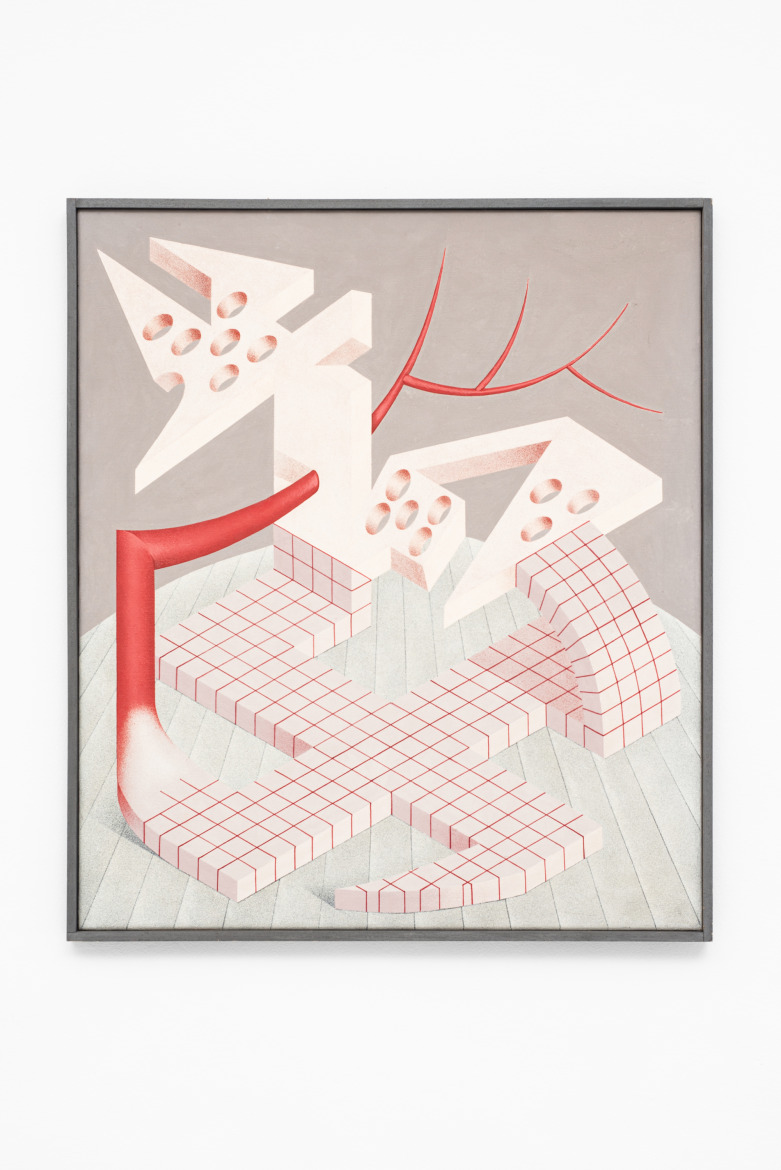
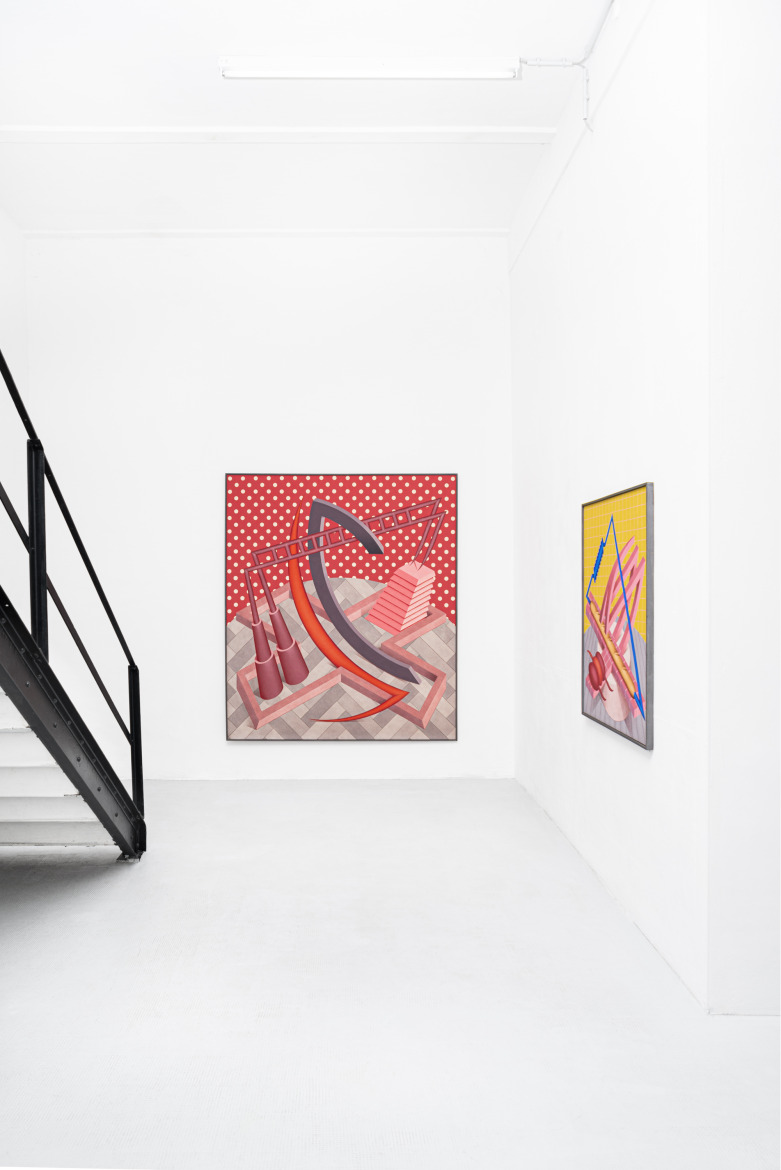
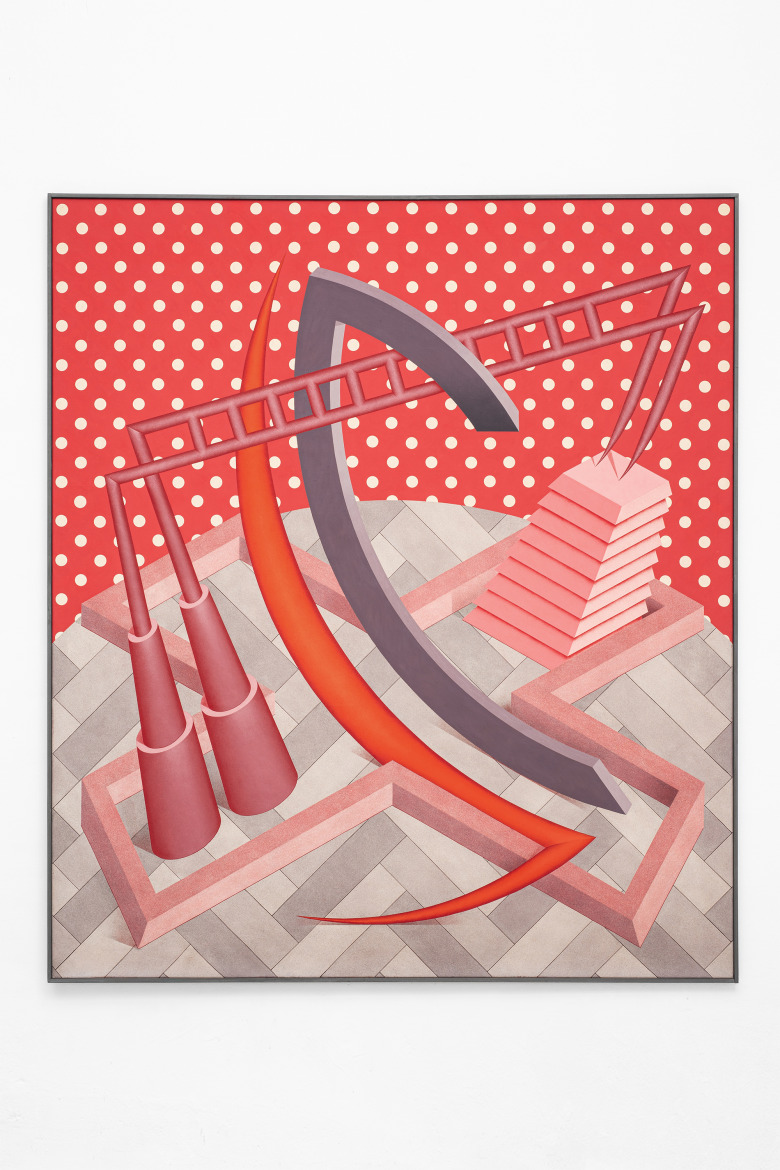
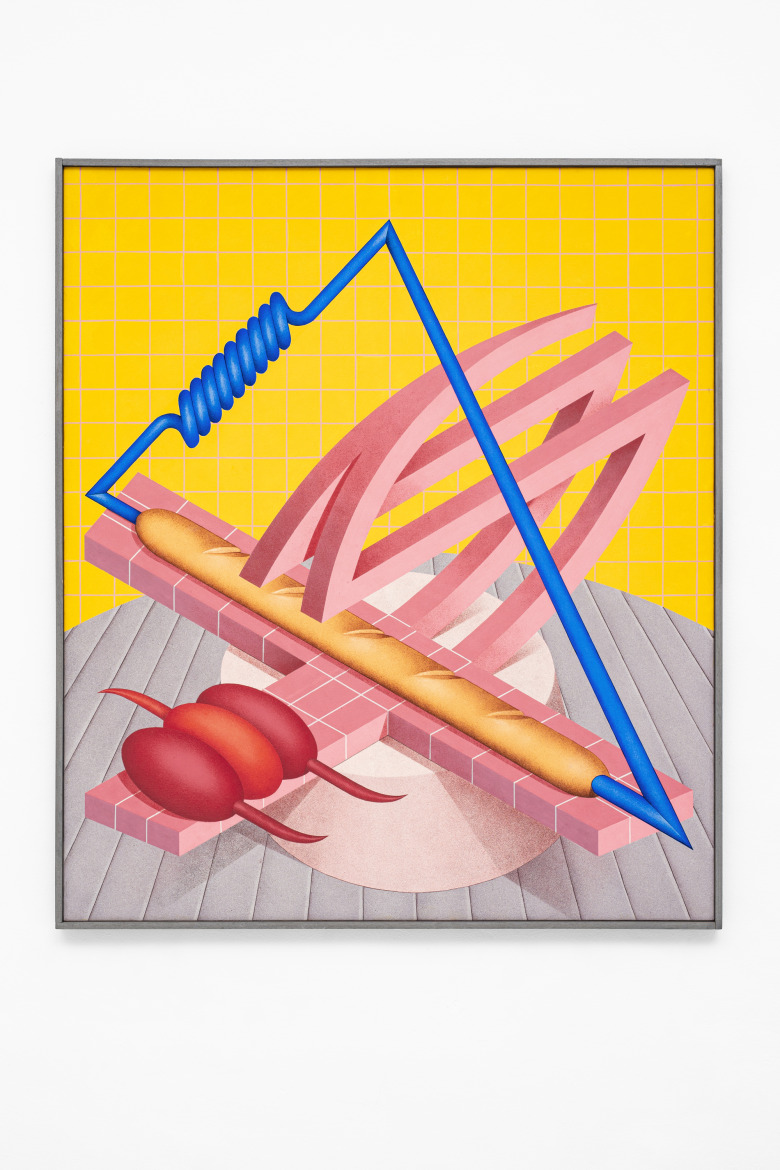
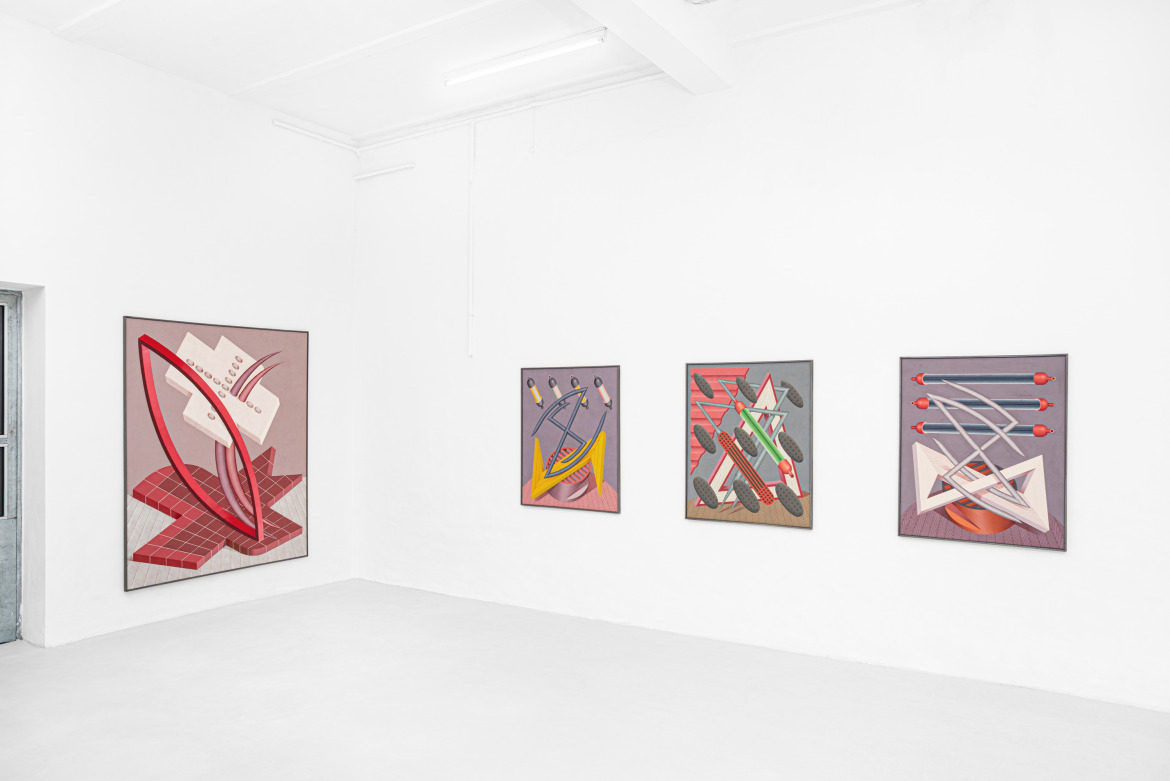
In his paintings, Meyer references technical as well as formal attributes of traditional still-life painting. On a technical level, Meyer exclusively worked with self-made, non-industrial tempera paints that he carefully layered on top of on another. On a formal level, Meyer’s works follow his predecessor’s three-fold compositional split into table-top, objects arranged upon and staged in front of an often plain, dark background. Meyer exchanges the predominantly natural objects with abstract forms ranging from crosses, hard-edged spikes, and moon-like shapes, to shapes that appear as if in stages of in-between. Physical objects appear in form of musical instrument-like trumpets or horns, wheel or ladder-like structures, or letters of the alphabet. Many of the more or less distinct shapes and objects in Meyer’s paintings seem to be caught in a kind of morphing, transitioning, intertwining or merging state from one form to another creating compositions that seem caught in an almost filmic state of flux just like an interim page of a flip book. These complex structures are placed upon textured plains quite similar to the table tops used in the paintings of his 17th century predecessors. The plain, usually dark and monochrome background’s is replaced in Meyer’s paintings with equally monochrome, yet often fiercely colorful, or in some cases wallpaper-like patterned, backgrounds.

On an interpretational level, Meyer’s painted compositions might also mean much more than what meets the eye at first glance. Especially when seen in context with the date of production, his paintings can appear as a graphic analysis of society in transition. Like the often impossible intersecting floral attributes of the 17th century, Meyer’s paintings invite the viewer to reflect on what these various symbols as well as their in-between stages can mean by themselves as well as within the overall formal composition. Is an electrified, bulb-like doubled flash, or a cross in its morphing distortion reminiscent of popularized right-wing insignia? If so, does Meyer interpret the troubling rise of neo-fascism in both parts of Germany as a consequence of German unification? Does Meyer, who also designed posters for some May 1st demonstrations and other left-wing political agendas, paint a rather dystopian view of the developments in 1990s Germany that critically questions the common narrative of the peacefully unified nation? Does Meyer’s pastel to vibrant color palette lure the viewer into visual consumerism that lays a cotton candy-esque diffusion over the greater societal challenges addressed in the works? Finally, are these works specific to 1990s social change in Germany or do they not have more universal questions embedded?

A particular link between Meyer’s work and the historical reference is the inclusion of loafs of bread in some of the works. While a rather basic food source not meant to elevate a patron’s status, it does find itself in many 17th century kitchen still-life paintings as symbolizing either the body of Christ, the simplicity of everyday life or a certain moral humility. In Meyer’s paintings, bread appears in form of a conventional baguette and is the only clearly defined and undistortedly painted object. Meyer’s reasons for being so particular and specific are unknown and we can only interpret. Yet, the inclusion of bread, as a basic food for human existence and survival might be seen as an intentional hint by the artist towards a socio-political reading of the artworks. Potentially this loaf of bread can even function as the concrete link or access point for an analysis of the work in the tradition of still-life painting past a formal surface?

In difference to the historical predecessor, Jobst Meyer was not painting for a patron or client but acted as an autonomous artist whose overall social, political as well as creative personality is embedded in his works. Meyer’s painted constructions hold no elitist codes readable only by the select few, instead the artist uses shapes and forms that are universally open and accessible to all. Yet Meyer did not have a large audience for his work in later stages of life and so these paintings were, to this moment, not seen by many. With time having passed since their production in the 1990s a new reading of Meyer’s work is possible and the urgency to critically address, question, and reflect upon dangers to civil societies remains fundamentally important today. Meyer’s paintings, when exhibited in the city of Erfurt in 2023, invite the viewer to analyze and abstract from the paintings’ symbolism, to the local placement, to the particular time we live in.

Text by Christian Siekmeier


Meyer’s works from the 1970s were previously exhibited at EXILE as part of the duo exhibition Monument Error in 2021.

Parallel to this exhibition, EXILE Vienna hosts the second solo exhibition by Jobst Meyer’s partner Sine Hansen (1942-2009). The exhibition is entitled Spannungszangen and features paintings created during the 1970s.

Jobst Meyer (1940-2017) studied at Akademie der bildenden Künste, Karlsruhe (1960-63), and at Hochschule der Künste, Berlin (1963-68). From 1982-2010 Meyer taught at the Hochschule für bildenden Künste, Braunschweig. In 1973, he received the Villa Romana award and residency in Florence, Italy. Meyer exhibited in numerous solo exhibitions, amongst them Galerie Junge Generation, Hamburg (1967); Forum Stadtpark, Graz (1969); Galerie Klang, Cologne (1973, 1974), Galerie Thomas Wagner, Berlin (1975), Galerie Niepel, Düsseldorf (1981, 1991) and Landesmuseum Oldenburg (1998). Selected group exhibitions include Kunsthalle Baden-Baden (1966), Kunsthalle Recklinghausen (1967, 1969), Kunsthalle Nürnberg (1968), Kunstverein Salzburg (1970), Haus der Kunst, Munich (1970), Akademie der Künste, Berlin (1973), Kunsthalle Kiel (1977), Kunstpalast, Düsseldorf (1982), Ludwig Forum, Aachen (1992), and Kunstmuseum Mülheim an der Ruhr (2016). Amongst others, his work is in the public collections of Museum Boijmans van Beuningen, Berlinische Galerie, Rheinisches Landesmuseum, and Bundeskunstsammlung, Germany.

Monument Error

Sine Hansen: Spannungszangen at EXILE Vienna
NADA HOUSE, New York

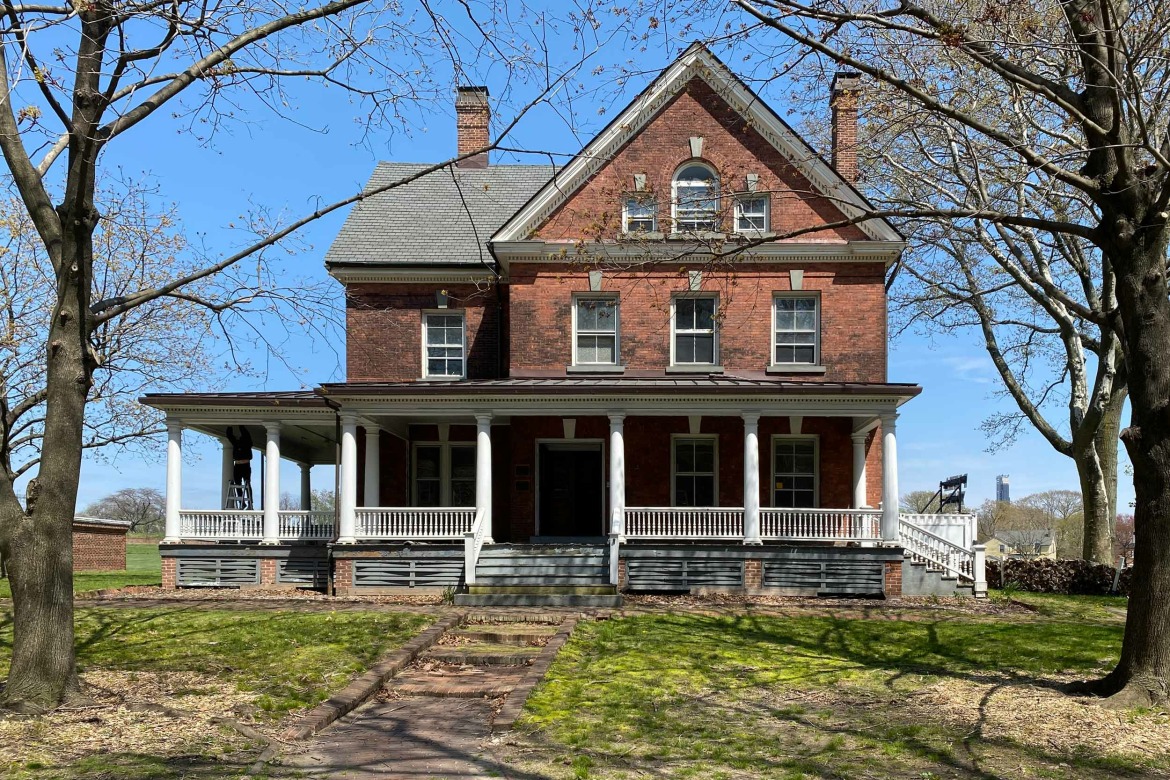
EXILE is happy to participate in NADA House with a collaborative exhibition by Vienna-based artist Kerstin von Gabain together with New York-based artist Gwenn Thomas. The exhibition will be held at House 403, along Colonels Row on Governors Island, New York from June 4 – Aug 7.

Governors Island, NY is approximately 6798.57 km or 4224.43 miles removed from EXILE, situated on Elisabethstr 24 in Vienna. The island, originally known as Paggank (Nut island) to the local Lenape Native American tribe, was deceitfully acquired in 1637 by Dutch colonialist Wouter Van Twiller for reportedly “two ax heads, a string of beads, and a handful of nails”. In the 1870s the building that today houses EXILE was built upon the raised medieval city wall of Vienna as part of the Emperor’s Ringstraße Project. The island was eventually renamed Governors Island and six residential houses were built to accommodate officers and their families on what is now known as Colonel’s Row in 1870. Following WWII, EXILE’s current gallery space in Vienna functioned as a travel agency for the US Allied Forces. The island’s defensive importance decreased over time, its original purpose and relevance fading into history. Most likely sometime in the mid 1970s, EXILE’s current space was fully clad in wooden paneling and became the office of a chain-smoking Russian businessman. An engraved metal plaque attached to House 403 reminds of its use by Soviet president Mikhail Gorbachev for the final preparations to the historic meeting with US President Ronald Reagan in 1988. The deceased Russian’s wooden smoking lounge became EXILE’s gallery space in 2018, eventually being transformed into a white cube during the pandemic. In June 2022, as part of NADA House, EXILE and House 403, Colonels Row, Govenors Island, NY meet inside an upstairs bedroom and adjacent bathroom. Layers of history intertwine and collide for a nanosecond of transitional time.
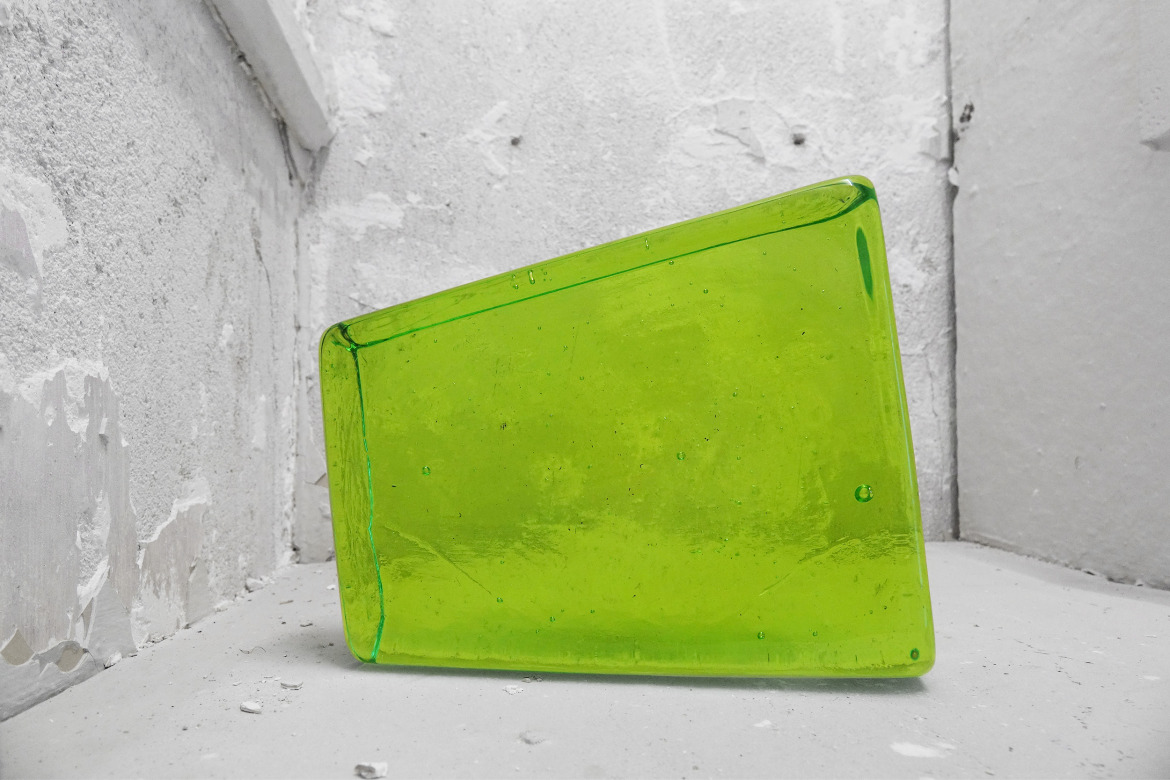
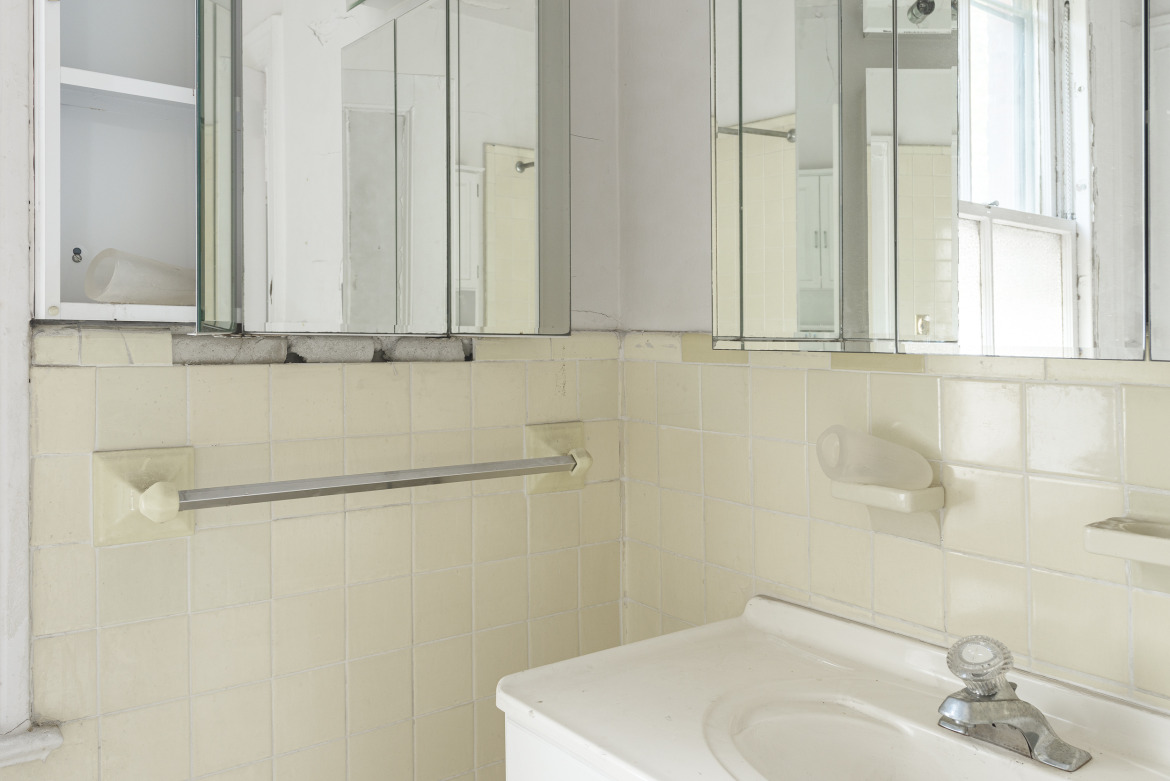
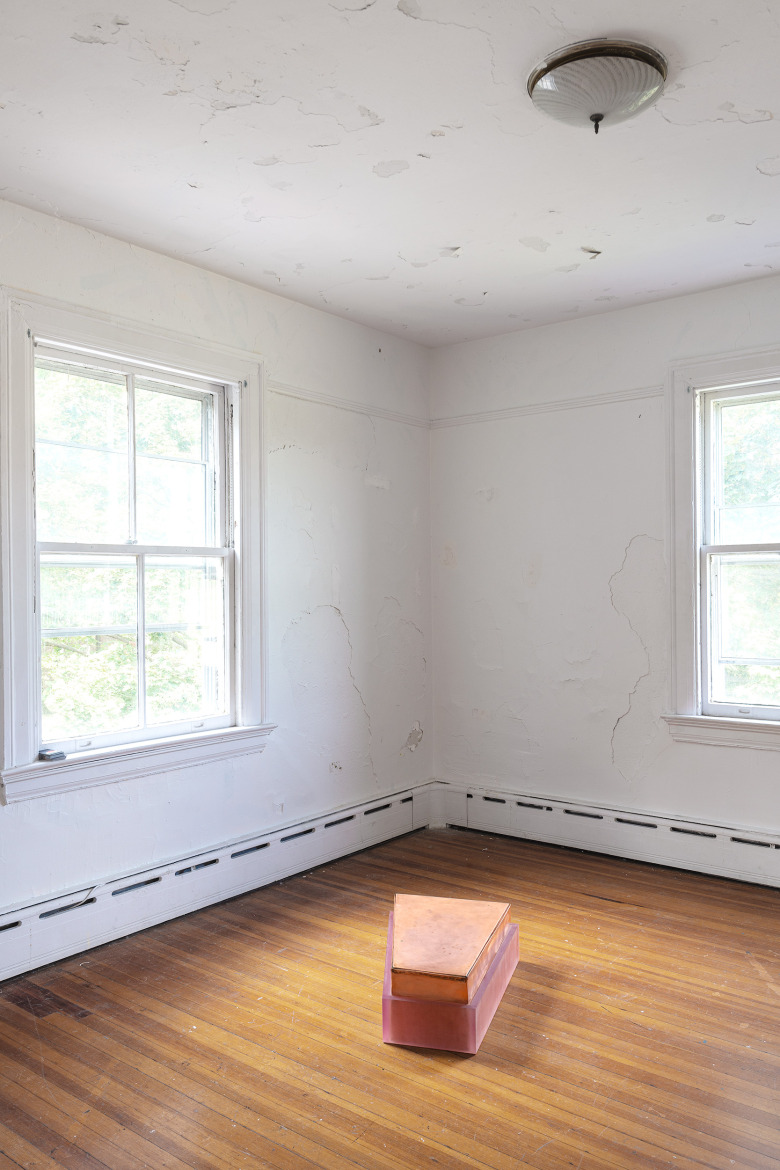
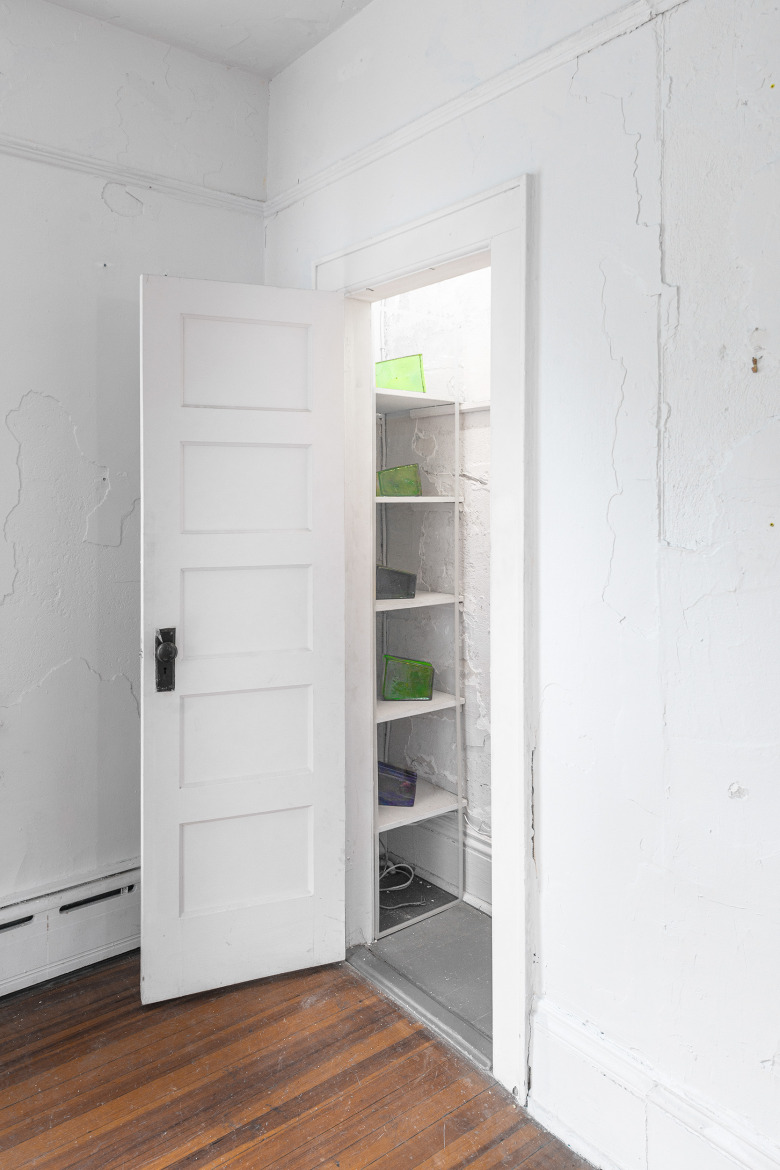
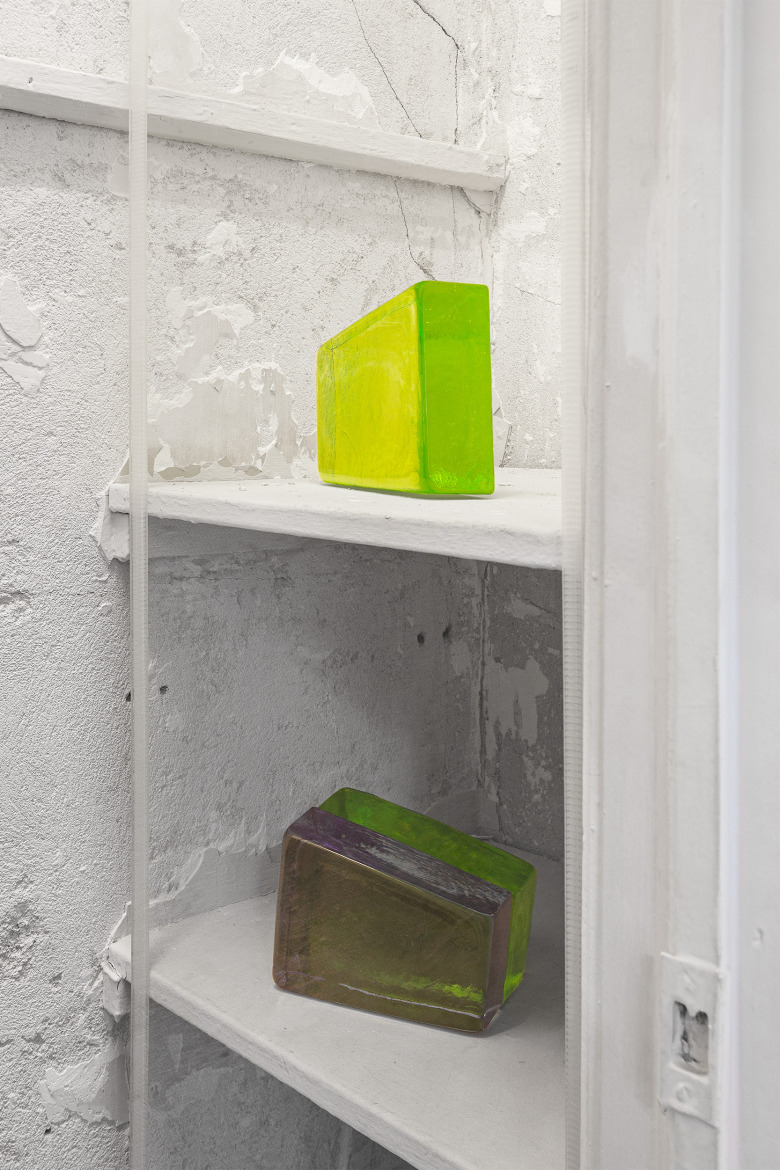
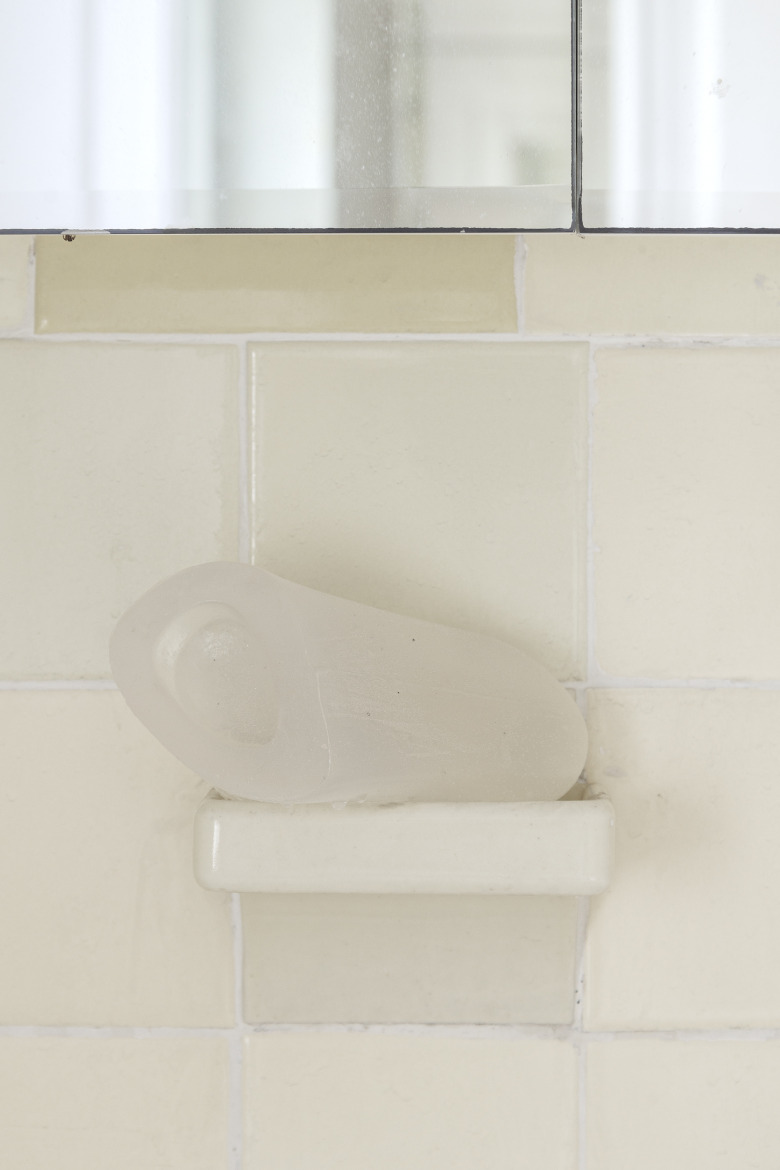
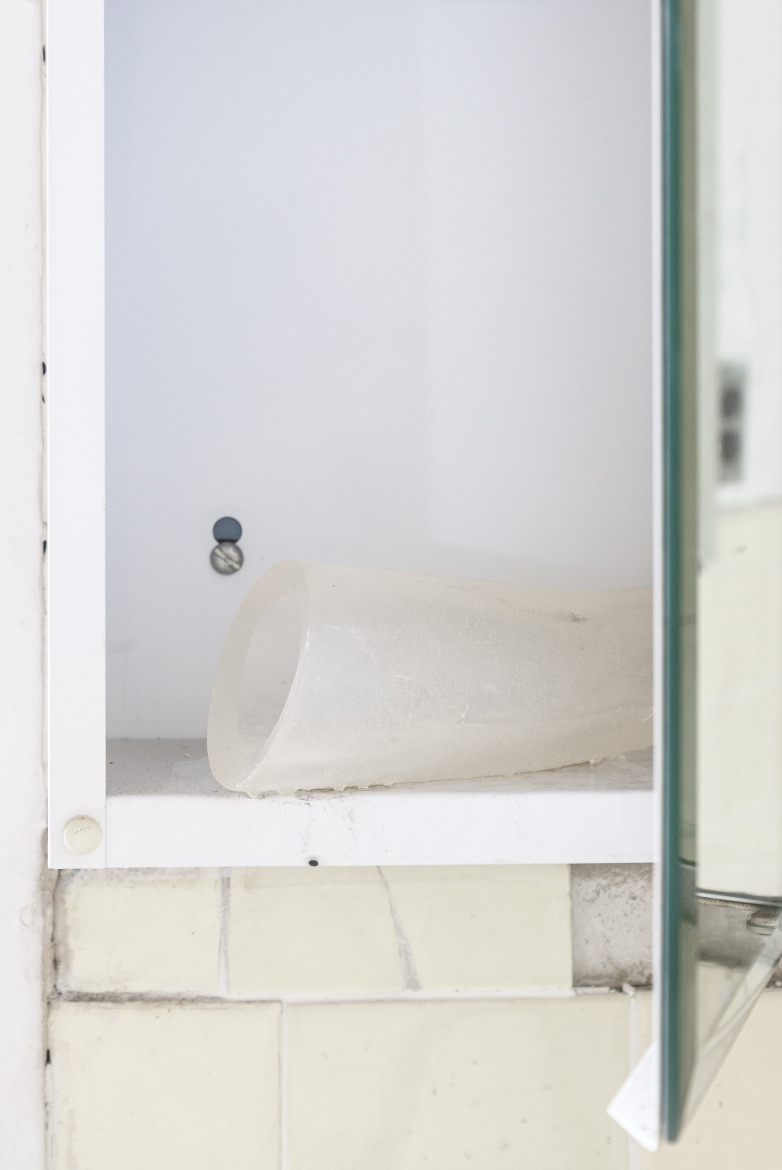
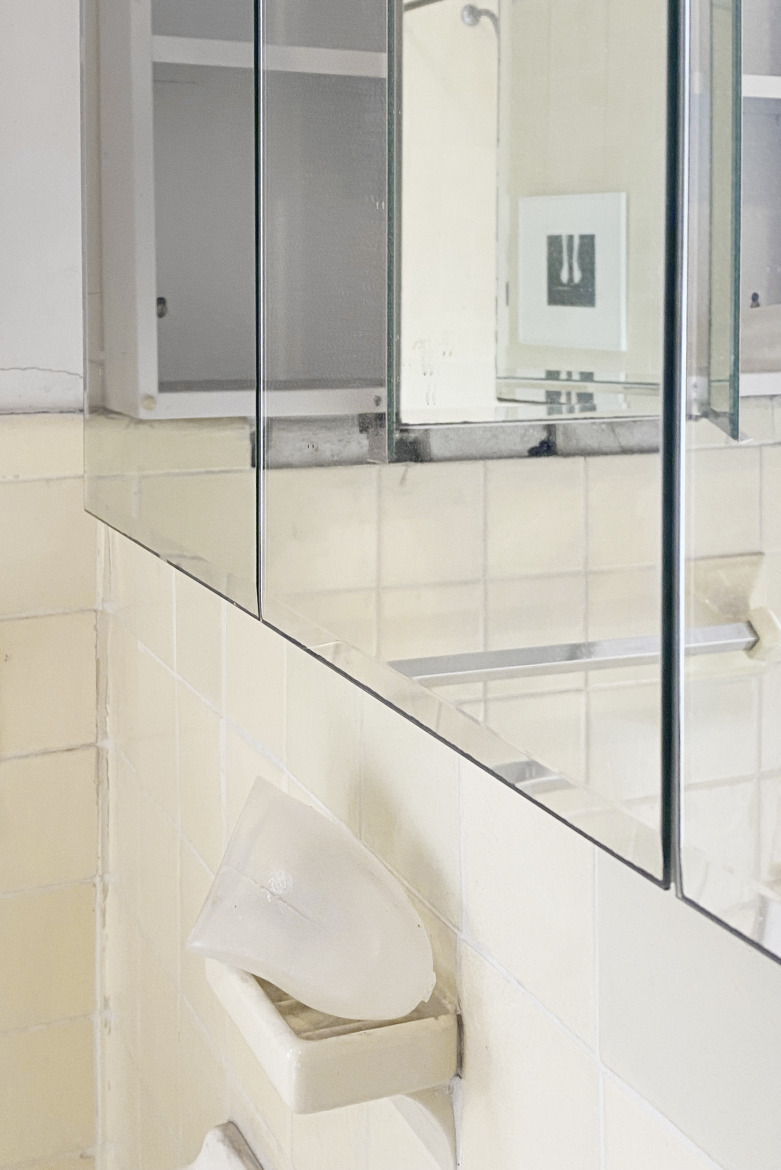
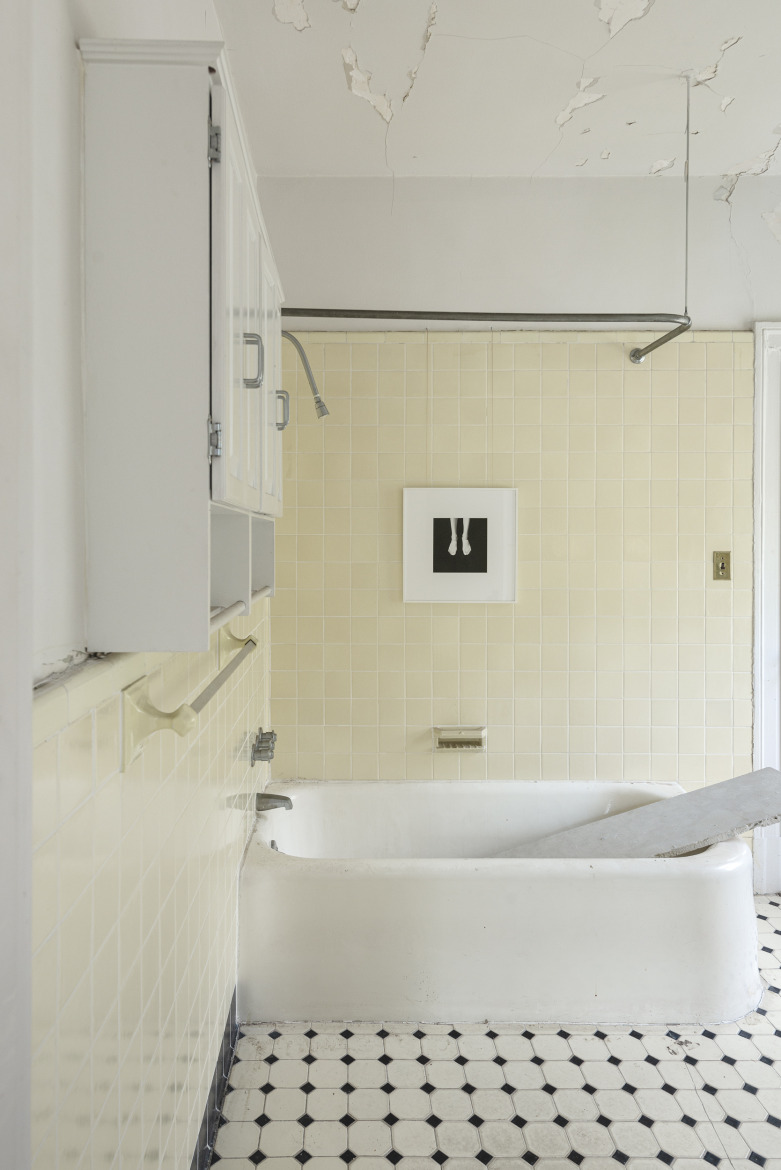
EXILE invited New York-based artist Gwenn Thomas and Vienna-based artist Kerstin von Gabain to respond to this temporal collision and create an immersive stage for their artworks. The selected works were deliberately not installed into but onto the existing space itself with some of the artworks’ material sources left in a state of flux themselves. Exposed to the elements, von Gabain’s soap pieces, shaped after human bone structures and arranged within the bathroom space, will begin to sweat and disintegrate over time. Thomas’s translucent glass shapes, their repetitive form taken from an abandoned found object and displayed in the bedroom’s cupboard, slowly pass the changing light of day. Both works respond to the spaces’ fluctuant nature and honor the opportunity to become short-lived, but active connectors between historical space and present visitor.

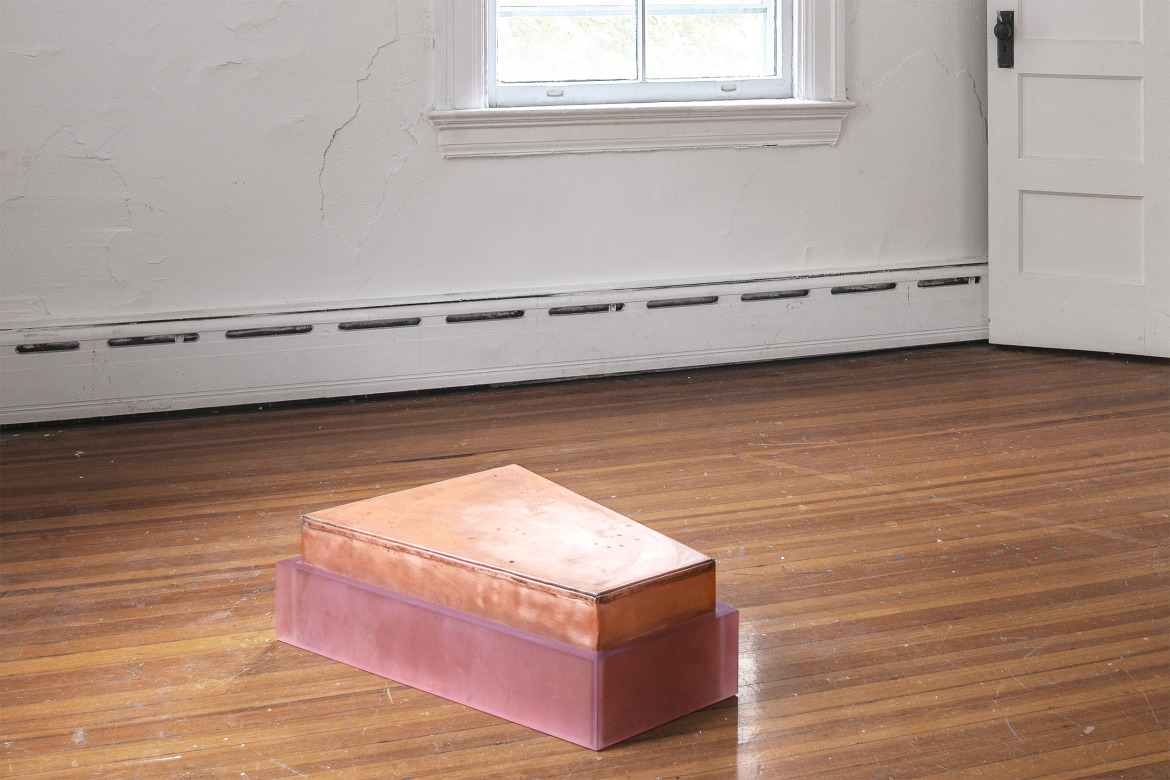
Thomas, who for many years has been researching window shapes as membrane-like metaphors for transformation and time, further places a single resin and copper object central onto the bedroom’s floor. The object consists of two intersecting shapes that seemingly depend on one another. The outer resin-made, opaque shape forms an enclosure for the negatively placed inner copper shape. Oppositional in material, both shapes together enclose a spatial volume that gives the artwork its final dimension and particular identity. Both materials together, one opaque, the other solid but changing its hue from bronze to green, again reference time while containing an inaccessible, hollow vacuum at its center. By scale, form and setting, the object appears like the marquette of a previously positioned piece of furniture and becomes an imaginary vessel for the domestic and intimate character of the space it is situated in.

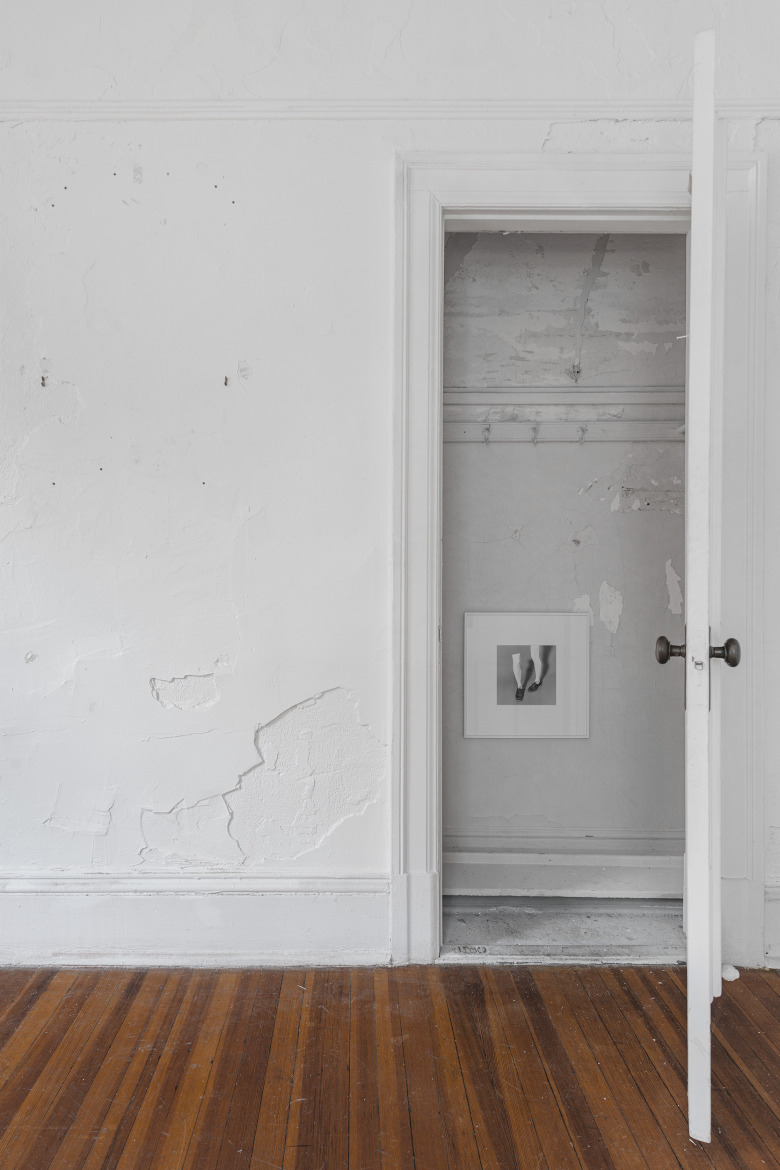
Von Gabain’s two black and white photographs show limbs of human bodies that appear like anatomical wax models known from historical medical archives. Either crudely cut-off from the human body or cropped by the photographic frame and dipped into liquid, they directly refer to the historical use of photography to disect, analyze and compare the human body into defining categories. Initially these two photographs remind of the previous identities that have occupied these specific two room as much as the island itself. Further though, they are reminders of a violent history that is, even if passed for a long time, forever embedded into this island. Set in context with the bone-shaped soap works, an inability to wash-off historical pasts or one’s personal self lingers within the work. Constantly transformational, von Gabain refers to a pressing urgency to revisit and re-evaluate each individual history.

Collectively, the installed works by Thomas and von Gabain humbly express gratitude for their granted time of existence within the fabric of these two rooms. The selected materialities reflect onto the absurdity and lasting consequences of an uneven exchange of material value in 1637 of which they are now part of. History appears in layers. The dust never fully settles, the light never fully fades. The artists acknowledge and honor the particular history of these two rooms – their artworks imagine and reflect upon past, present and future spatial and personal interconnectivities. The displayed artworks are glitches of spatial time mirroring an uneven past onto an increasingly unpredictable future.

Text by Christian Siekmeier

The project has been kindly supported by →Austrian Cultural Forum New York.

A Return to Sweetness

Dear Guests, 

welcome to the new EXILE space in Vienna and to our inaugural exhibition A Return to Sweetness by Pakui Hardware.

Now: Slowly breathe in – then out, while wandering around the space and looking at the works installed within. Inhale – exhale – repeat. At times, this most fundamental rhythm of bringing oxygen into your lungs and flushing out carbon dioxide can be enhanced or distorted depending on one’s prefered additive intake, a ritual as old as humankind. The gallery’s wooden walls are the lasting result of such a chemically enhanced ritual breathing enhancement:

“Chain smoking is the practice of smoking several cigarettes in succession, sometimes using the ember of a finished cigarette to light the next. The term chain smoker often also refers to a person who smokes relatively constantly, though not necessarily chaining each cigarette.” (Source: Wikipedia)

Prior to our move-in, the space was the office of an unknown tenant, locally referred to as ‘the Russian’. For three to four decades (accounts vary) he would sit in this wooden cube behind a grand desk and endlessly smoke. Cigarette after cigarette, inhaling, exhaling, decade after decade, while taking care of unknown business. As smoking is quite often not a solitary but a social action, his office became a smoker’s lounge for the neighbourhood, a partial communal space, where many stories were shared, discussions and conversations held, all over the course of a (Viennese) Tschick.

The exhaled smoke of roughly half a million cigarettes took its part to fumigate these walls and give the space its specific patina and lasting ordeur. While the walls patiently soaked-up the nicotine, the lungs of the Russian disintegrated and eventually collapsed.

In a sense these organic wooden panels are a mirror image of the Russian’s internal organs. The space itself is a breathing machine, that temporarily stopped with the previous tenant’s death of lung cancer a few years ago. Ever since, these spatial lungs laid bare and empty, devoid of function.

From today, these rooms start to breathe again. Without the need for nicotine-intake itself, we continue the legacy left to us. Pakui Hardware’s installation is a first reaction to these walls, to their infused histories. A Return to Sweetness relates to the metabolic obsession of capital reproduction as it does to the need for conversation and exchange. The artists’ own inside-out organs adding another chapter of stories, actions and myths to be experienced, this time though -if smoking – only outdoors.

Now when in this space, surrounded by its nicotine-soaked walls, feel warmly welcomed to this new chapter of EXILE’s trajectory and to engage and participate in our upcoming journey.

Christian Siekmeier


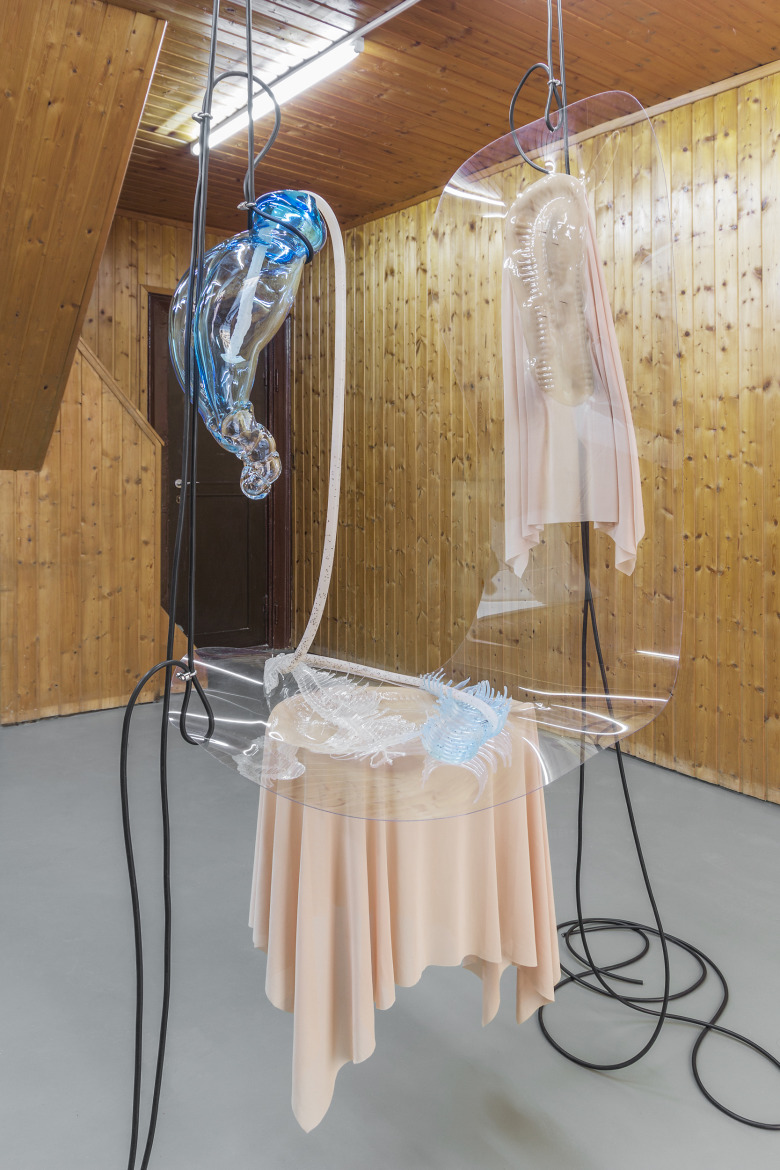
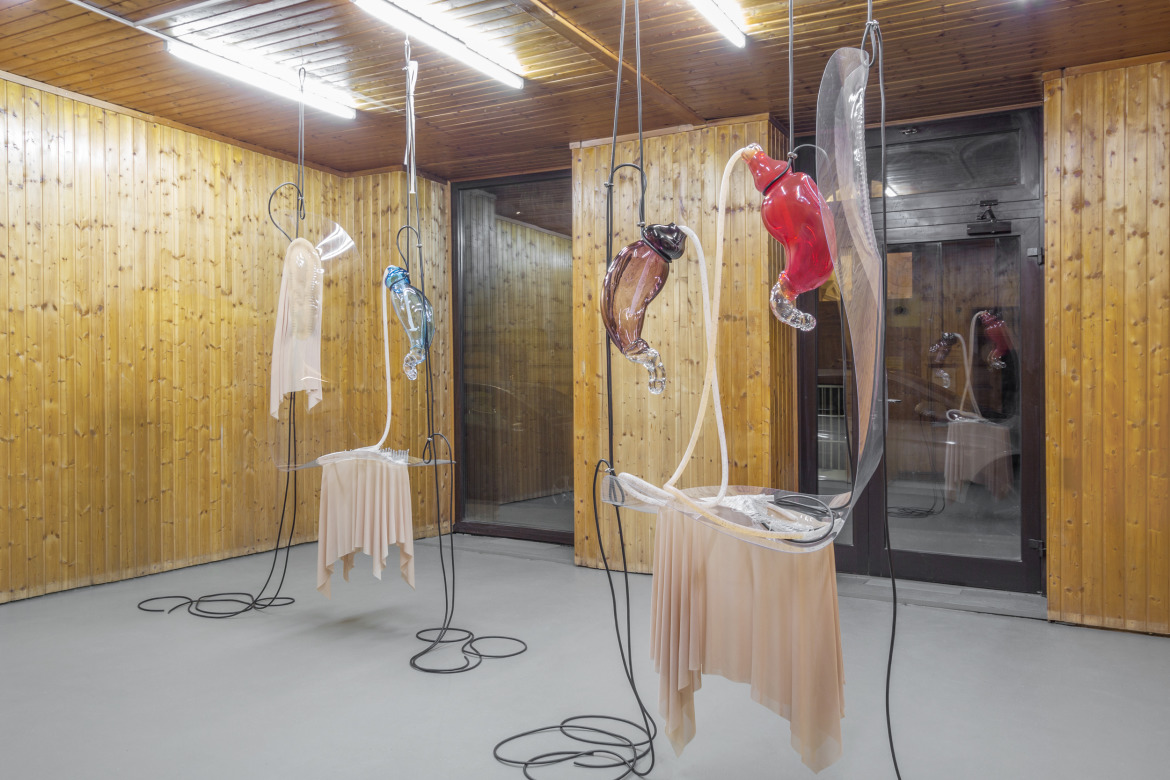
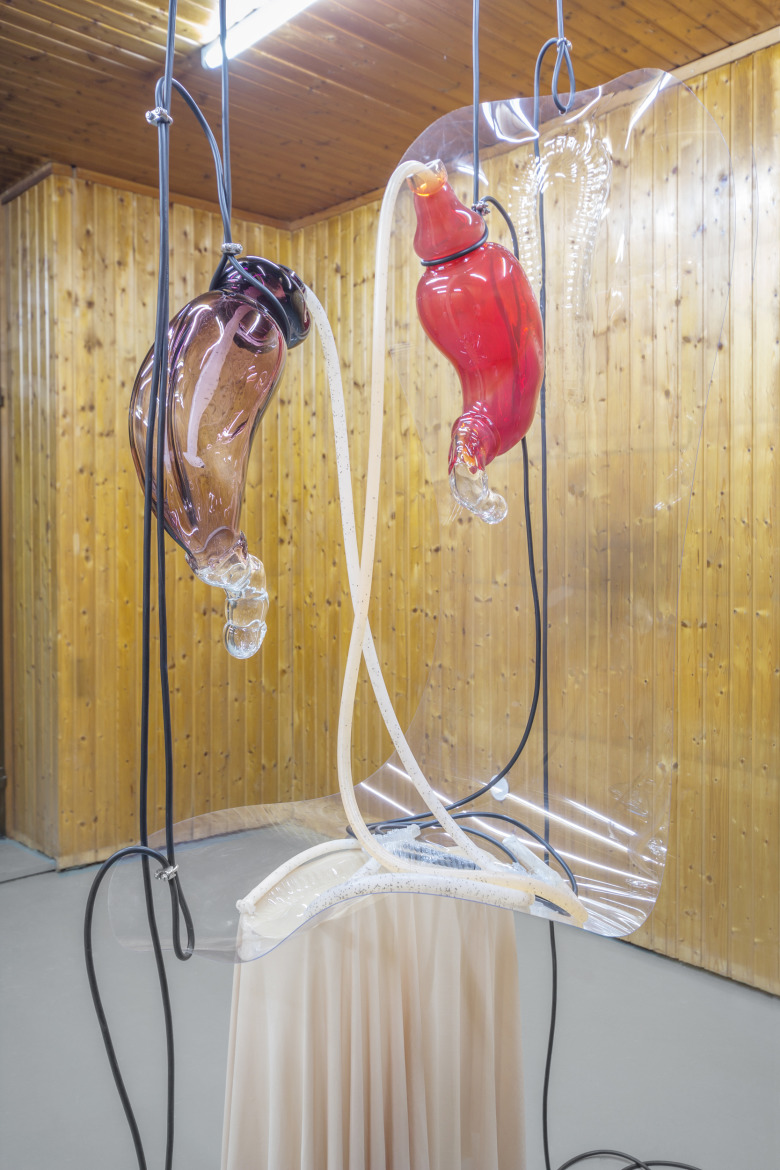
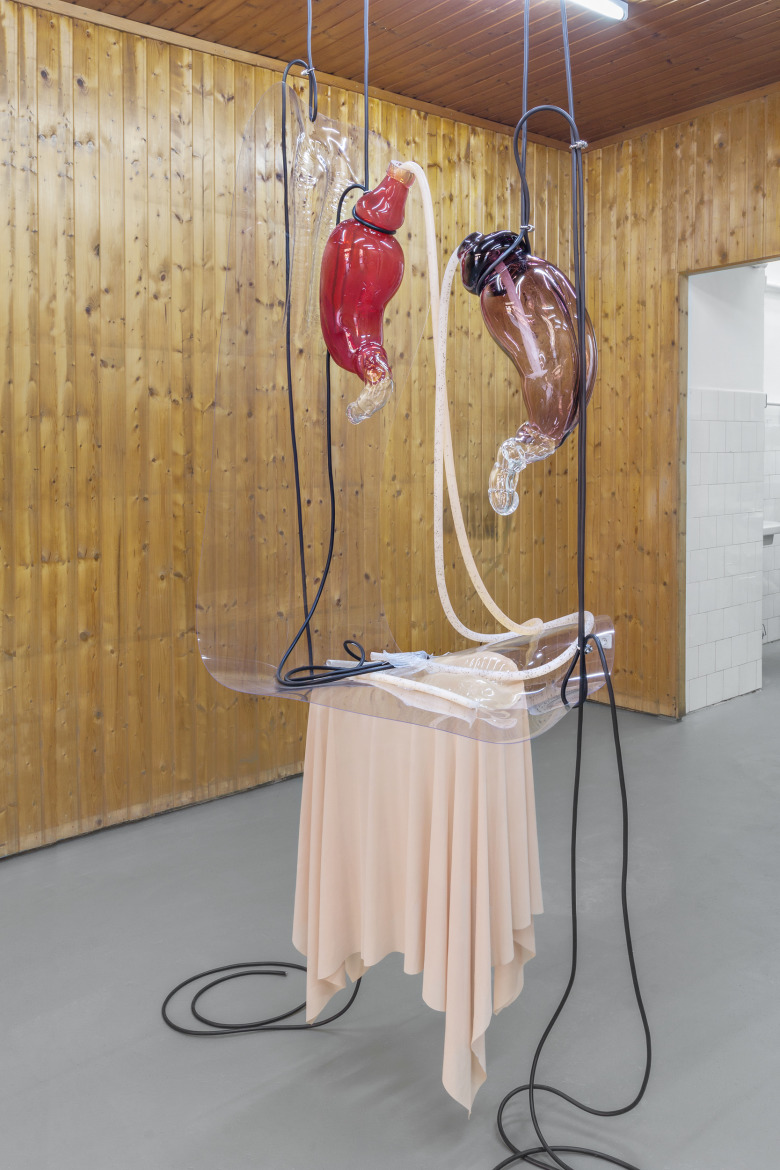
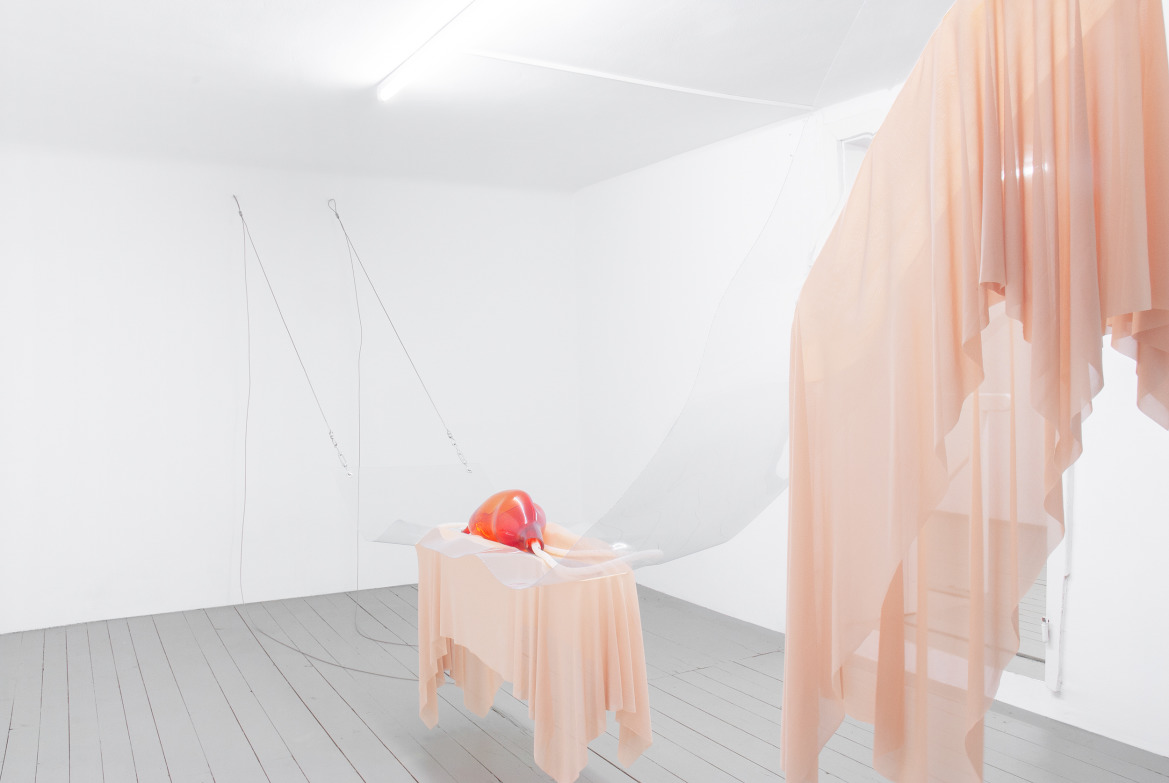
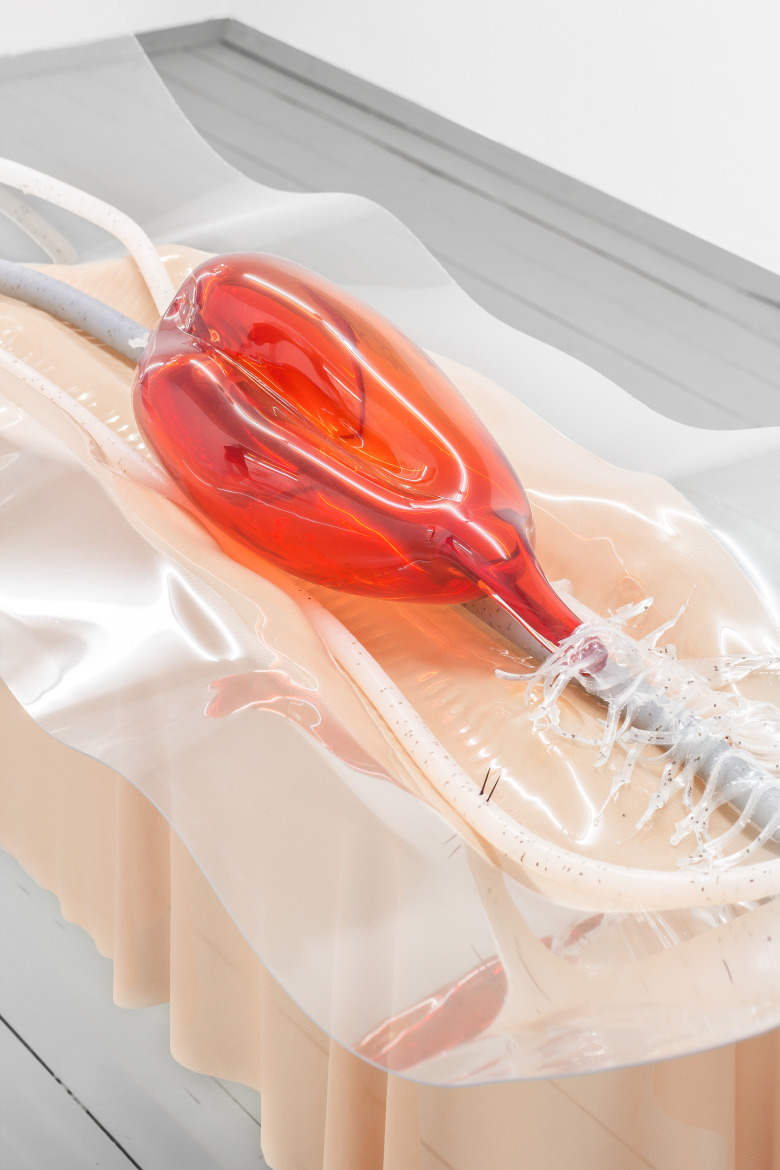
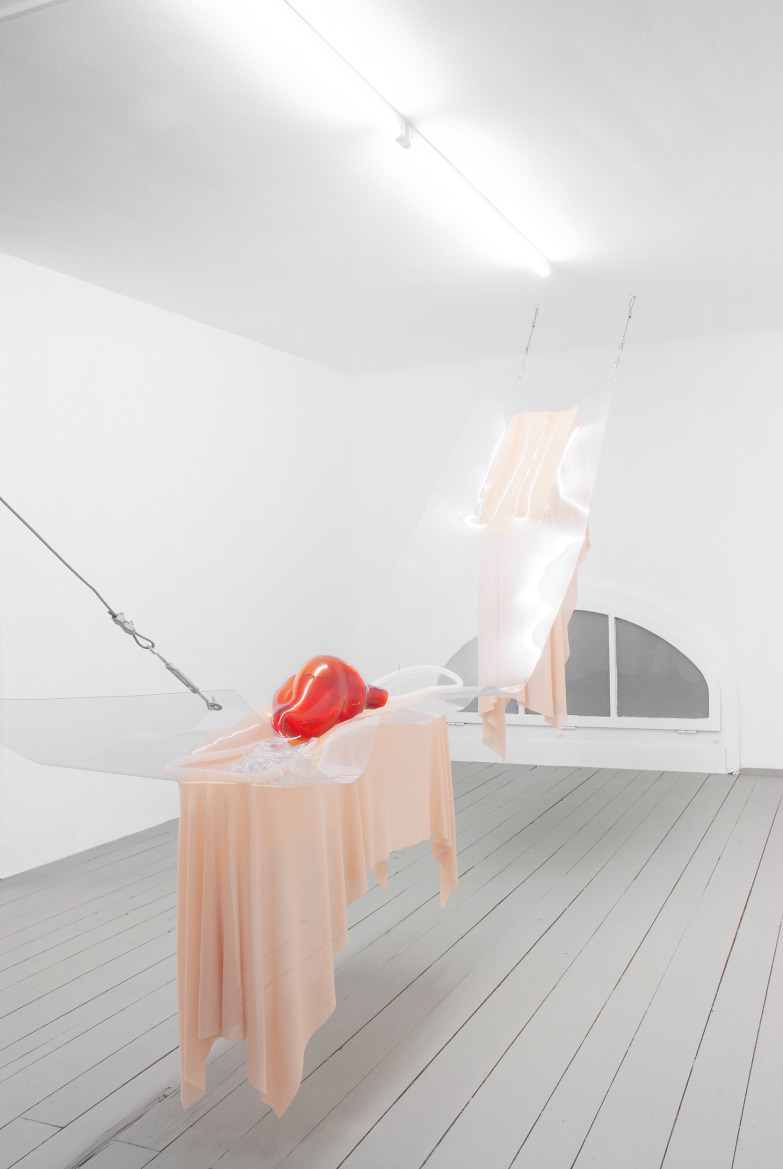
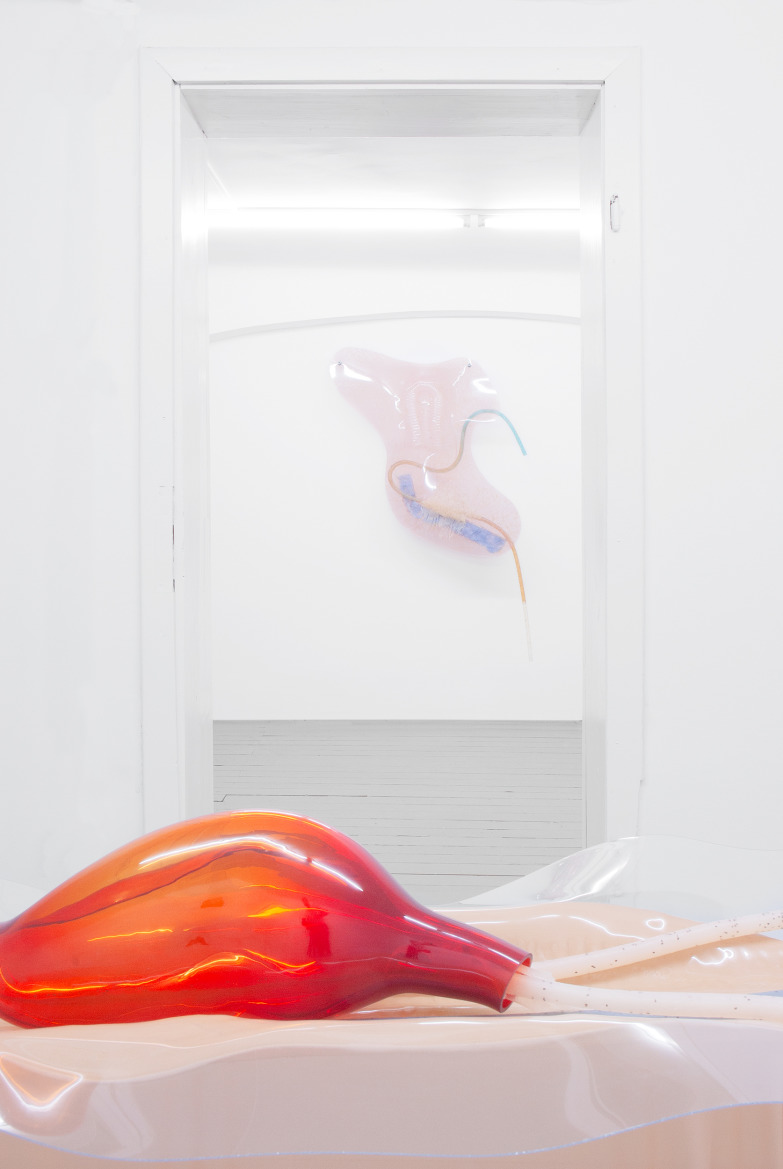
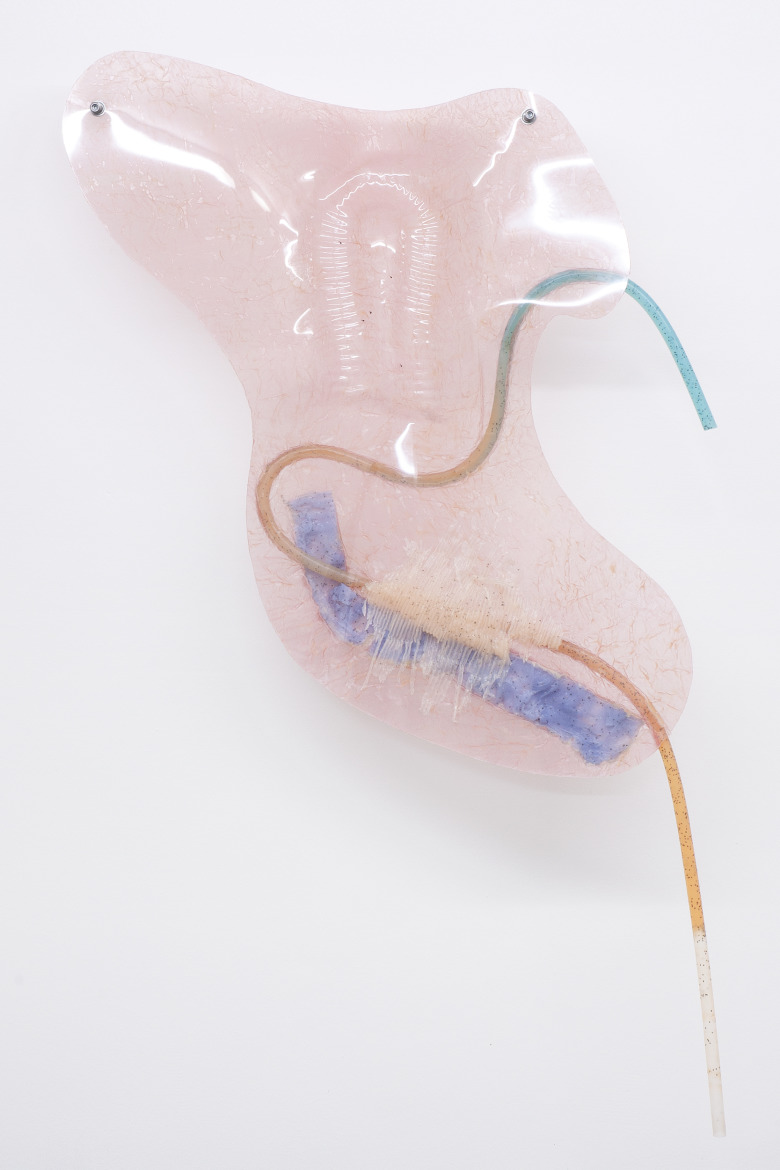
Undo opacity. What do we have here? It’s not the heart but the belly of the matter. Belly up. Belly out. Turn the problem inside out and expose it’s guts. To see the thing exposed – the belly of the beast… Crystalline gall. Artist duo Pakui Hardware help us edge towards a new choreography of care.

Pakui Hardware are concerned with the vulnerability of the horizon. Their work collapses the difference between human and non-human actors through installations of ‘hybrid ecologies’ that confuse any immediate impulse as to where loyalty or affinity might lie. Their compositions, amorphous, organic-industrial forms, examine the role that technology, economy and materiality have in shaping each other. Inspired by ‘case-studies of tensions’ including High Frequency Trading, automated futures and the idea of ‘Second Nature’ (biological futures, synthetic biology), Pakui Hardware takes cultures – and by extension culture – off the assembly line to check in – how is everybody feeling? The duo’s palliative approach softens the industrial hardware and along with it our own feedback response to their bill of health. Under the roof, things are looking a bit fragile. New alliances formed through a familiar vulnerability. Must care better.

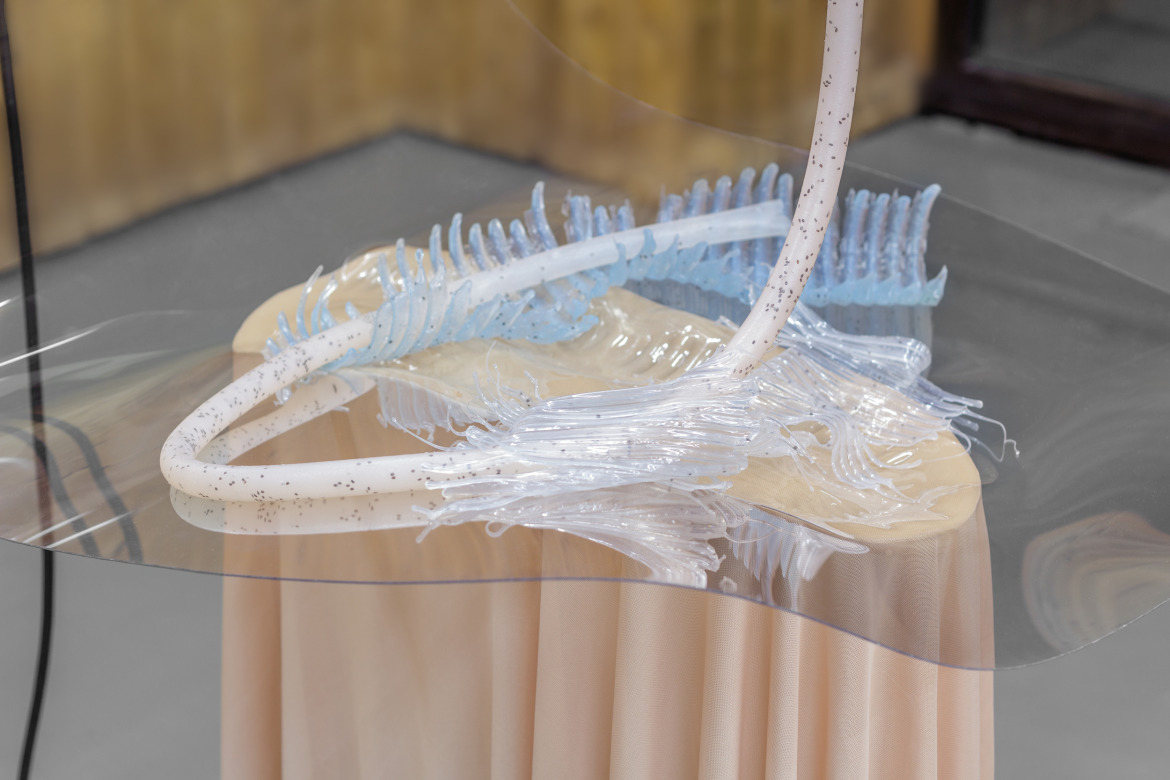
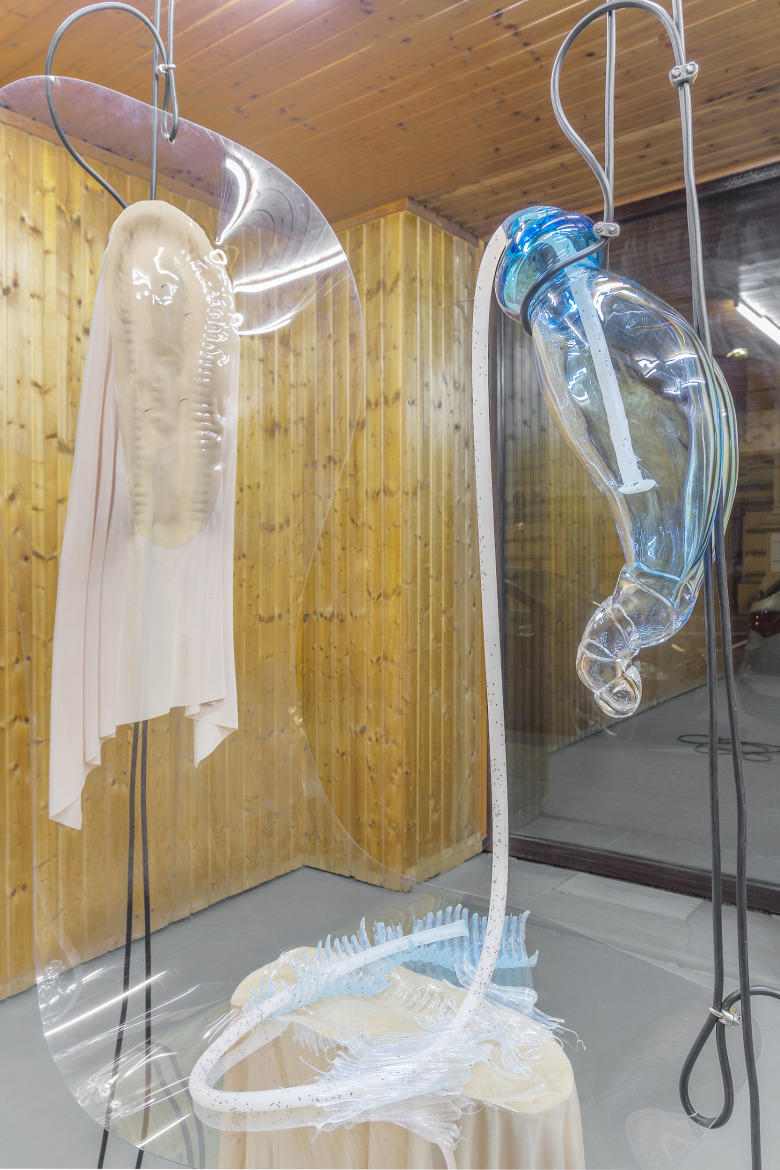
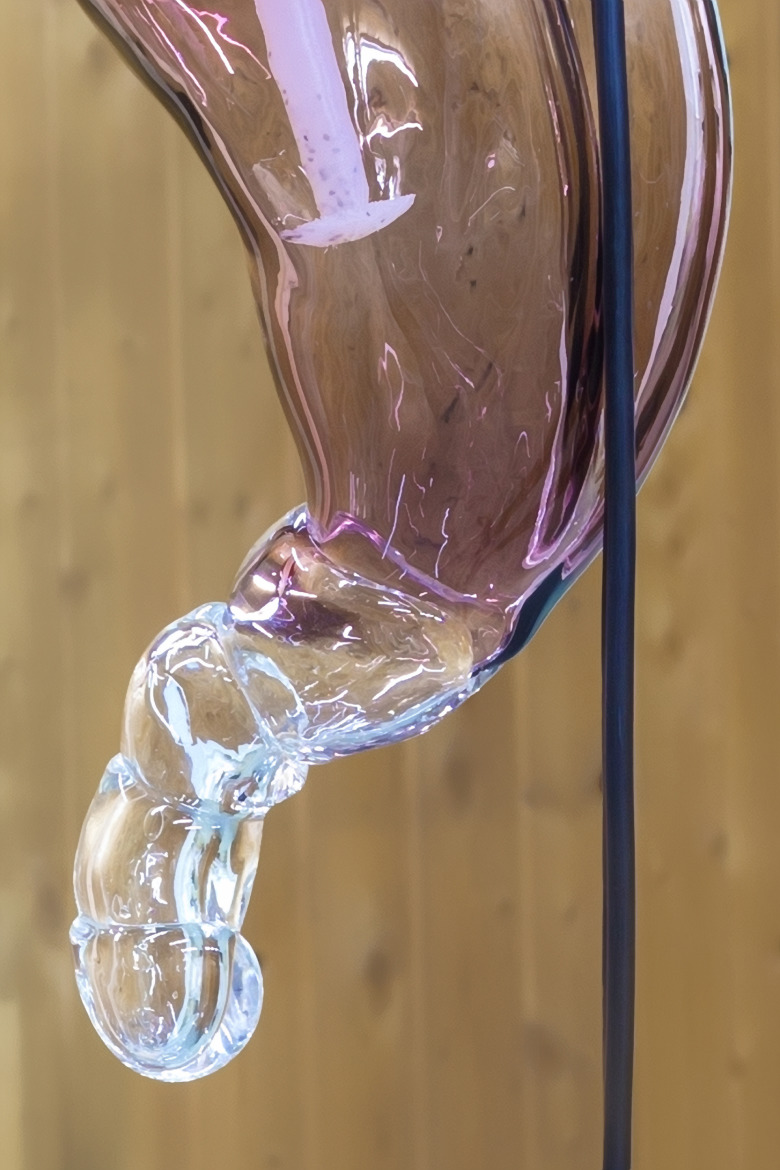
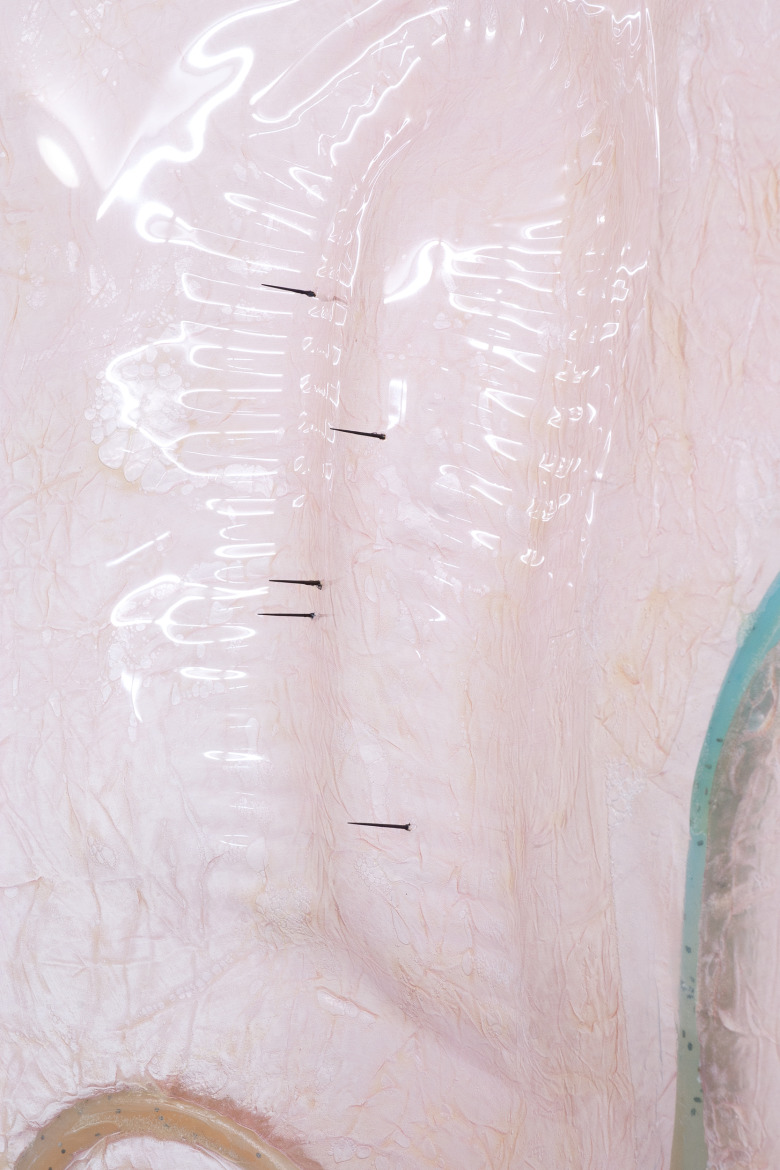
Pakui Hardware present a new configuration that zones in on the ‘metabolic rift’ (Mckenzie Wark). This is the crisis point of irreversible ecological imbalance, the era of the Anthropocene in which we now live. Working through the metaphor of metabolism, the duo speak from the heart – or rather the belly of all, itself a grossly augmented system, engineered for maximum output, but fatally out of sync. Take it all in. Consumption, extraction. Consumption, extraction. Metabolic process amped to the max. Cables sluice inside wet, fresh extractions on support. A sacrificial victim of the gastric economy. The organism lays exposed. Glass, copper pipes, heat-treated PVC film, latex, saliva and chia seeds. Silicon guts. Interconnected parts lace through the space in an install hung from the rafters, sleek droop system. Eyes slip down rubber tubes and curl around glacier-rounds. Molecular red forms crystallize in thermodynamic moments that look like big boiled sweets. Some parts cinched round the middle like a gastric band… looks a little loose though. Someone should check on that. Stitches coming loose too on the part below, and that bit hanging like the Sword of Damocles above it all. So you breathe in a little as you pass by the formation, suck yourself up and shrink a little. Careful, or shards will be everywhere. Watch your step. Working out how to stay intact together by augmenting your flow. Something a little more symbiotic this time. It’s all in the balance.

Tamar Clarke-Brown

Pakui Hardware are Neringa Černiauskaitė and Ugnius Gelguda. The artists are based between Vilnius and Berlin. Recent and current exhibitions include The Return of Sweetness, Tenderpixel, London; Solar Bodies, Musée d’Orsay, Paris; Give up the Ghost, 13th Baltic Triennial, Contemporary Art Centre, Vilnius; Peer to Peer, Muzeum Sztuki, Lodz; Somewhere in between, Bozar, Brussels, and L’esprit Souterrain, Domaine Pommery, Reims. Upcoming institutional exhibitions include Orient, Bunkier Sztuki, Kraków; Low Form, MAXXI, the National Museum of 21st Century Arts, Rome; Bielefelder Kunstverein (solo), Bielefeld; Ideal Standard, Zeppelin Museum, Friedrichshafen, and Museum der bildenden Künste (solo), Leipzig.

Pakui Hardware have last exhibited in Vienna in 2016 at mumok, Museum of Modern Art Ludwig Foundation Vienna.
Pakui Hardware: Vanilla Eyes, mumok, 2016
 

Press:
Spiegler, Almuth: Rückkehr zur Süße, Süddeutsche Zeitung, Sept 21, 2018
Spiegler, Almuth: Galerien: Berlin zieht nach Wien, Die Presse, Sept 13, 2018
Watzl, Paula: Neuzugang unter den Wiener Galerien, Kunstmagazin Parnass, Sept 10, 2018

2012

With the exhibition entitled 2012, EXILE wants to actively focus and involve itself in the debate on the current situation of the arts in Berlin. In times of particularly drastic changes within Berlin and an increasingly confrontational debate about the importance and integration of the very artistic foundation of Berlin, EXILE wants to provide a forum in which discussion about these issues is openly encouraged.

Substantial reductions of public and private sales and funding opportunities raise questions of the role of the artist as well as the exhibition space for the identity and branding of the city itself. How is the diverse artistic community, as still existent in Berlin, affected by such developments? What effects do decreasing opportunities and growing commercial pressure have on the diversity of Berlin’s artistic demographics?

The two artists’ positions presented in this exhibition can both, in their own distinct ways, be read in relation to the idea of the exhibition and provide entry points to stimulate a dialogue about the current situation for the arts.

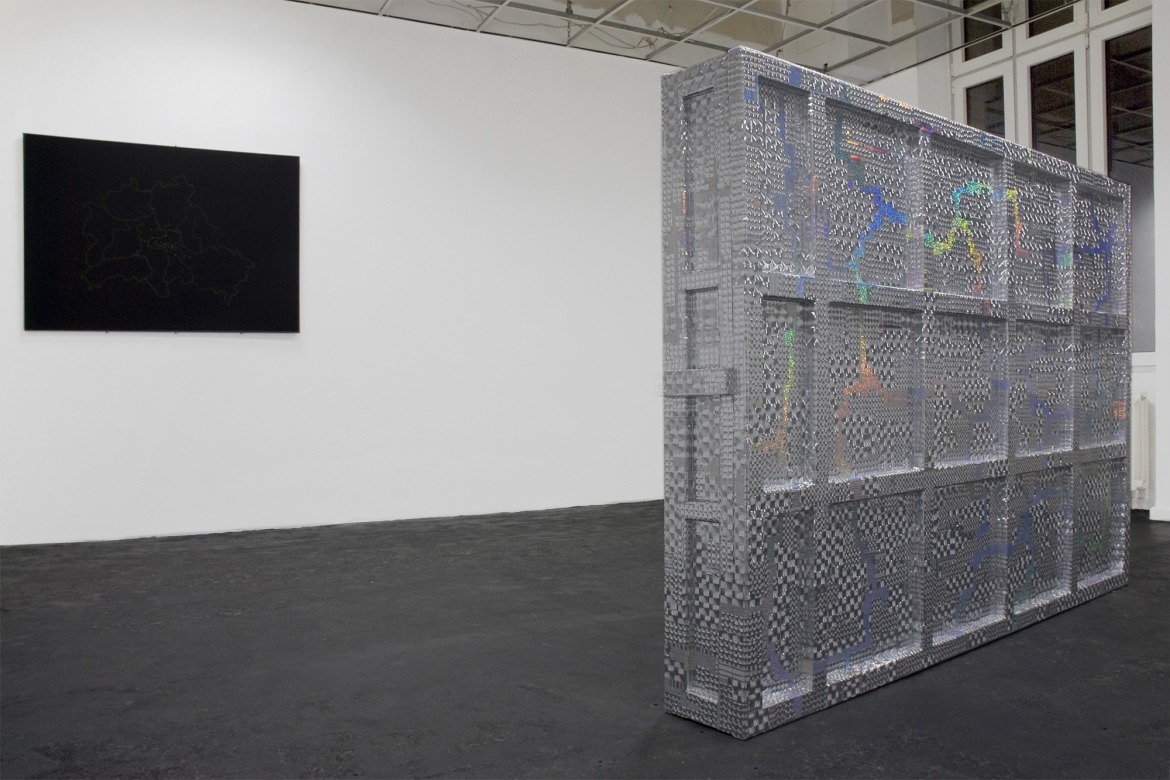
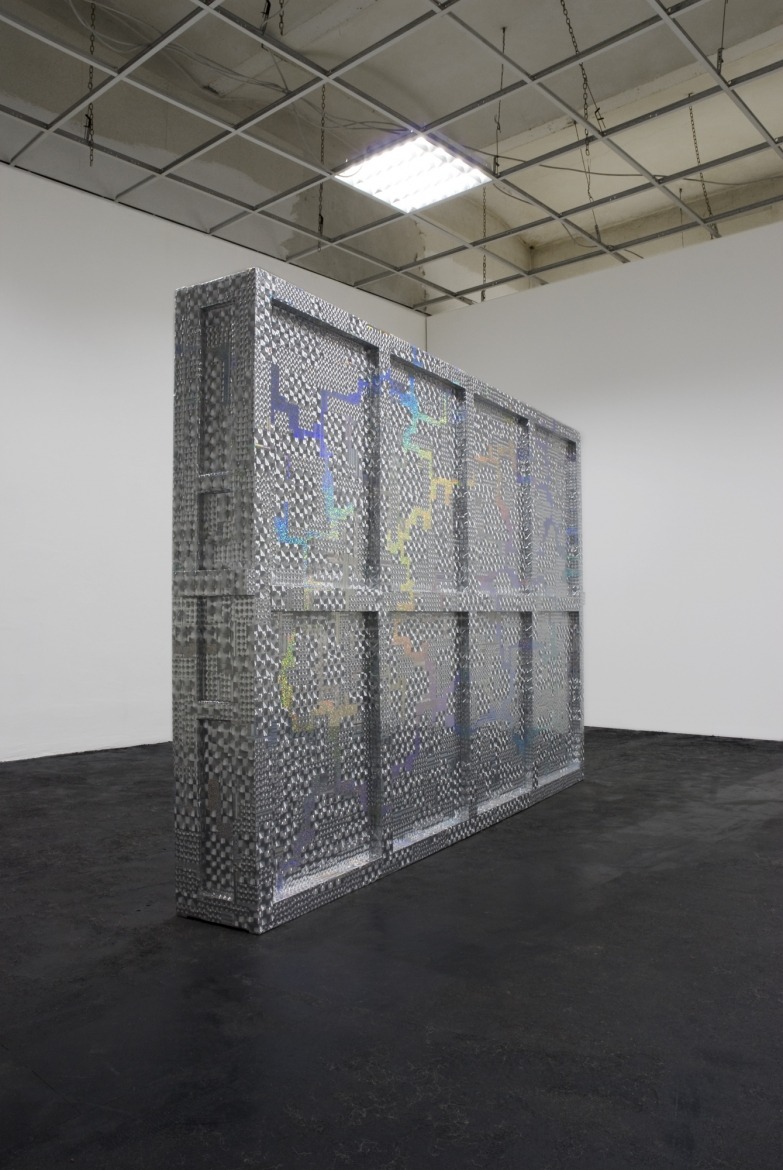
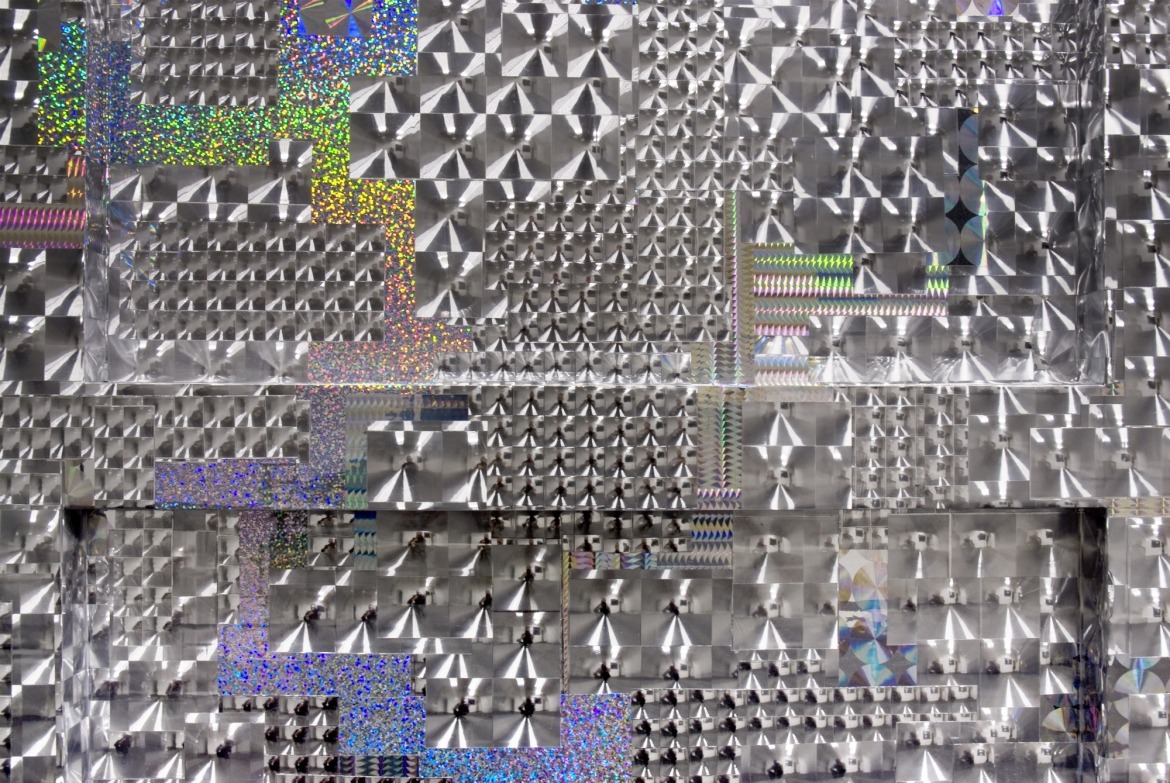
Goran Tomcic’s single work in the exhibition is based on a regular high-end art transport crate, previously used to transport and protect an anonymous painting. Tomcic completely transforms the crate’s wooden surface with multiple layers of silver holographic patterns, resulting in a shiny reflective surface that reflects the viewer back into the space itself. The function of the crate is turned inside out. One of the most mundane objects of the exclusive globalized high-end art is turned into a hollow, though shimmering, jewel. Its form becomes its content and its lack of purpose its purpose itself.

Standing by itself within the gallery space, Tomcic’s work resembles an almost religiously ethereal experience. When being confronted with the crate the associations can range from the Kaaba in Mecca to the monolith in Stanley Kubrik’s 2001. Its mundane character becomes its seduction which again becomes its own alienation; one of the most common signifiers of high-end art becomes a symbol for the deepening ruptures felt within the different parts of the creative community.

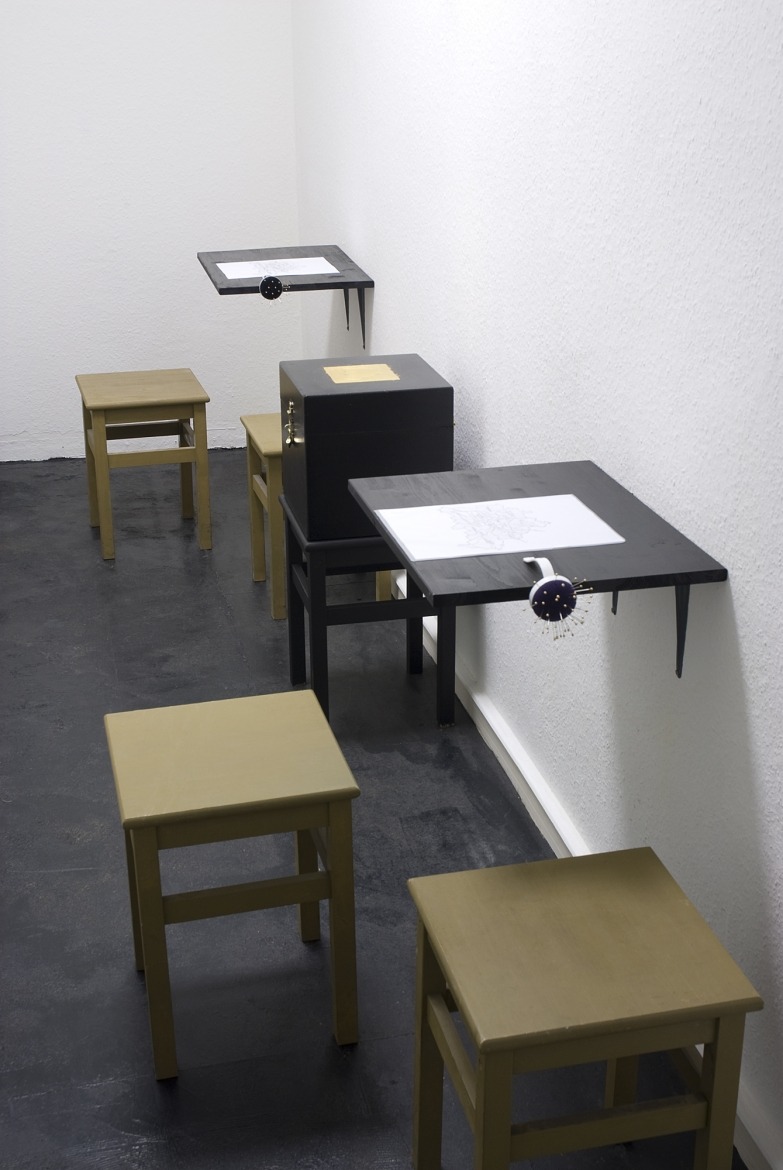
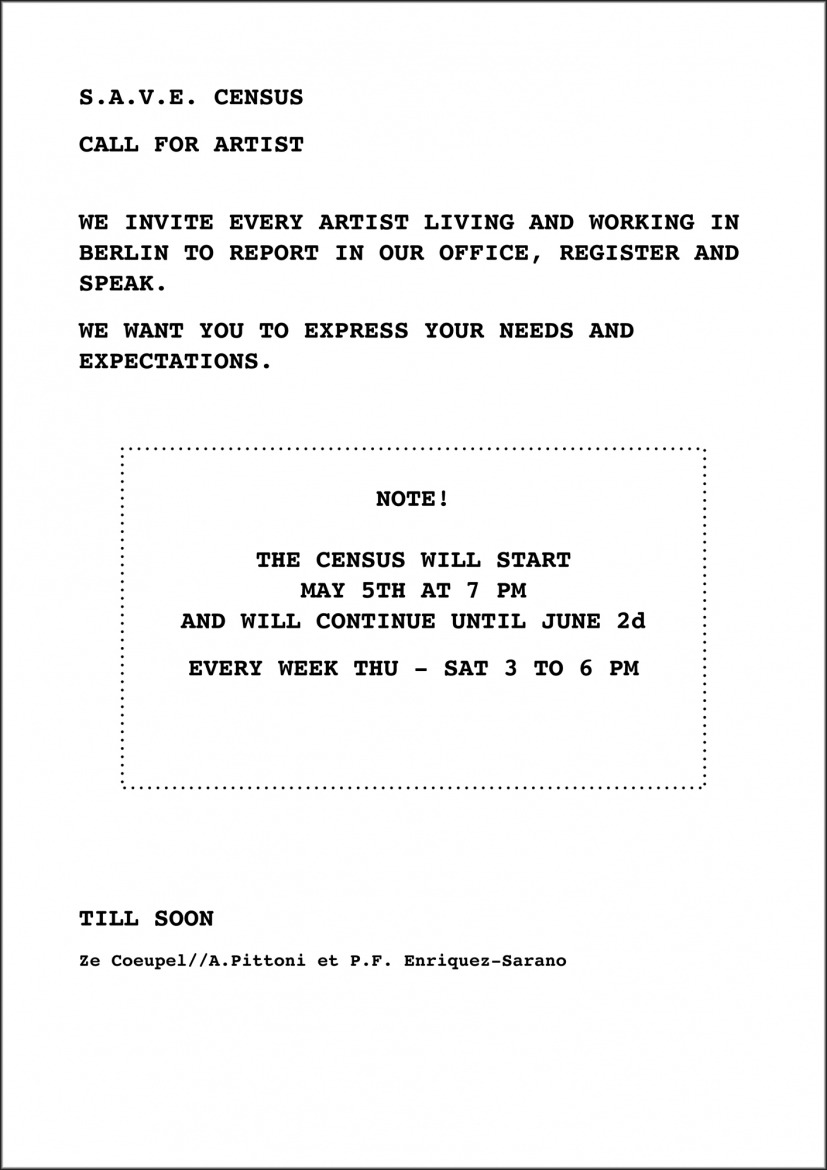
In 2009, the artists Ambra Pittoni and Paul-Flavien Enriquez-Sarano, working under the Synonym Ze Coeupel, created the performance entitled S.A.V.E.. Functioning as a self-proclaimed ‘investigation agency’, S.A.V.E. takes residence at EXILE for the duration of the exhibition 2012.

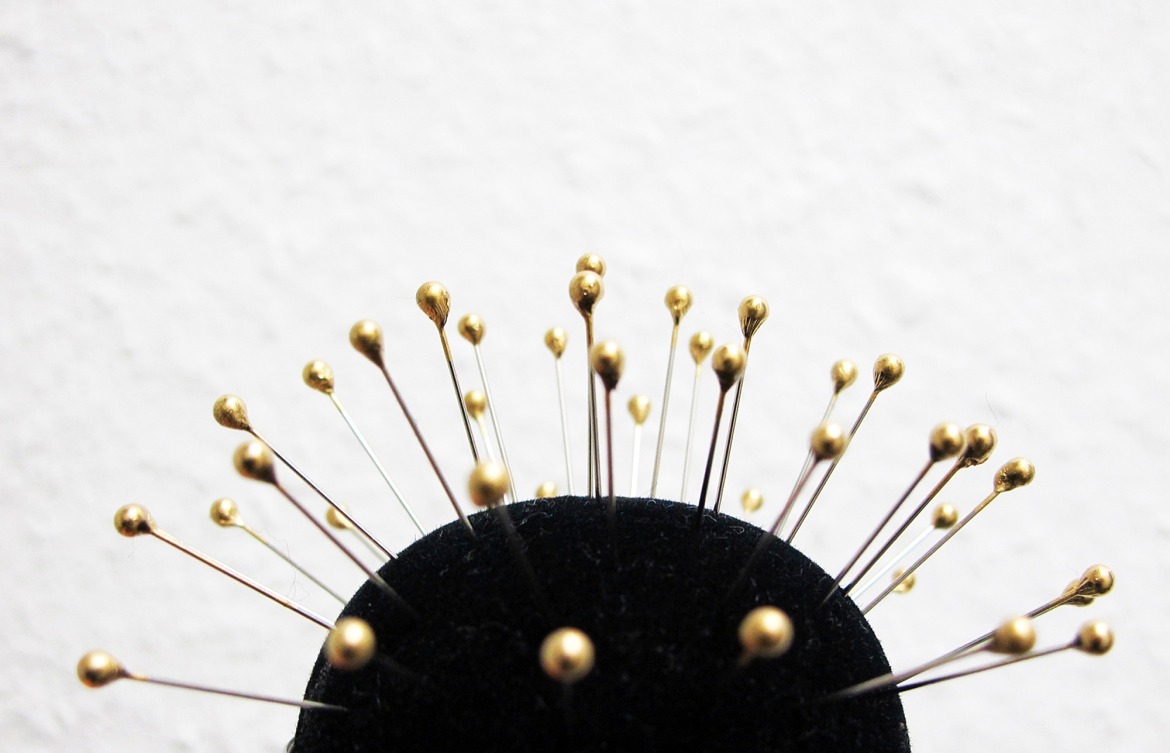
Taking place from 3 to 6 PM during gallery opening hours artists living and working in Berlin are invited to report in S.A.V.E. office inside the gallery to take part in the Census.

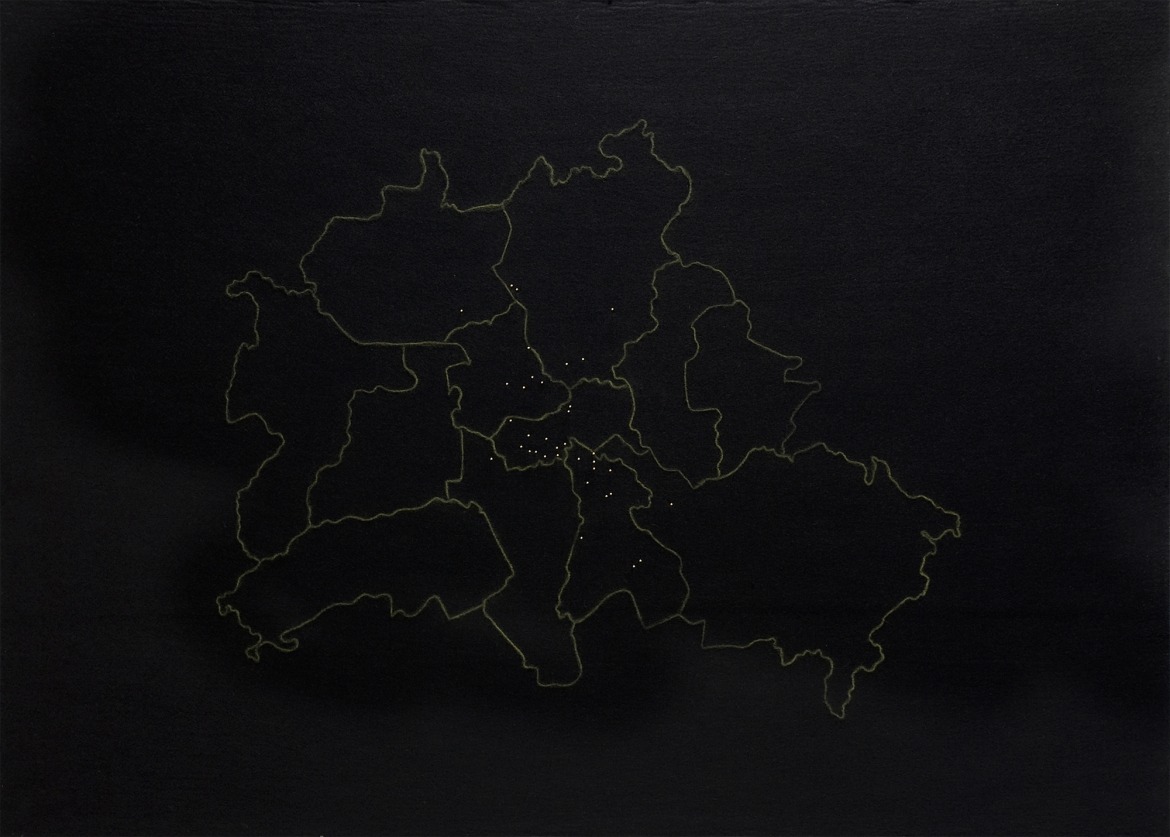
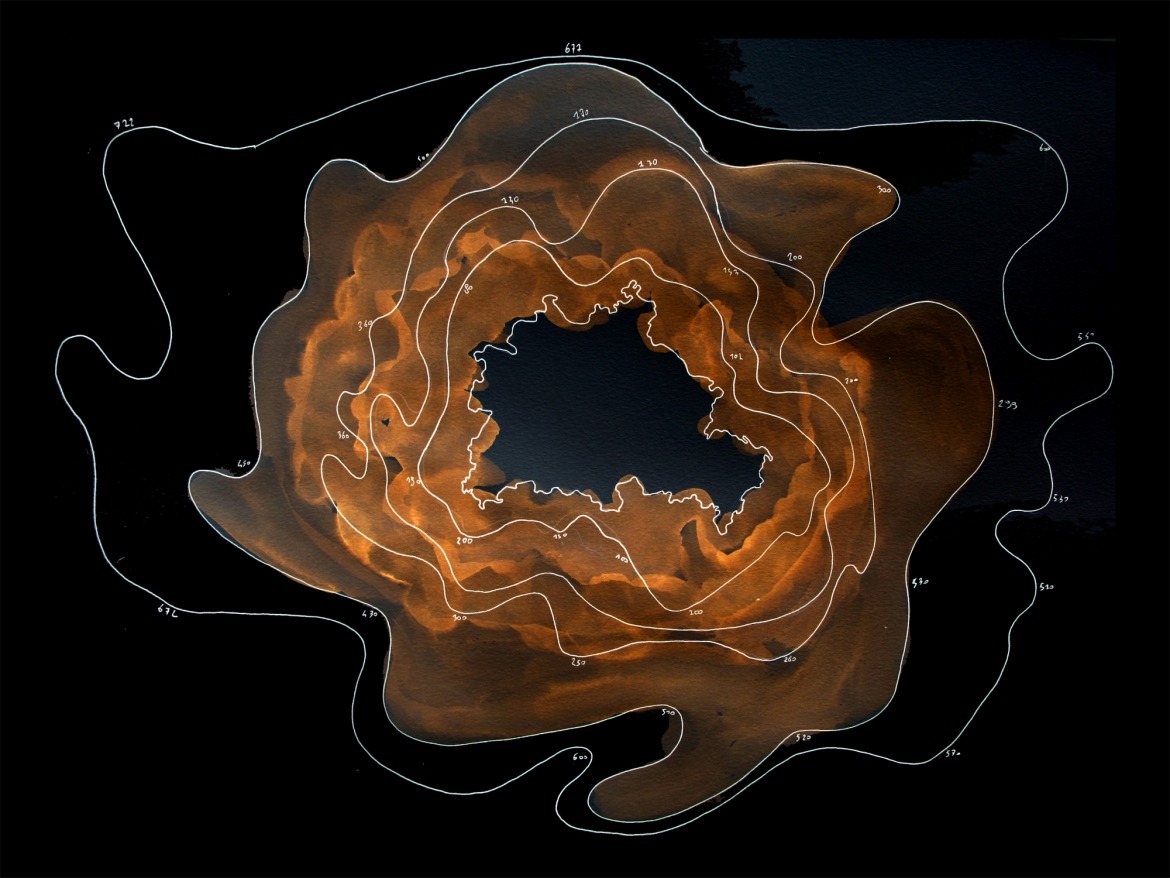
Each participant’s questionnaire helps to investigates further into the current state of the artistic community in Berlin. The collected data is turned into an accessible archive as well as into demographic mapping visuals. The results of the census will be constantly updated and visible in the S.A.V.E. office inside the gallery.

With the exhibition’s title, simultaneously apocalyptic yet mundane, EXILE wants to engage itself, as a commercially operating gallery, into the discussion and provide a platform upon which everyone is invited to participate.