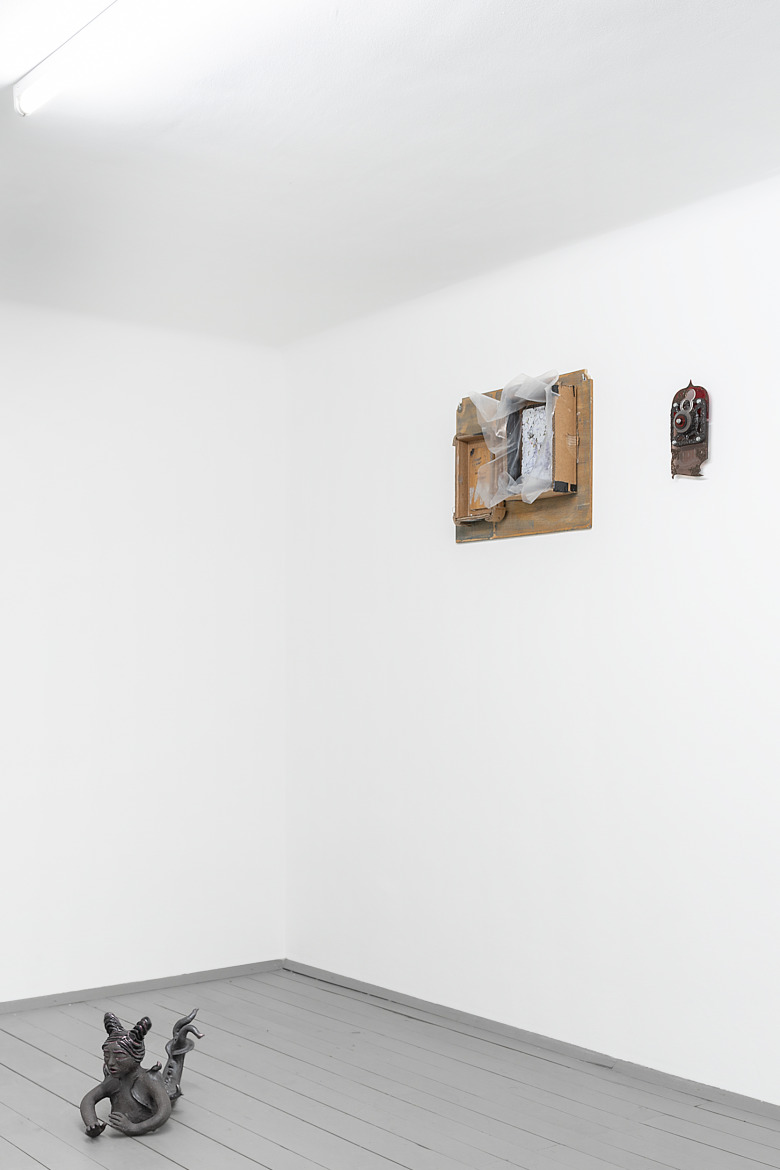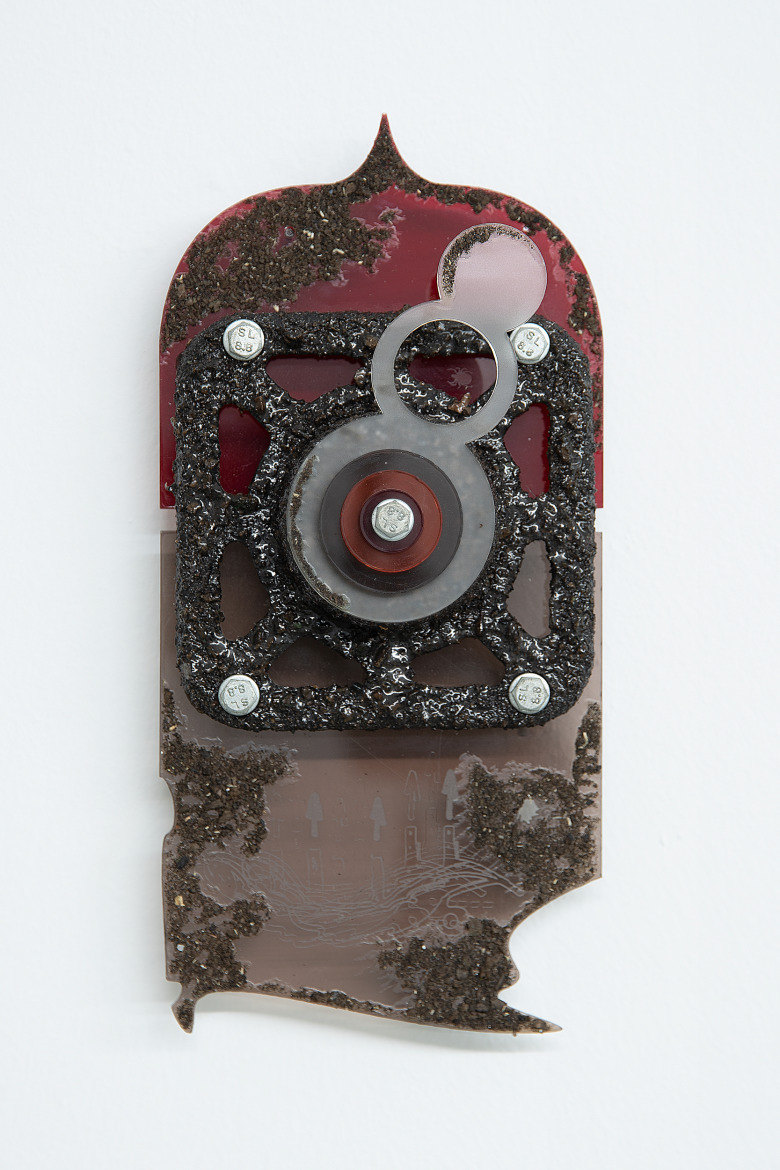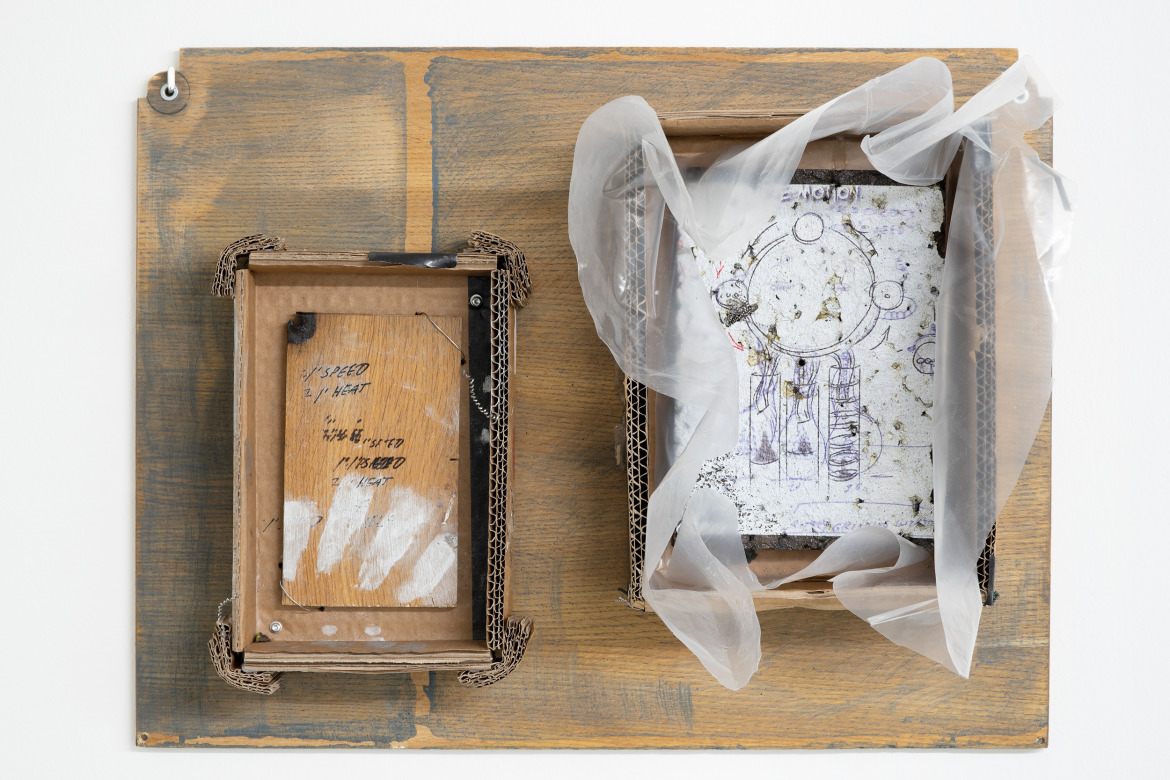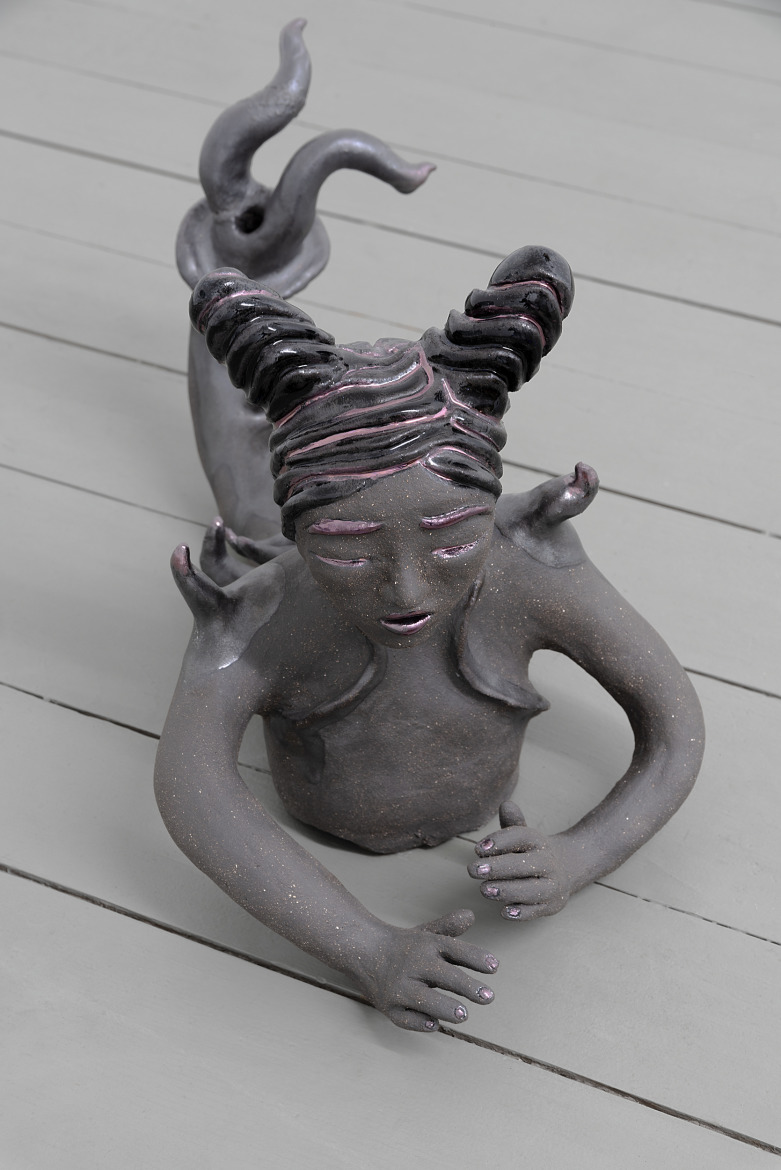

These ambiguities, redundancies, and deficiencies recall those attributed by Dr. Franz Kuhn to a certain Chinese encyclopedia called the Heavenly Emporium of Benevolent Knowledge. In its distant pages it is written that animals are divided into (a) those that belong to the emperor; (b) embalmed ones; (c) those that are trained; (d) suckling pigs; (e) mermaids; (f) fabulous ones; (g) stray dogs; (h) those that are included in this classification; (i) those that tremble as if they were mad; (j) innumerable ones; (k) those drawn with a very fine camel’s-hair brush; (1) etcetera; (m) those that have just broken the flower vase; (n) those that at a distance resemble flies. Jorge Luis Borges: John Wilkins’ Analytical Language(a)
Organised in lists, departments, compartments, definitions, dictionaries, meanings, boxes, crates, files, folders, encyclopaedias, and memory drives lies everything you’ve ever described, known, felt, and seen. Borges’ nod towards the tautological absurdity of analytical philosophy can be summarised by the serious joke of Wittgenstein’s The limits of my language mean the limits of my world.(b) In this vein, one recognises that language is both access to the world as well as a prison.
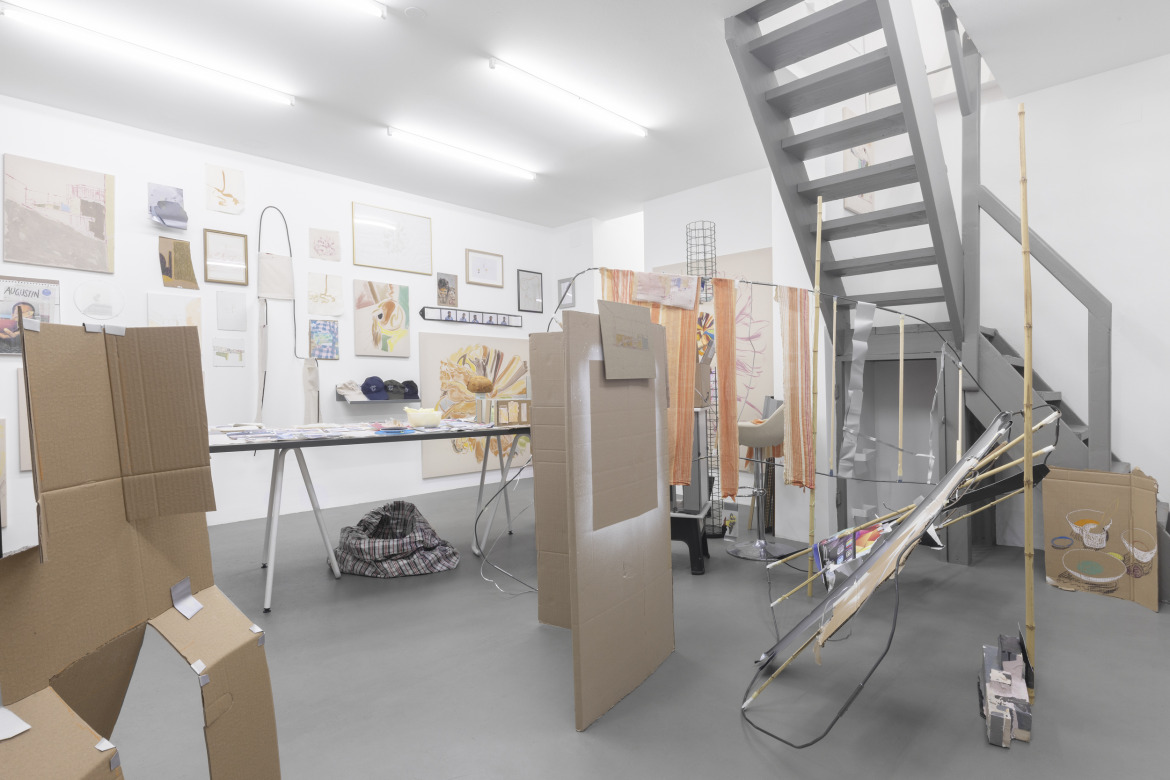
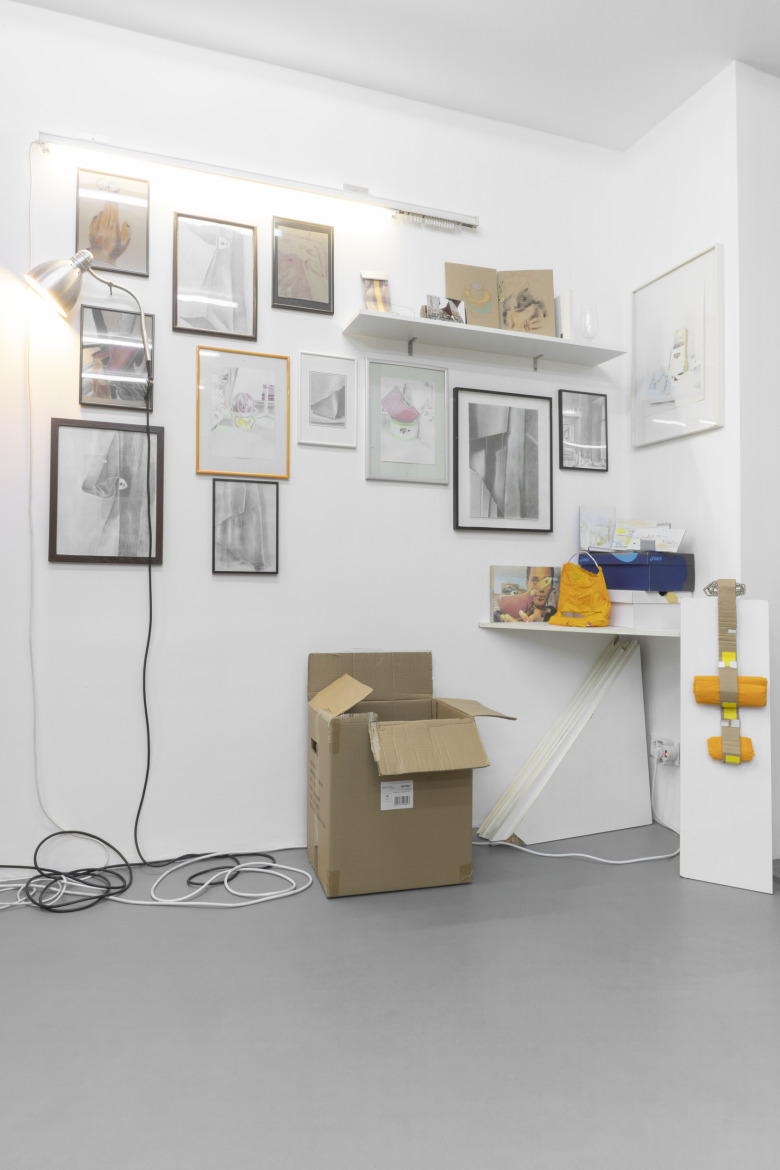
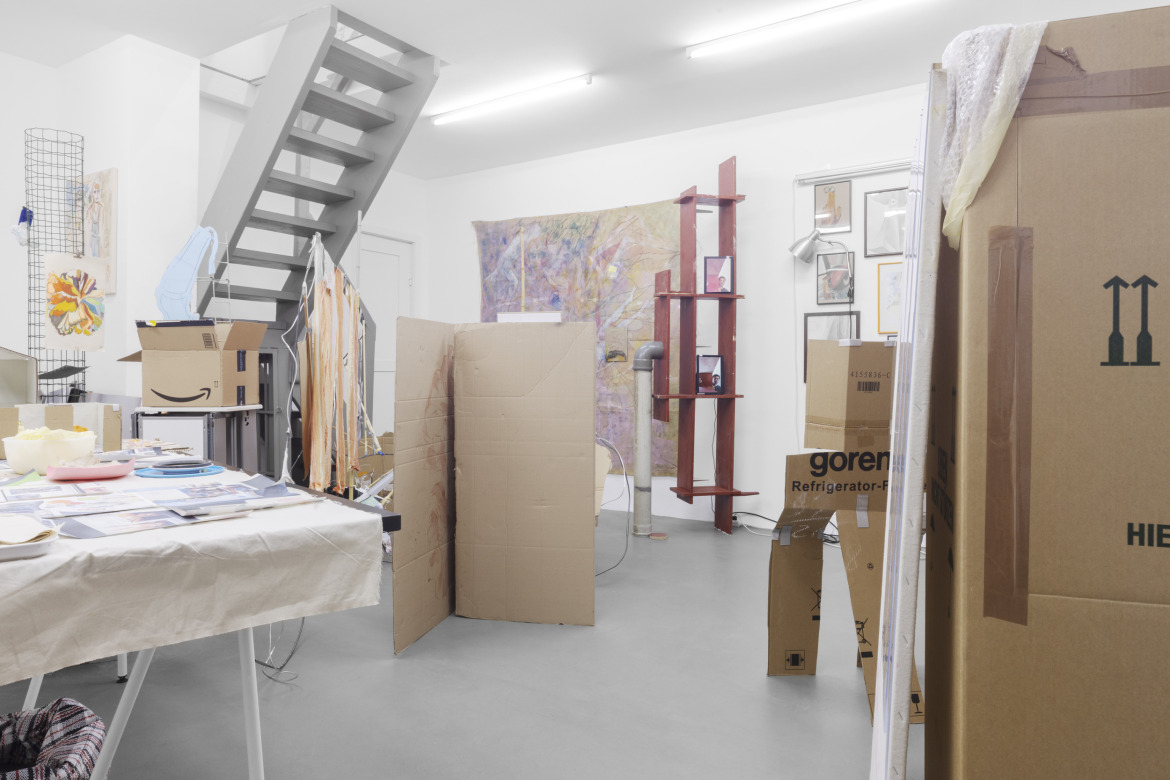
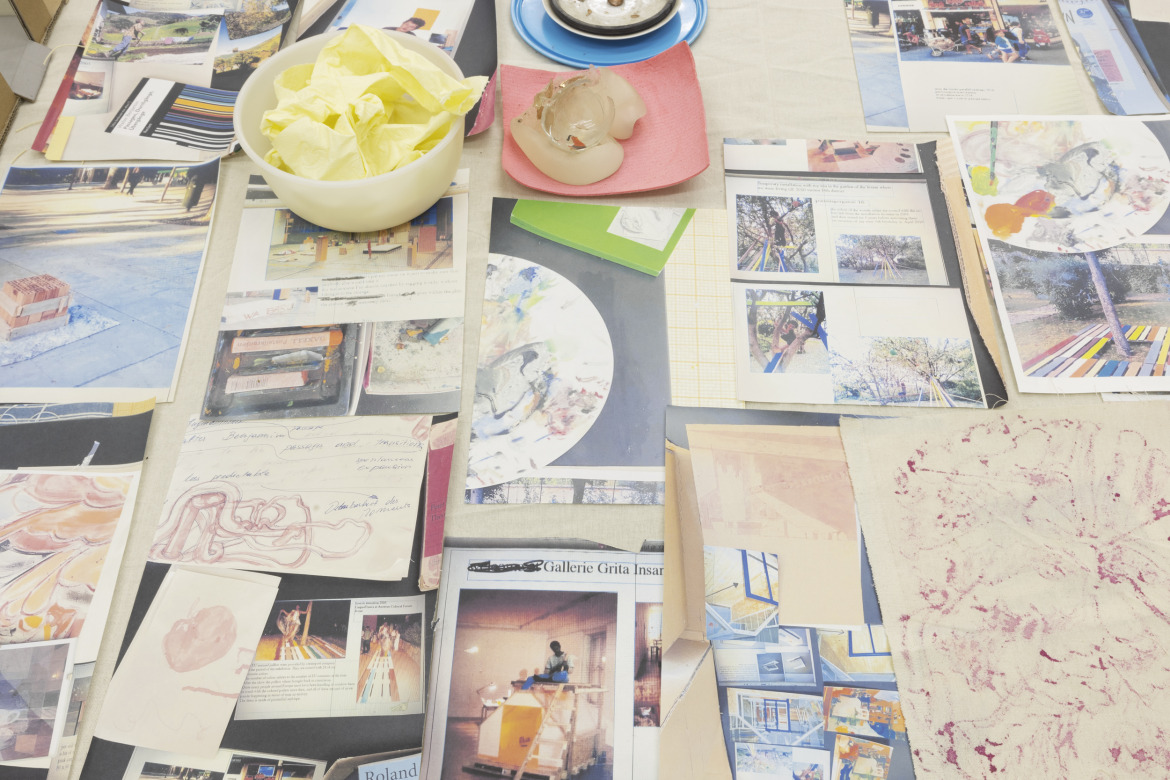
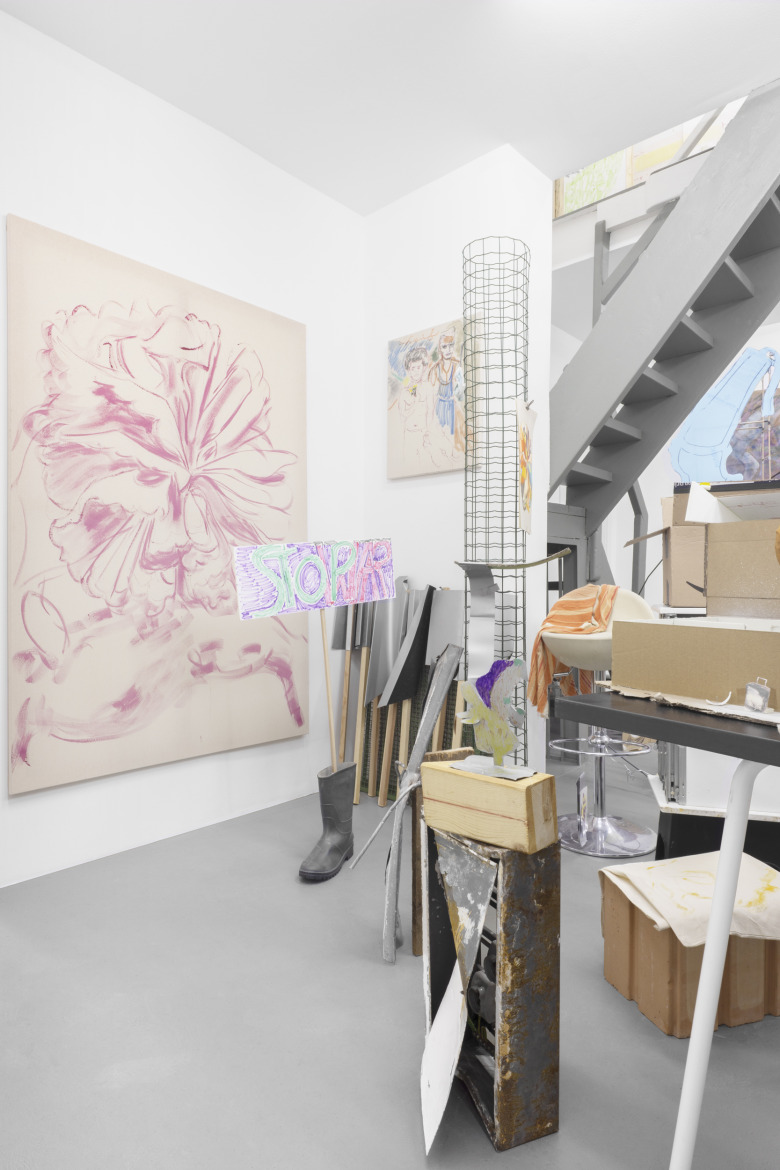
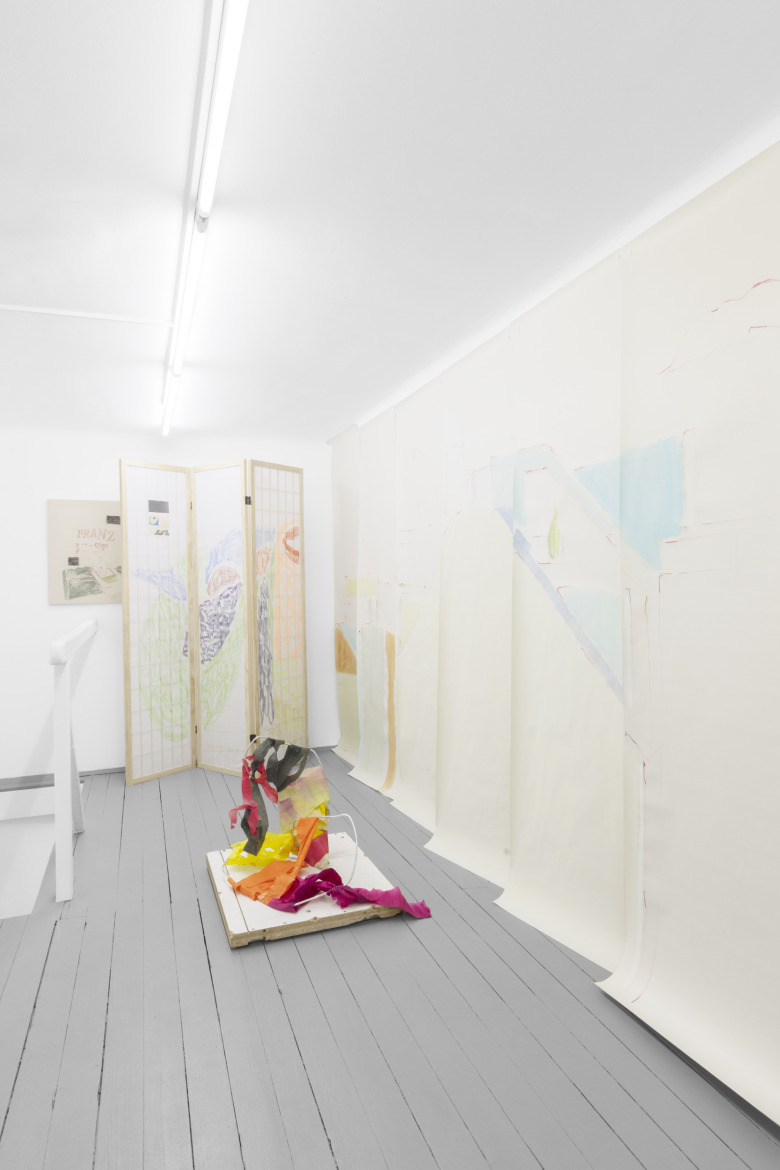
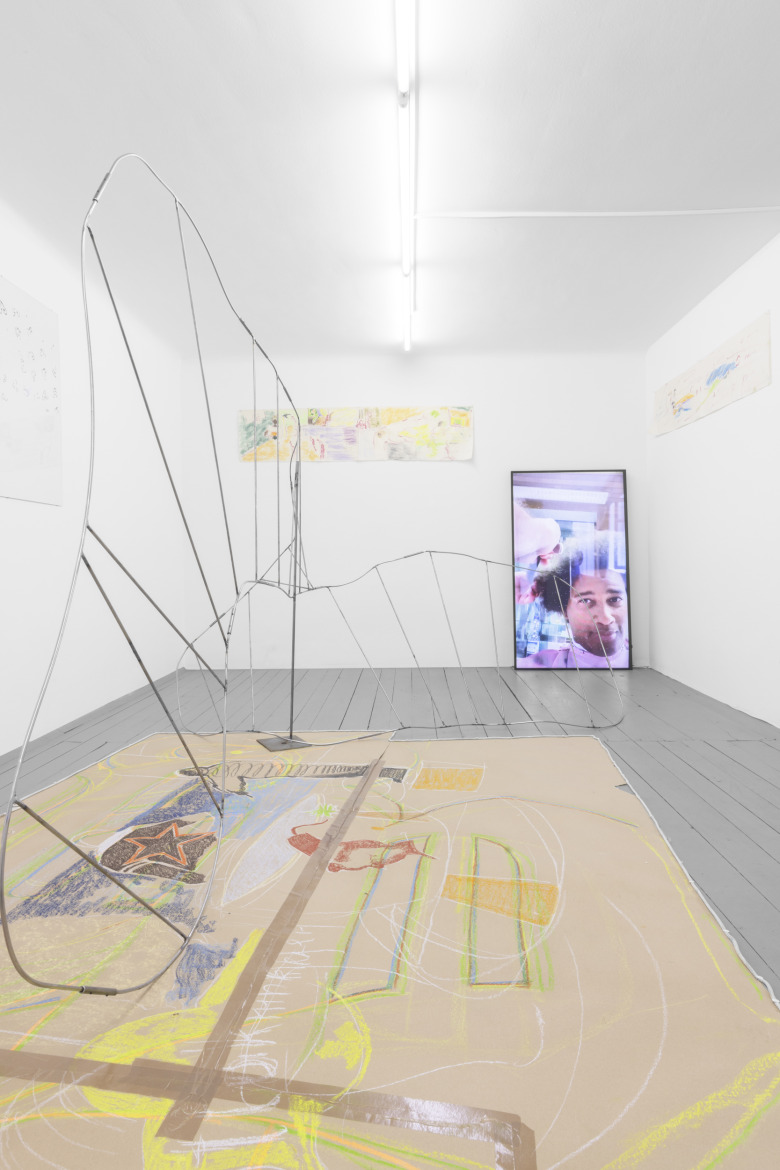
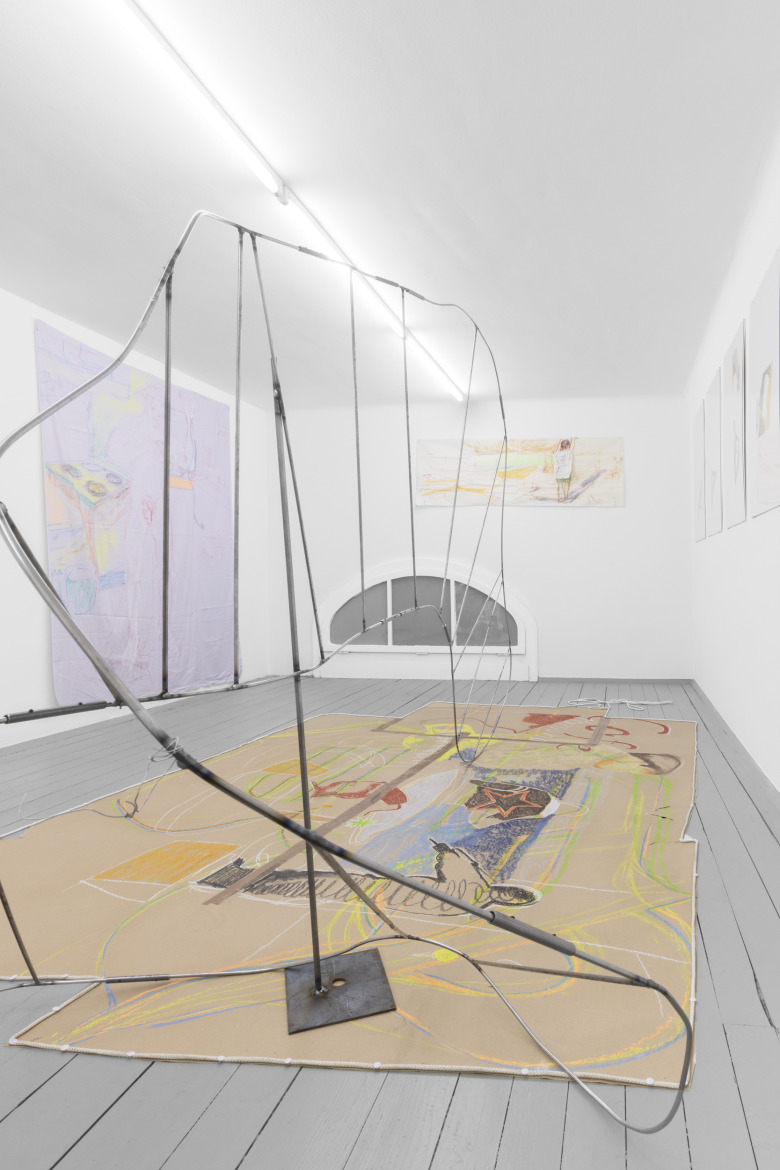
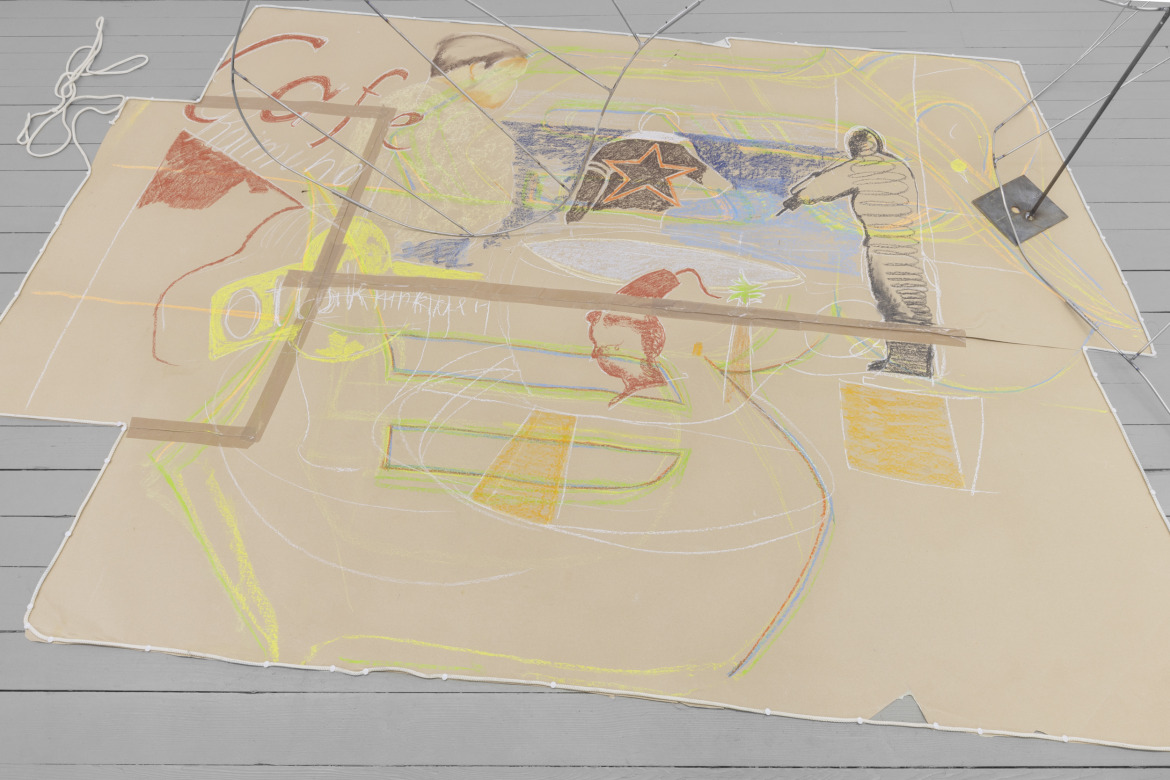
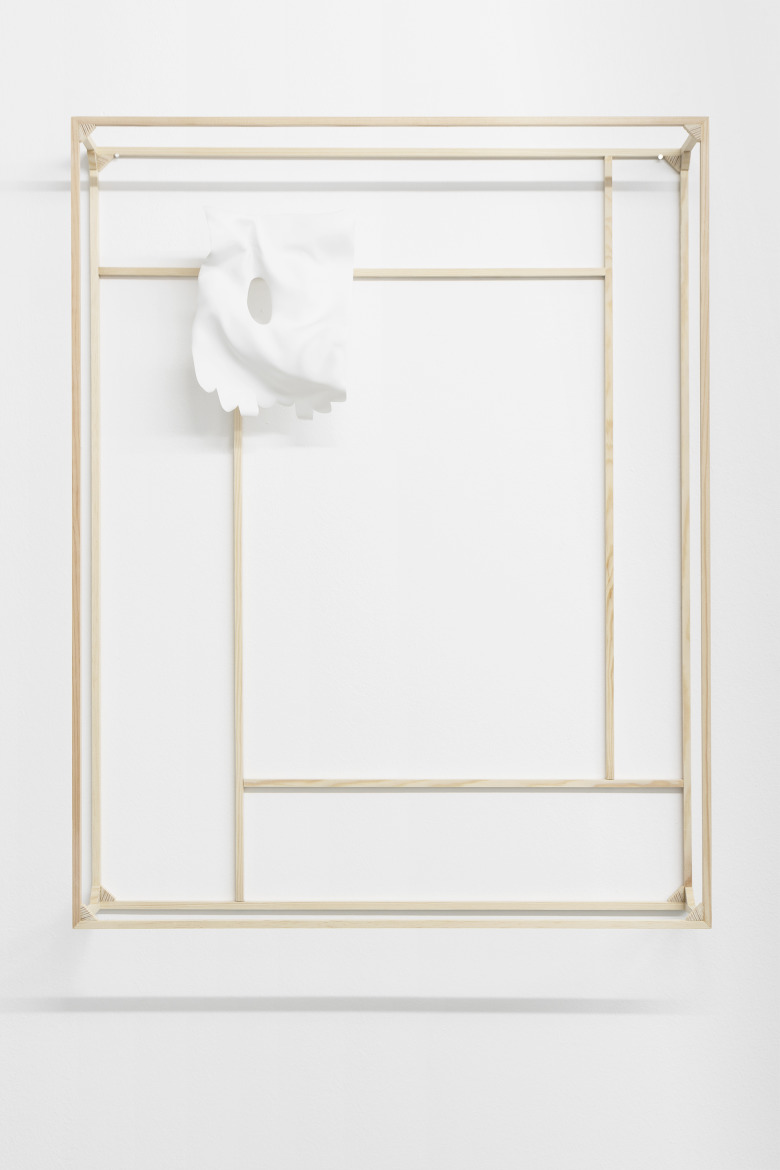
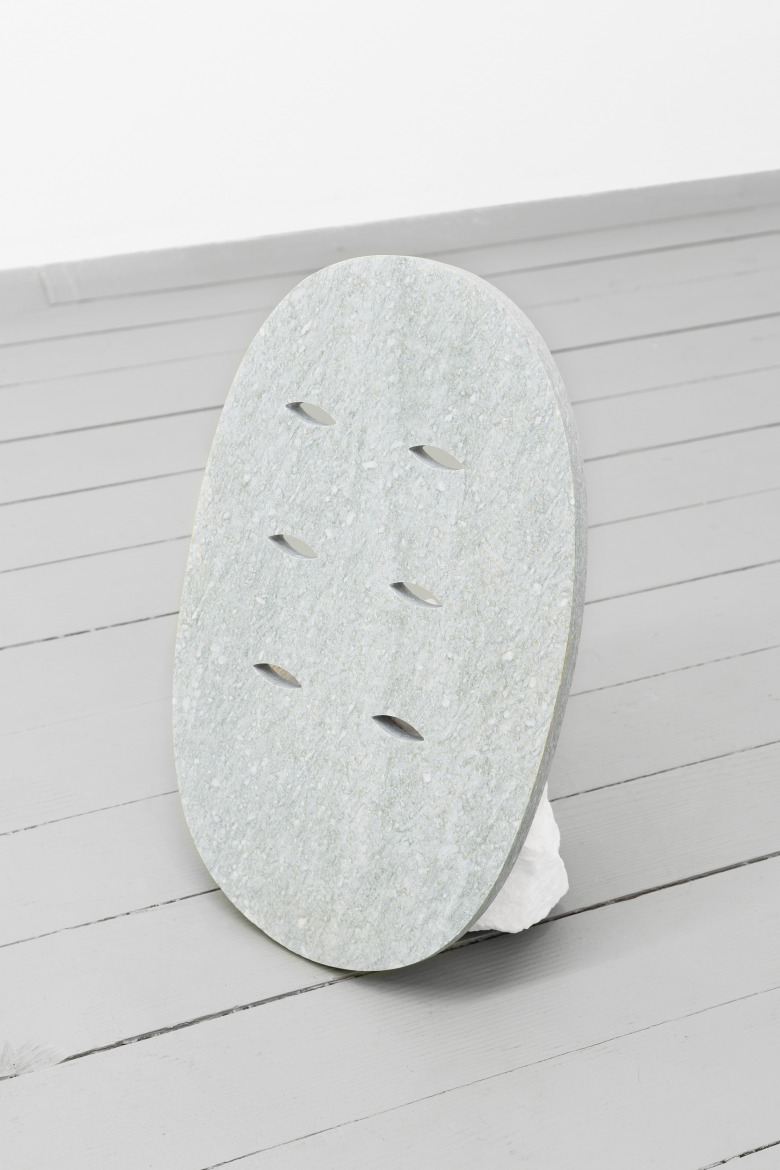
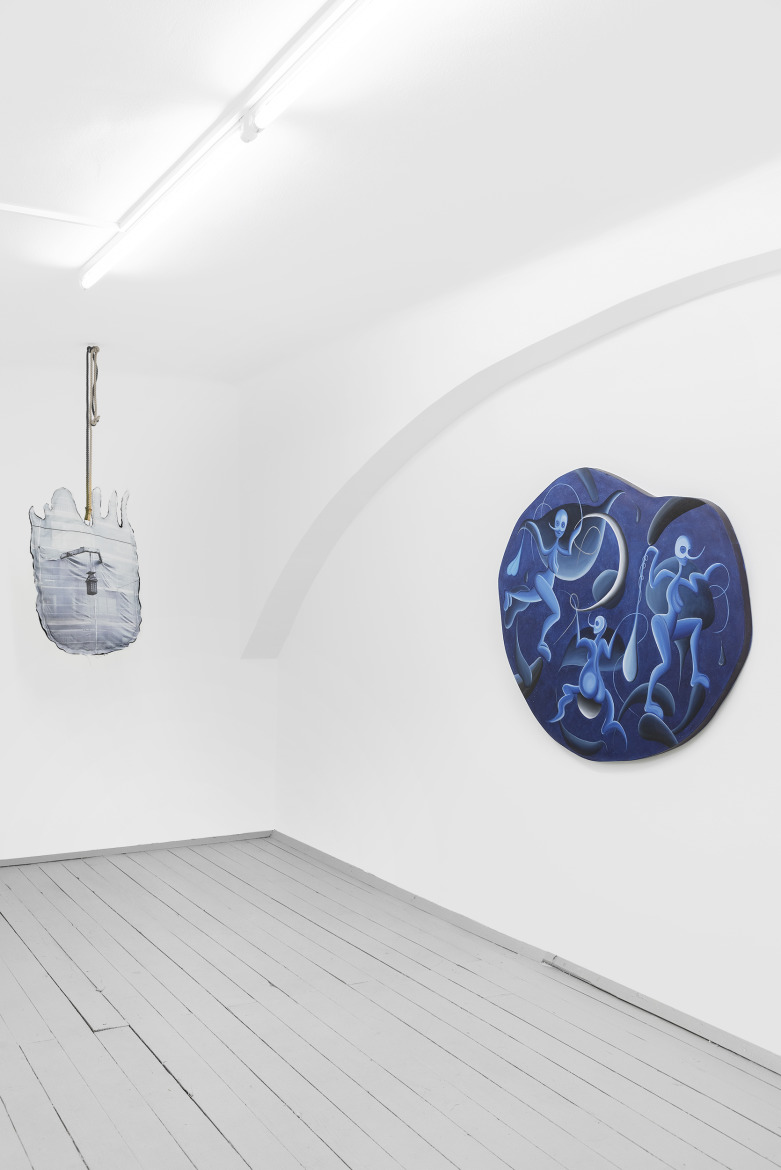
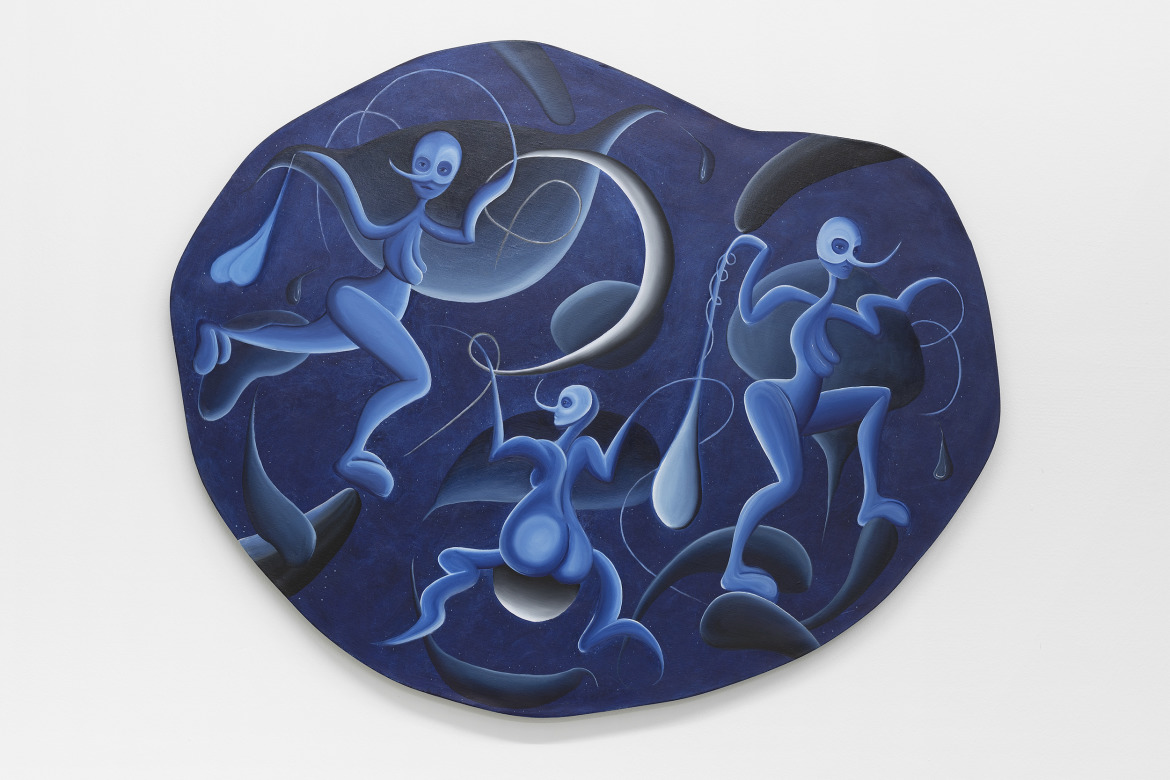
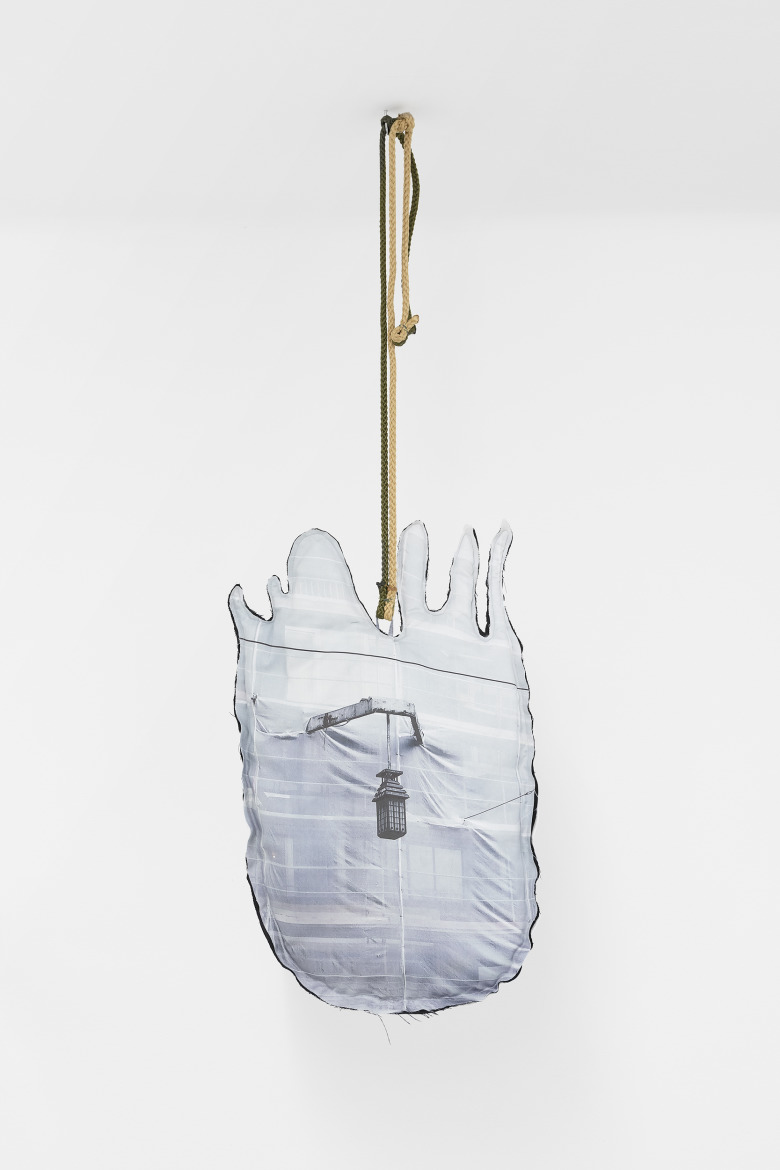
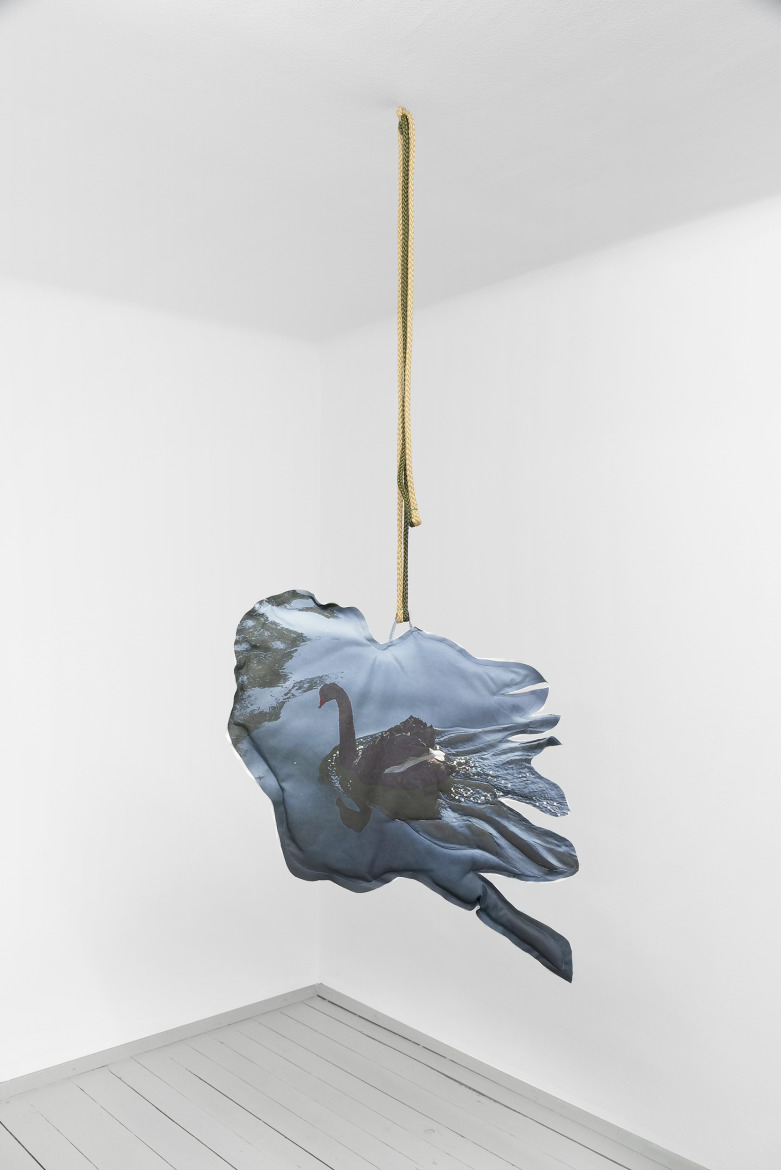
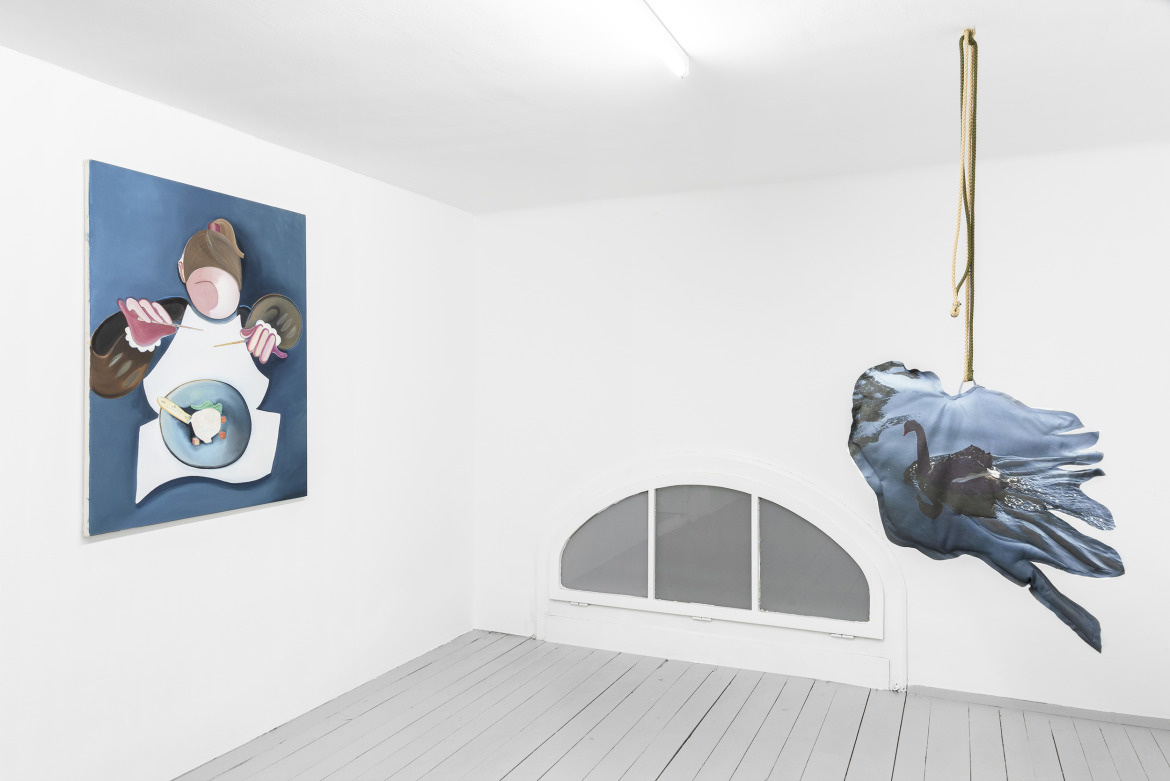
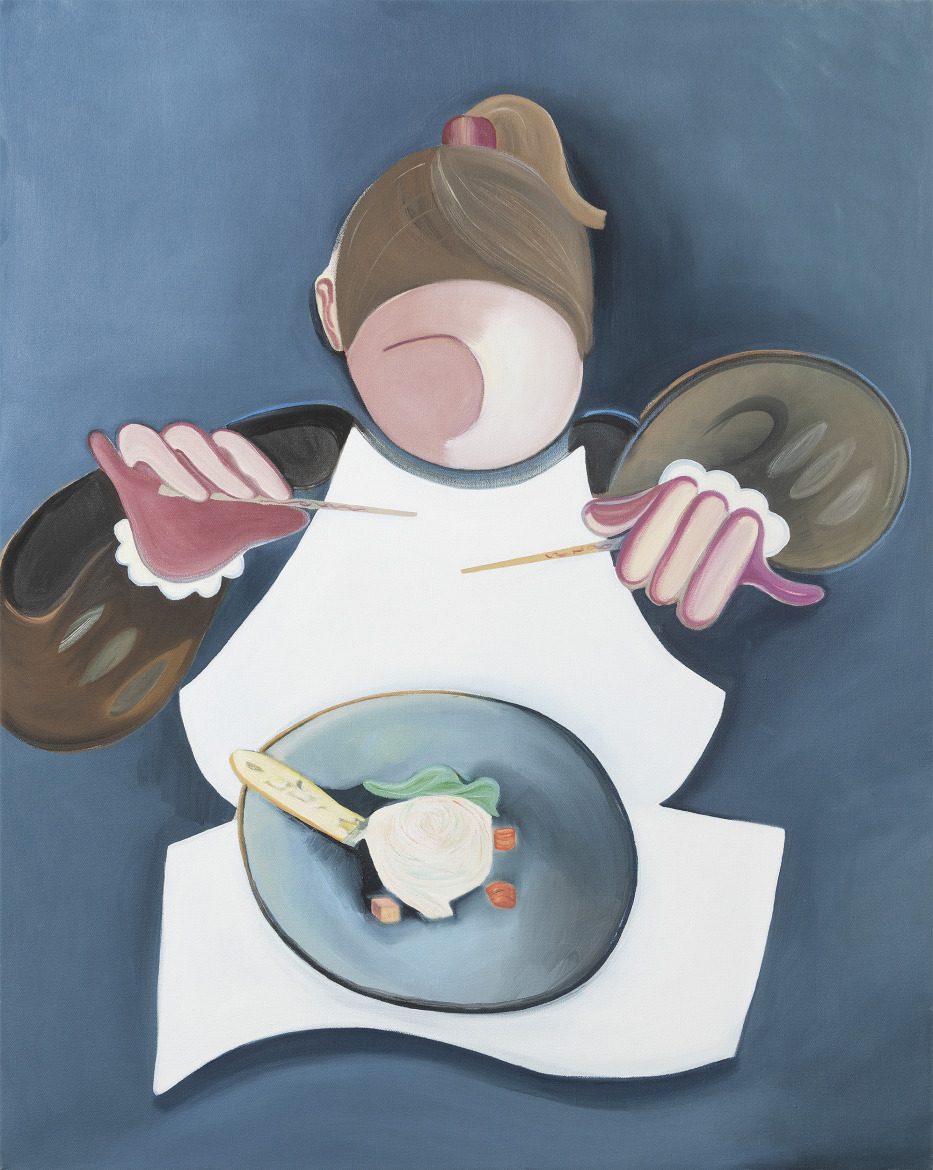
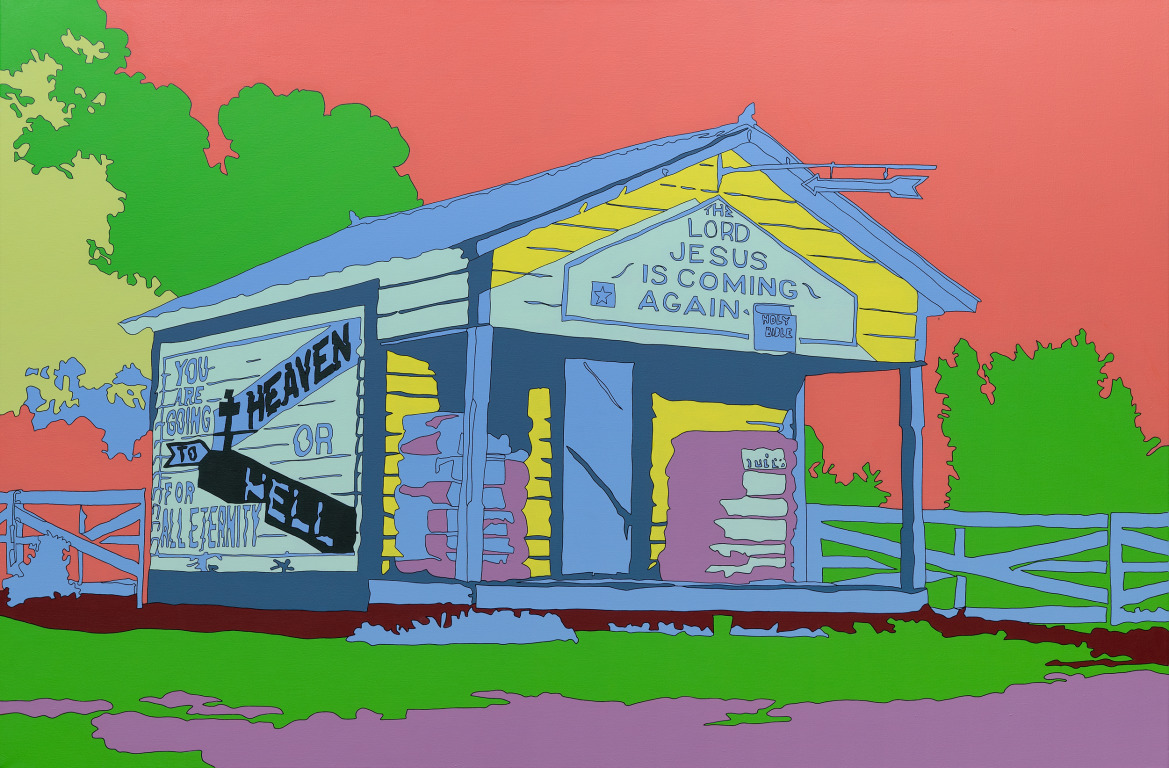
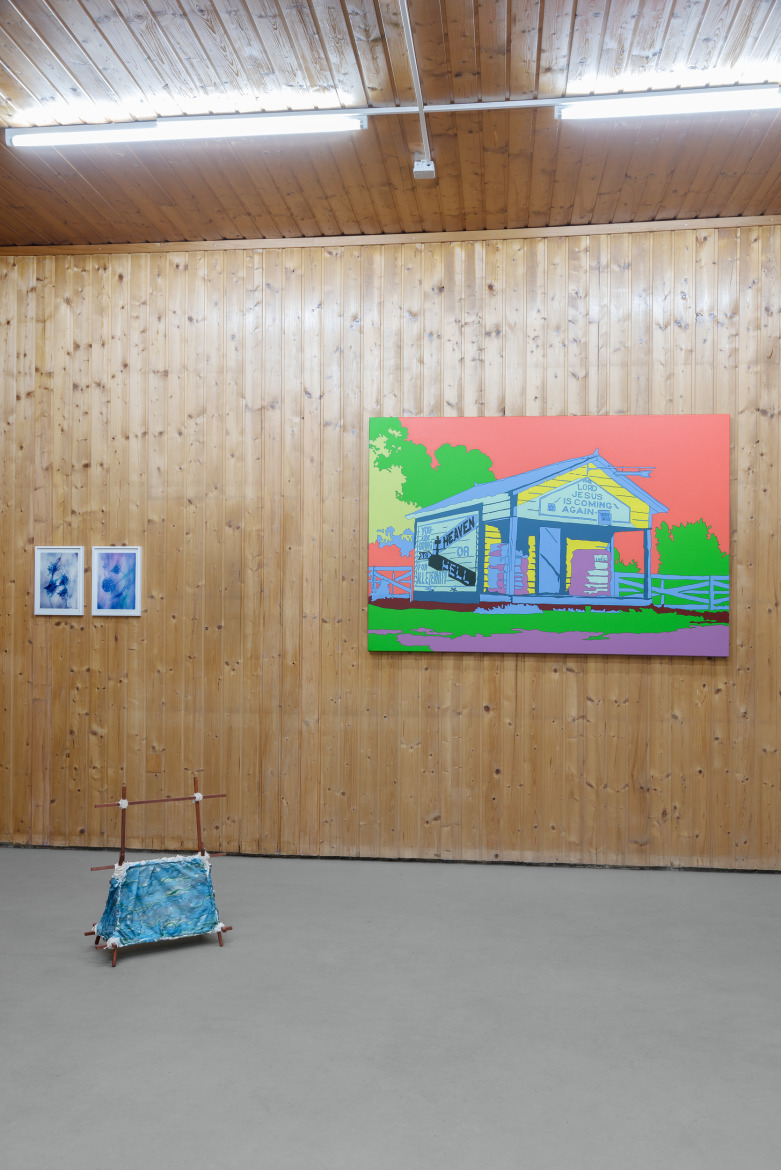
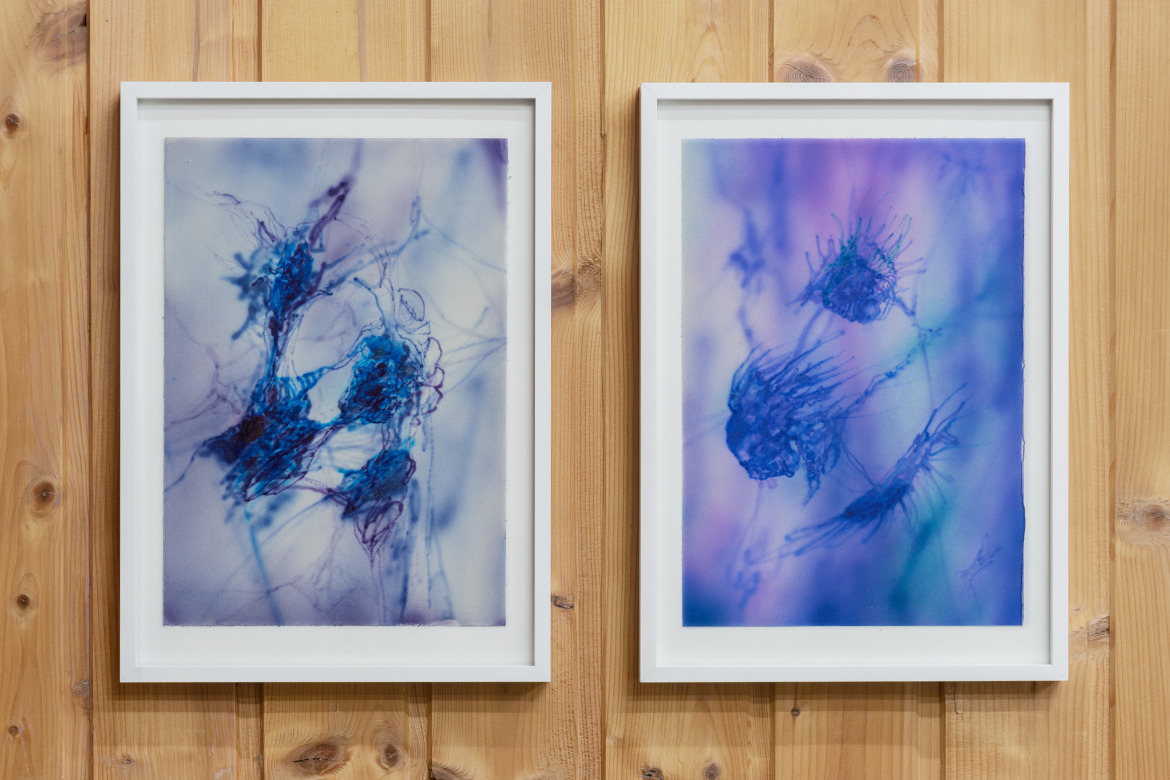
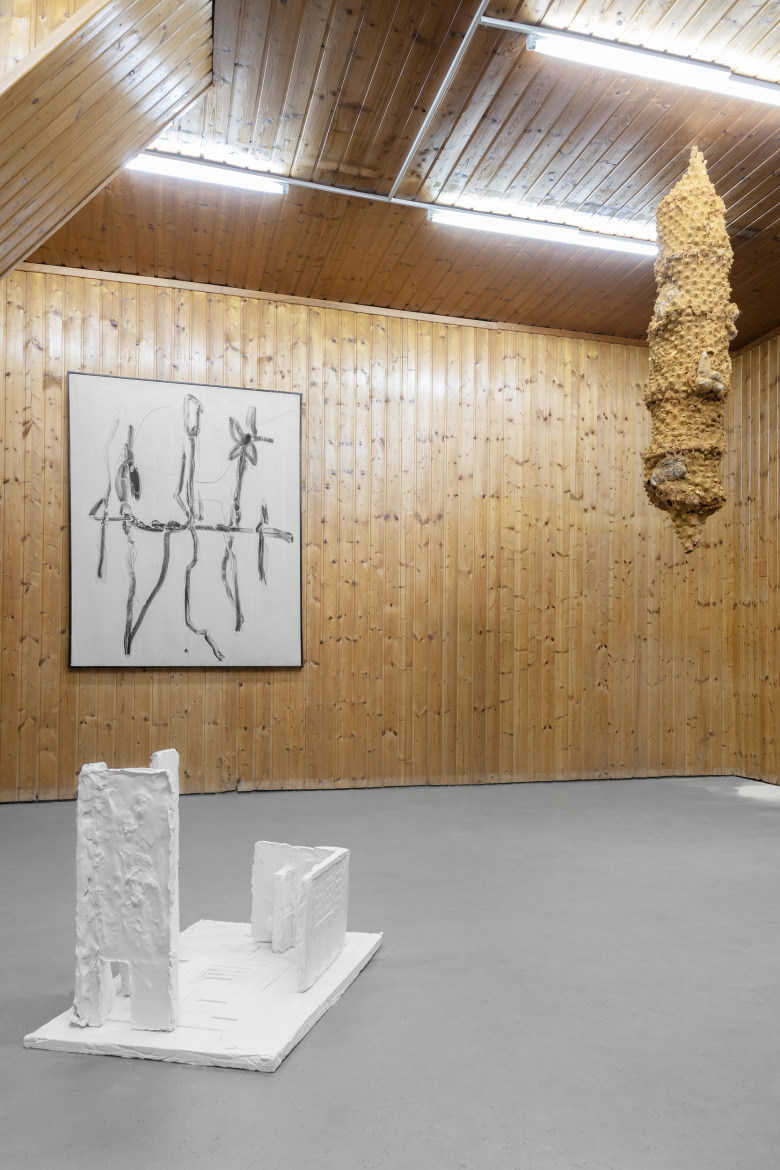
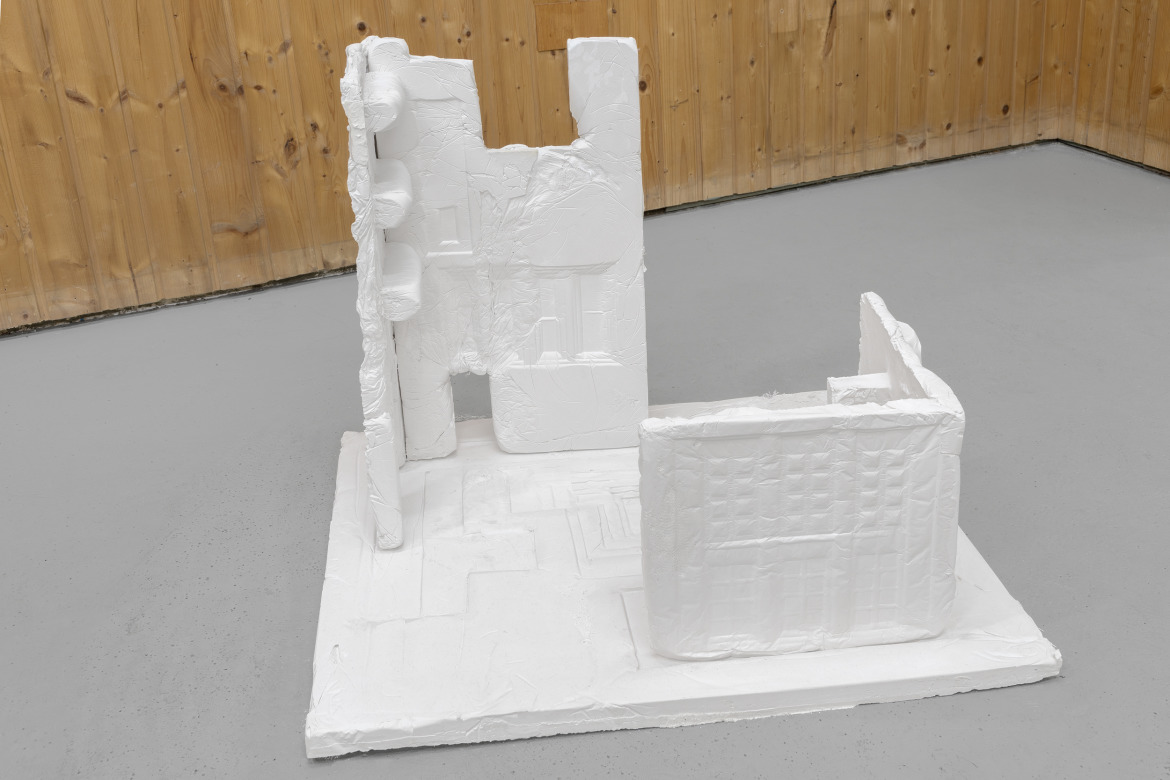
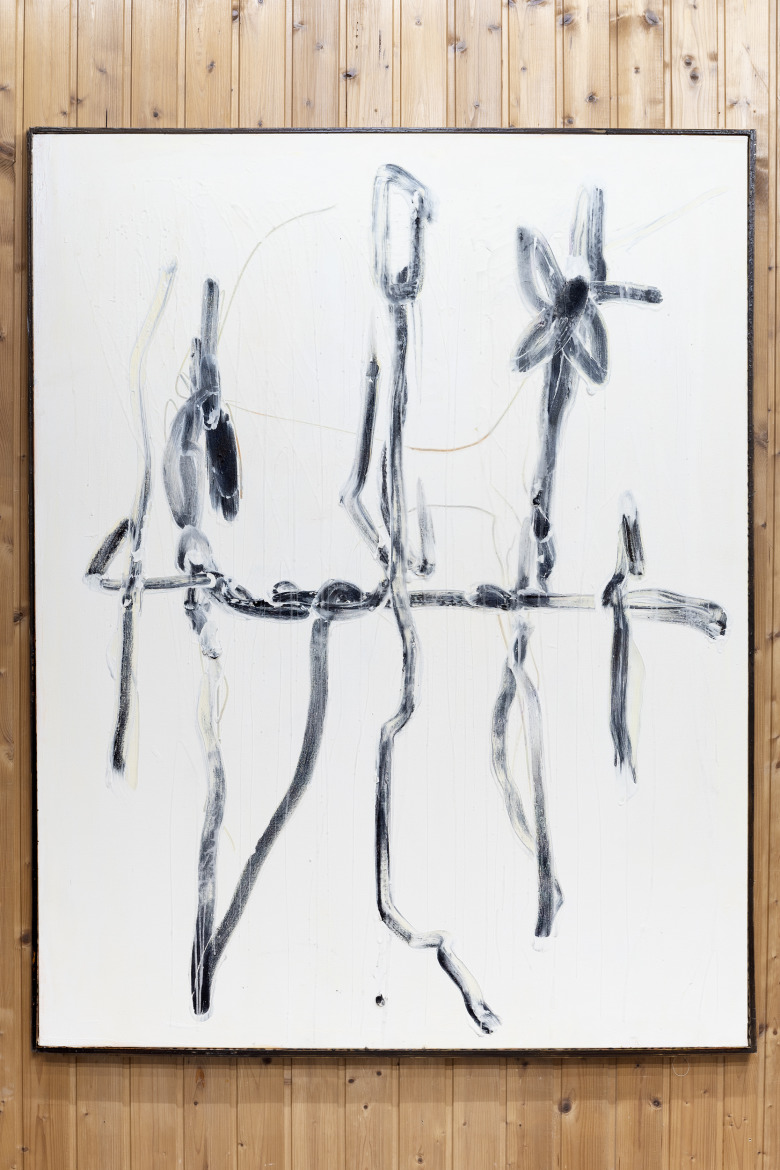
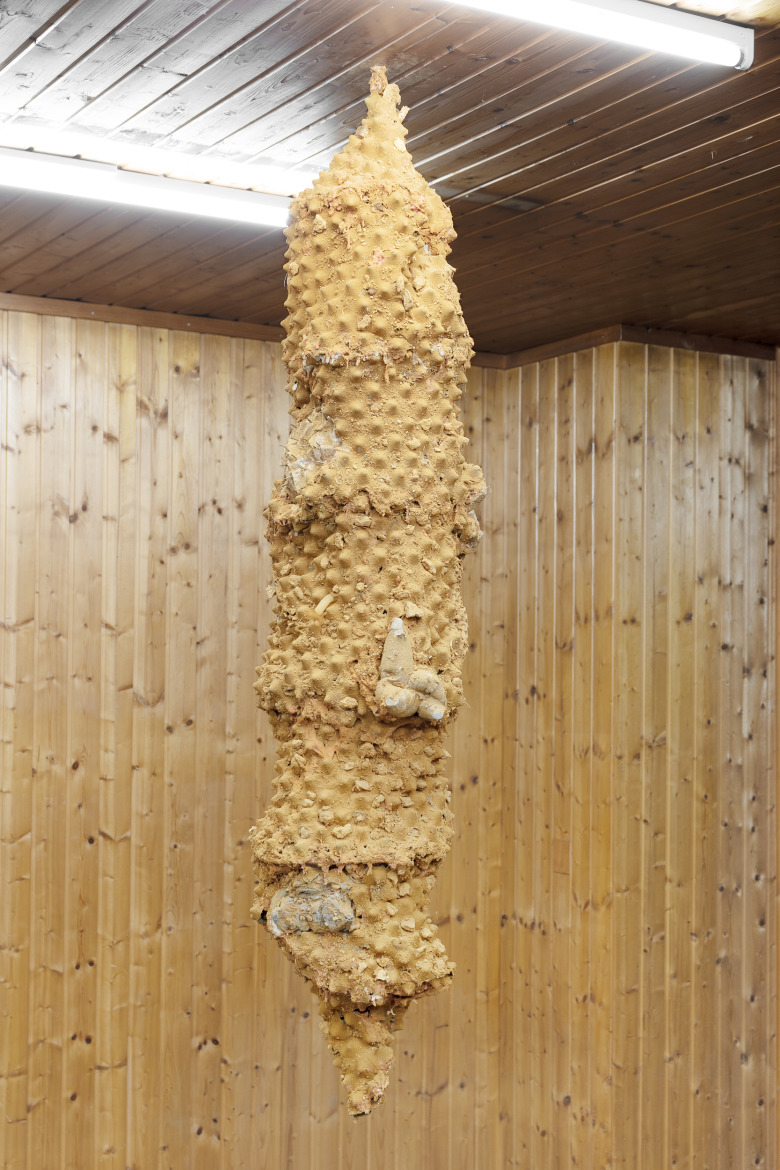
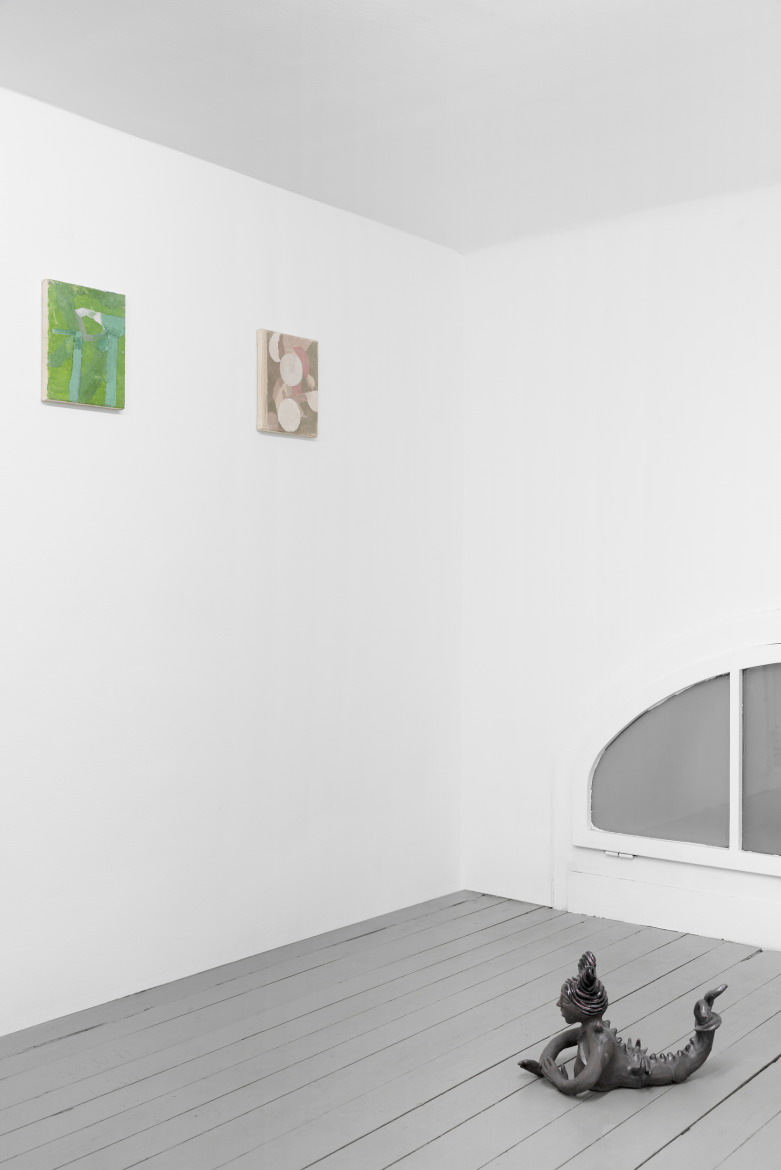
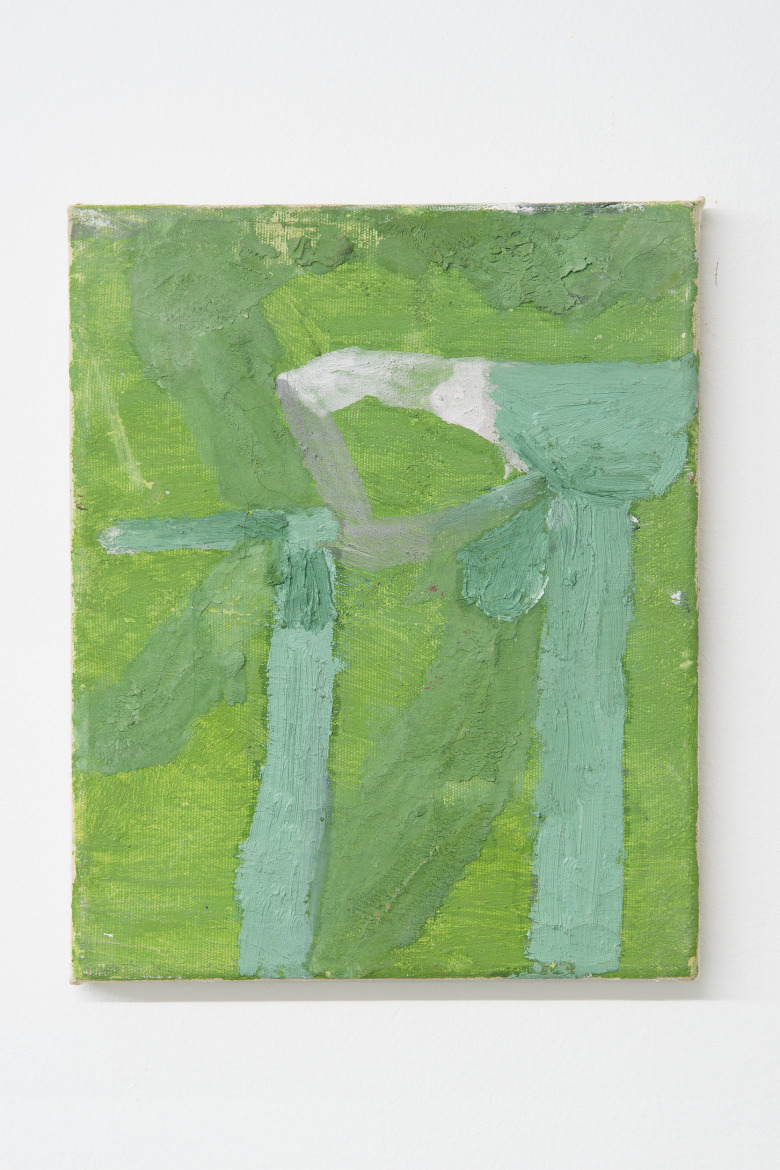
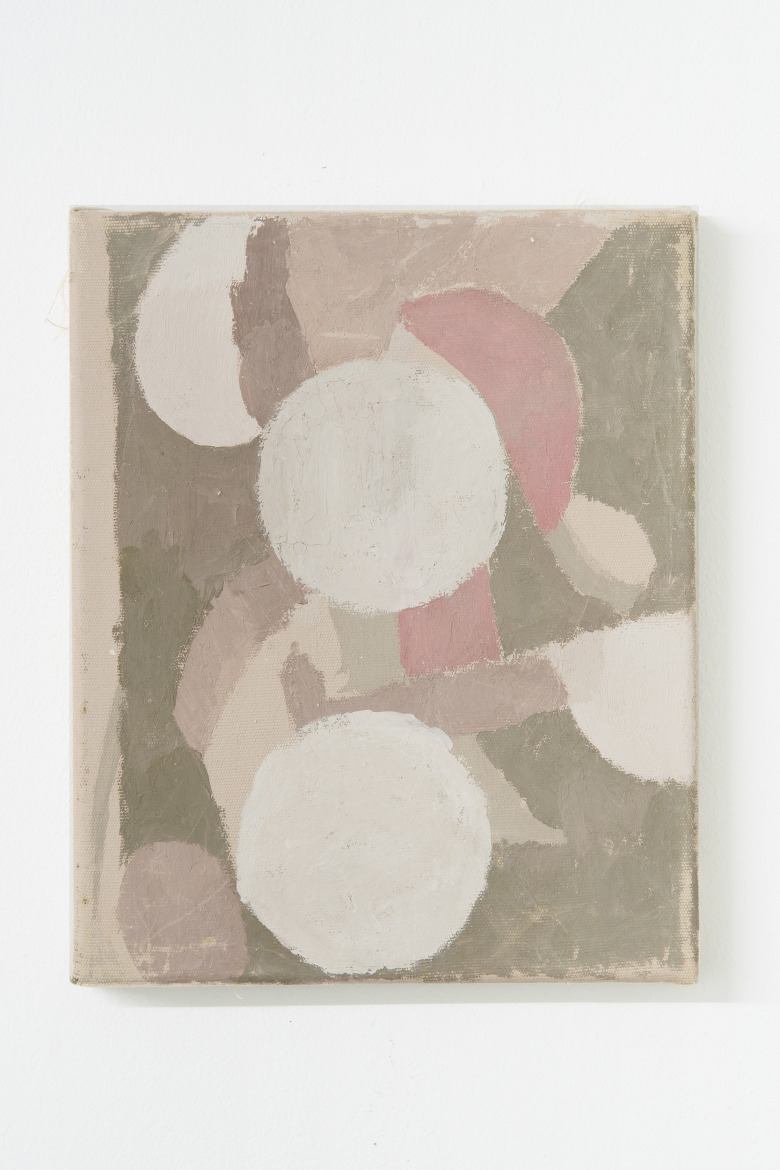
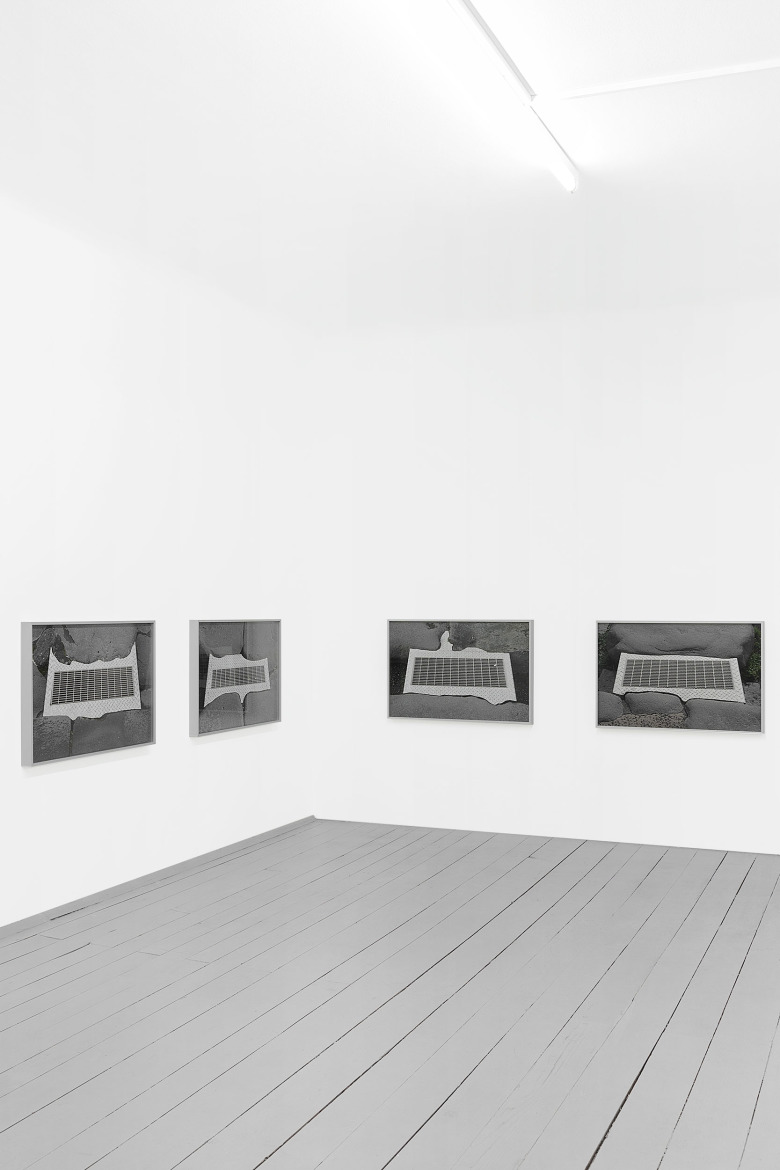
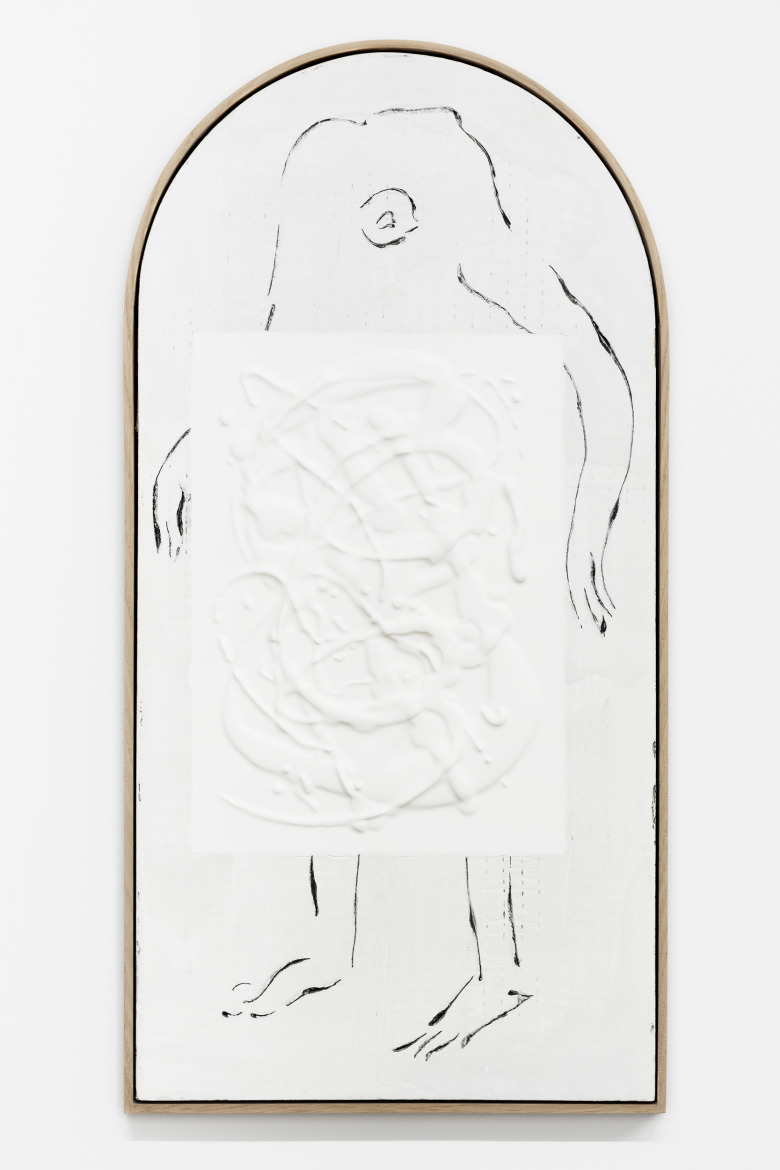
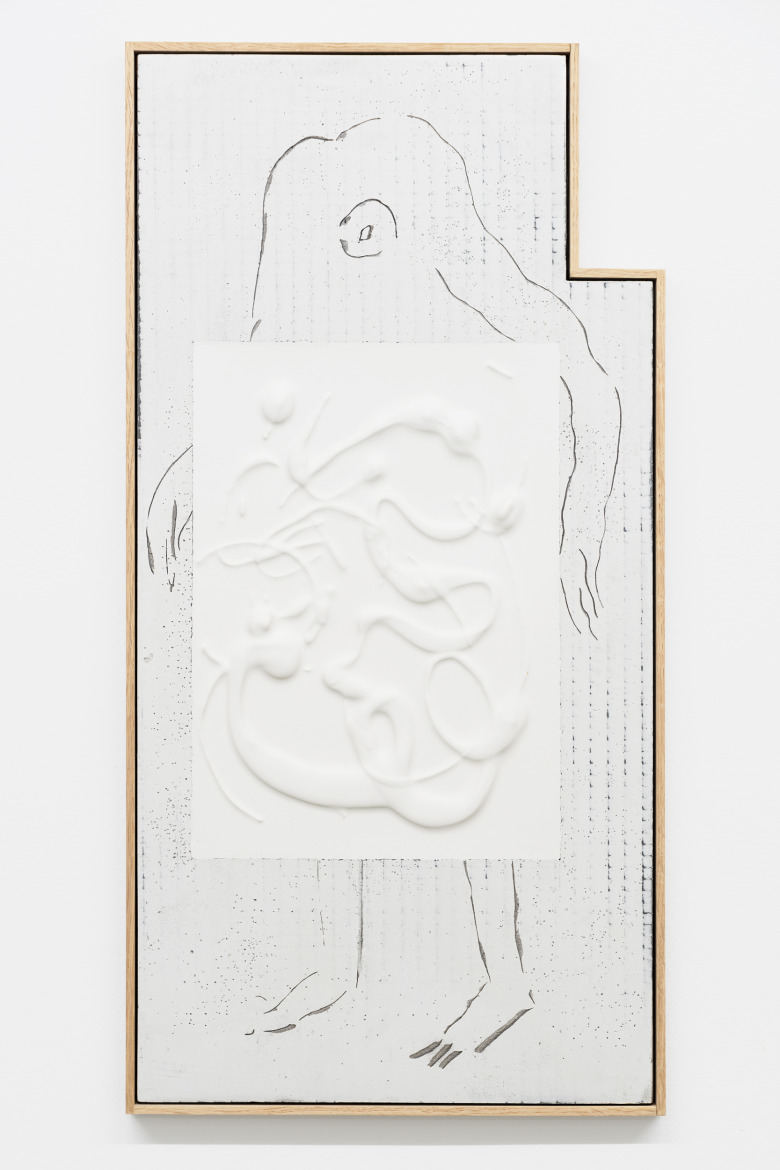
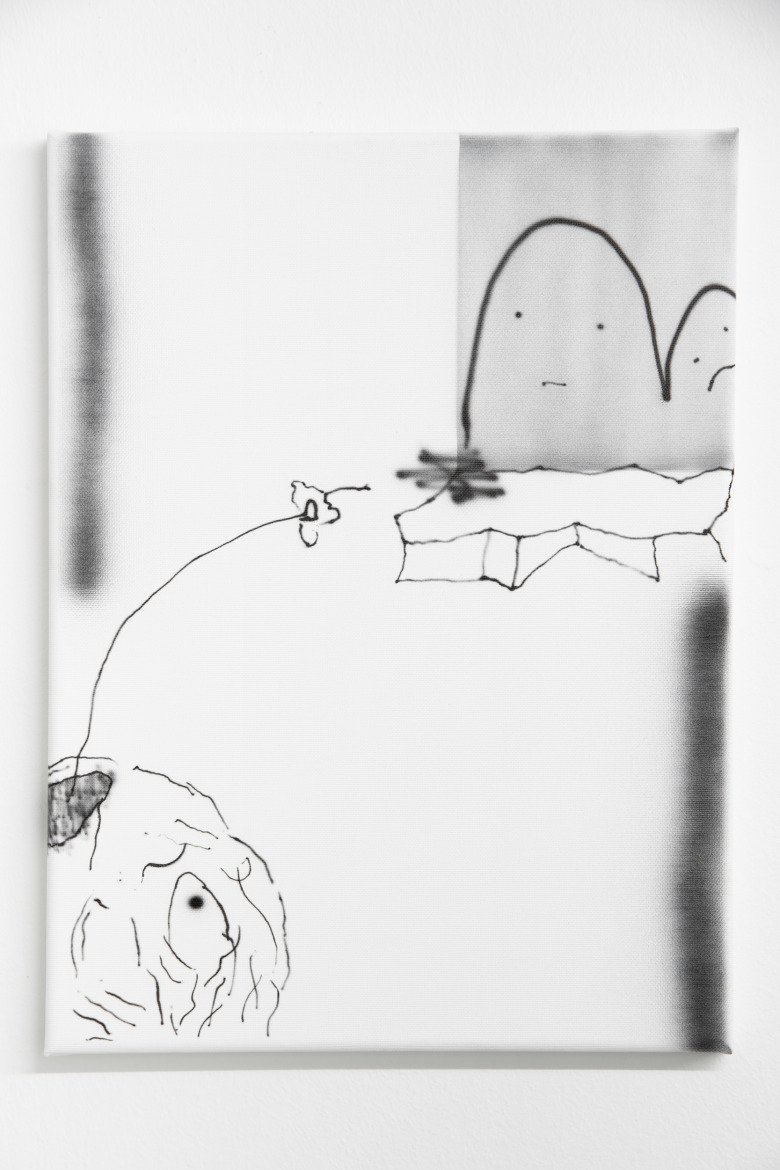
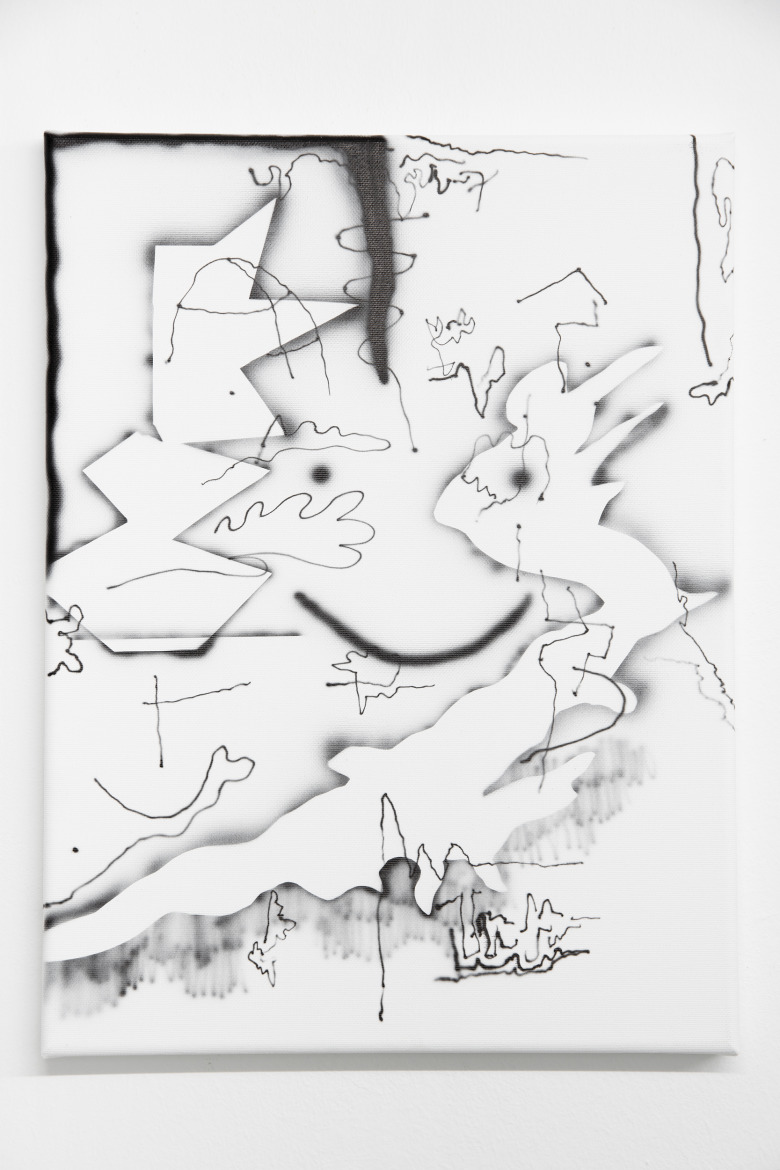
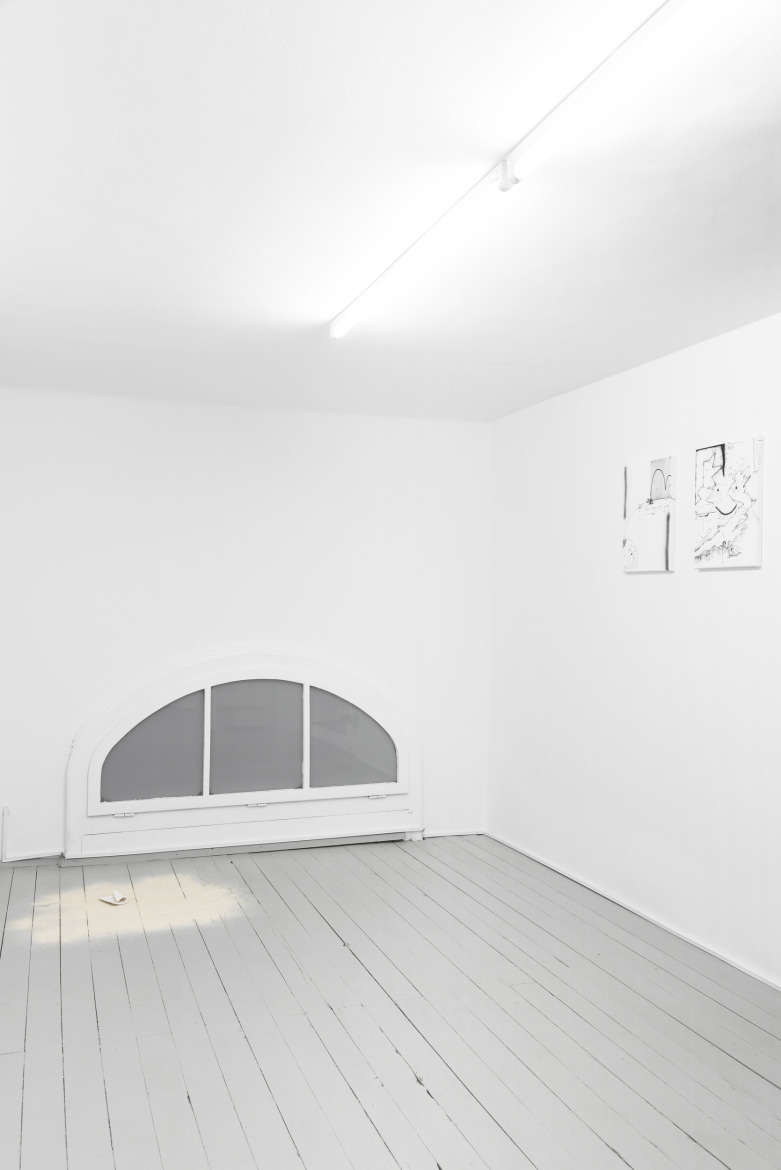
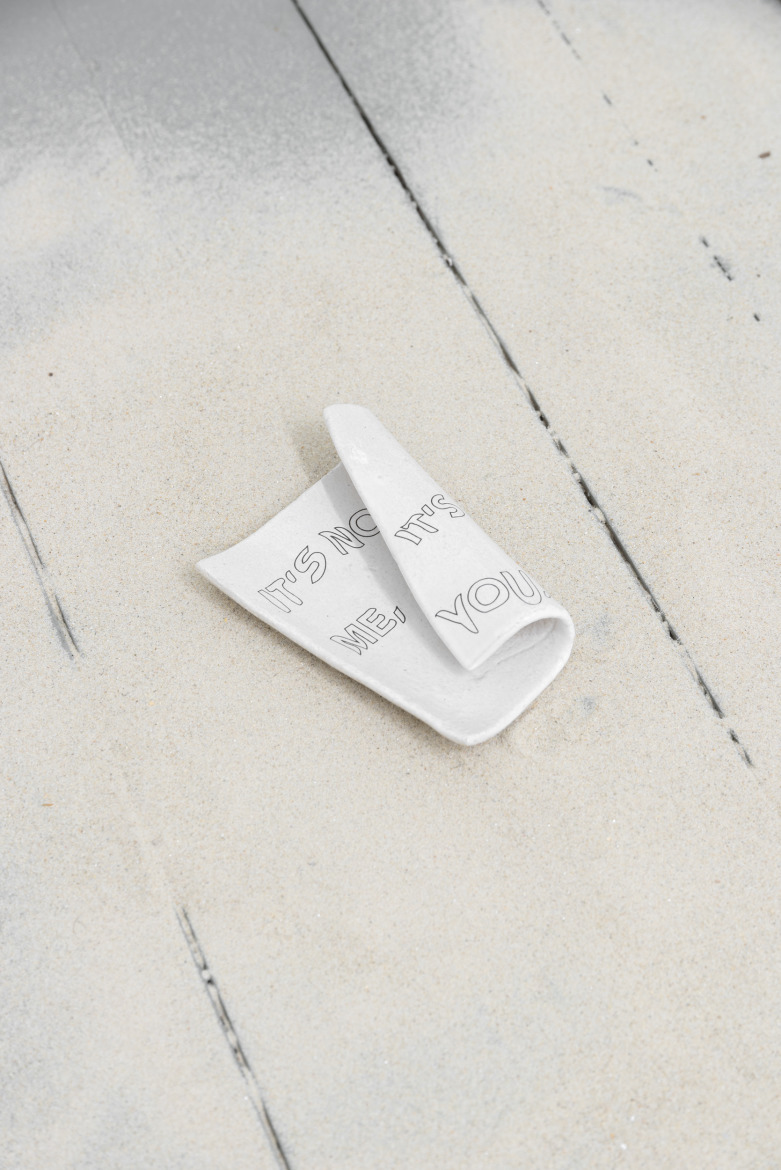
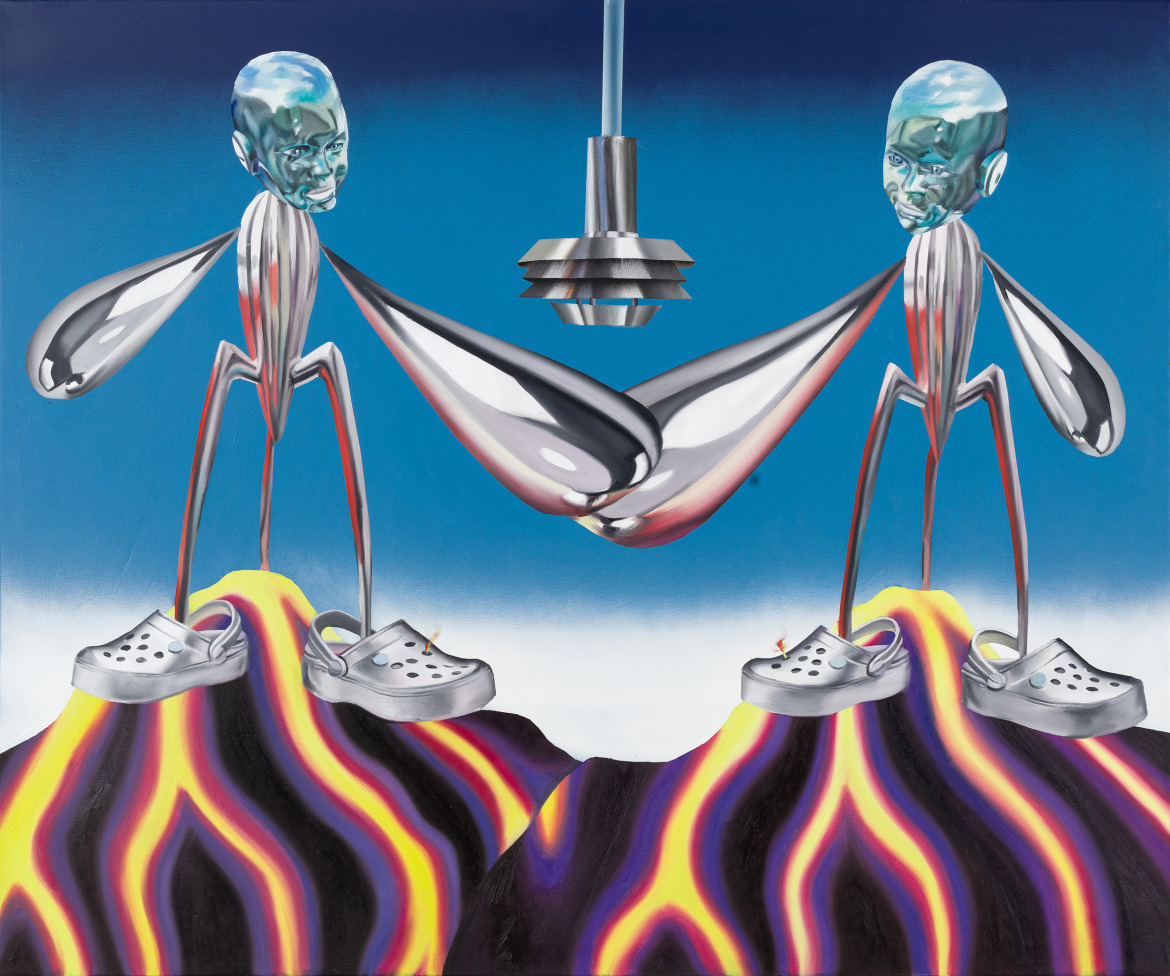
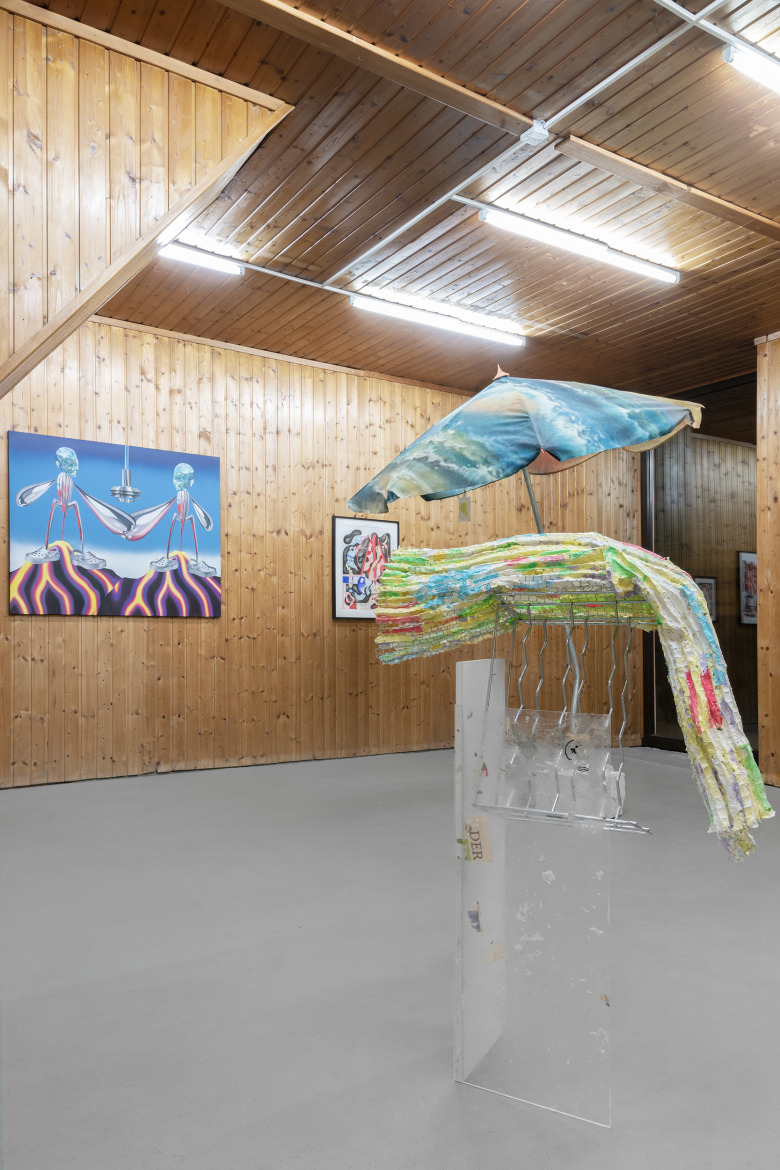
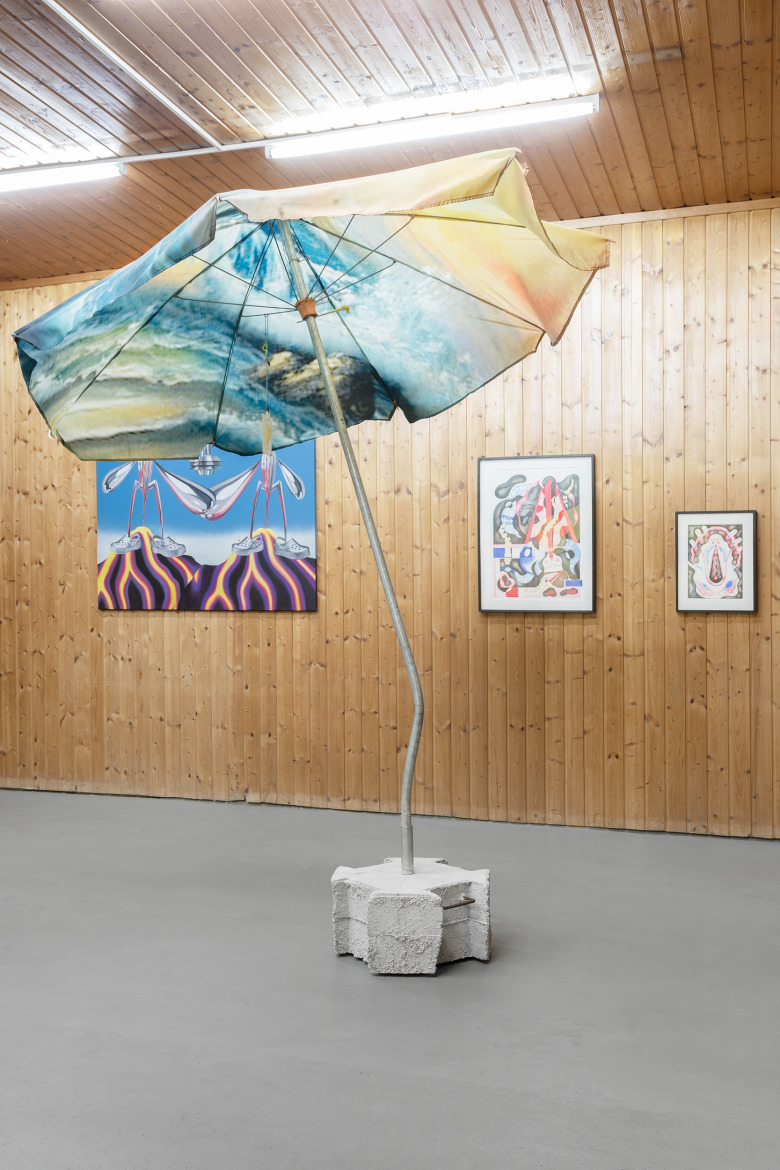
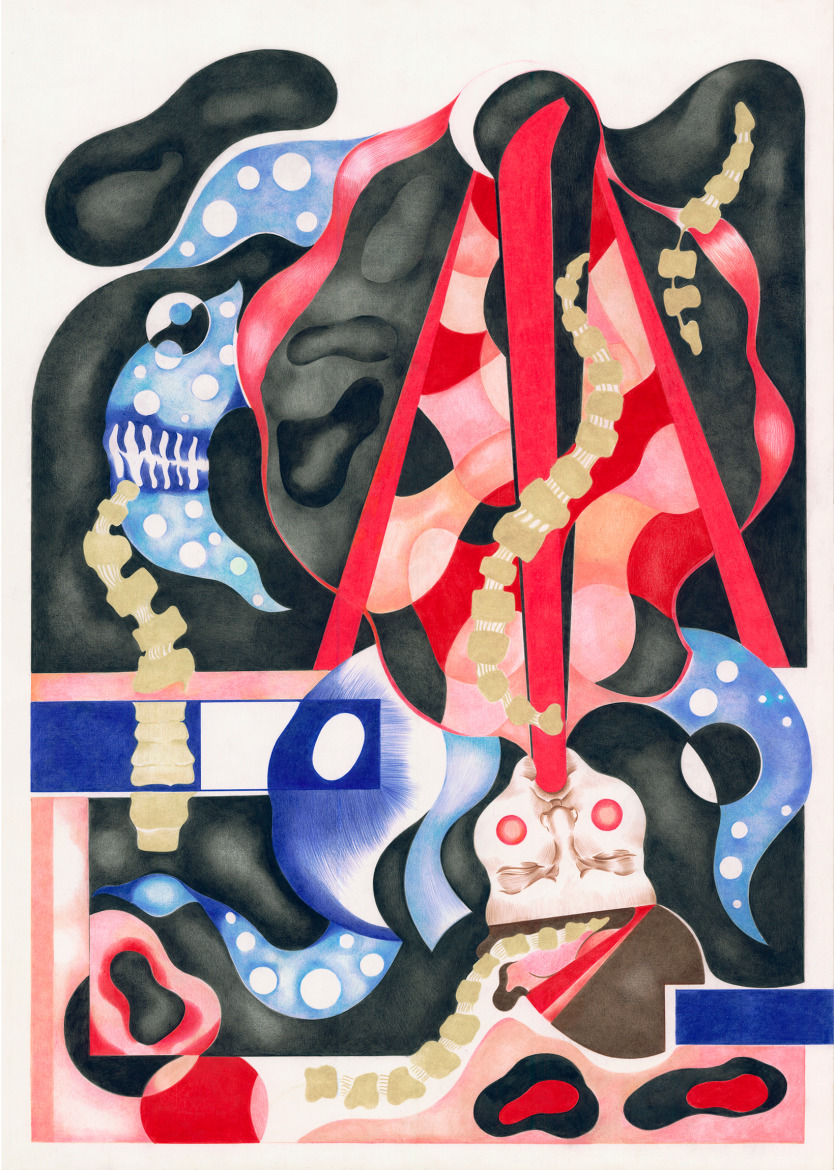
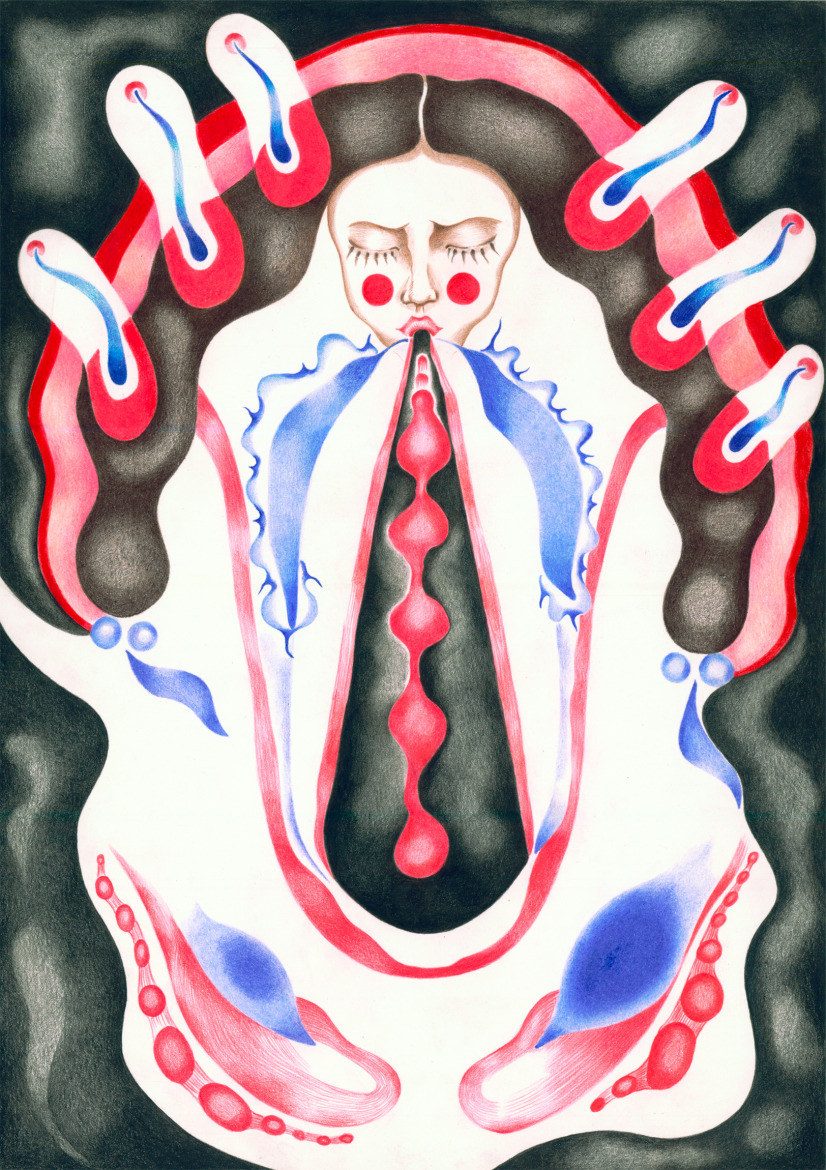
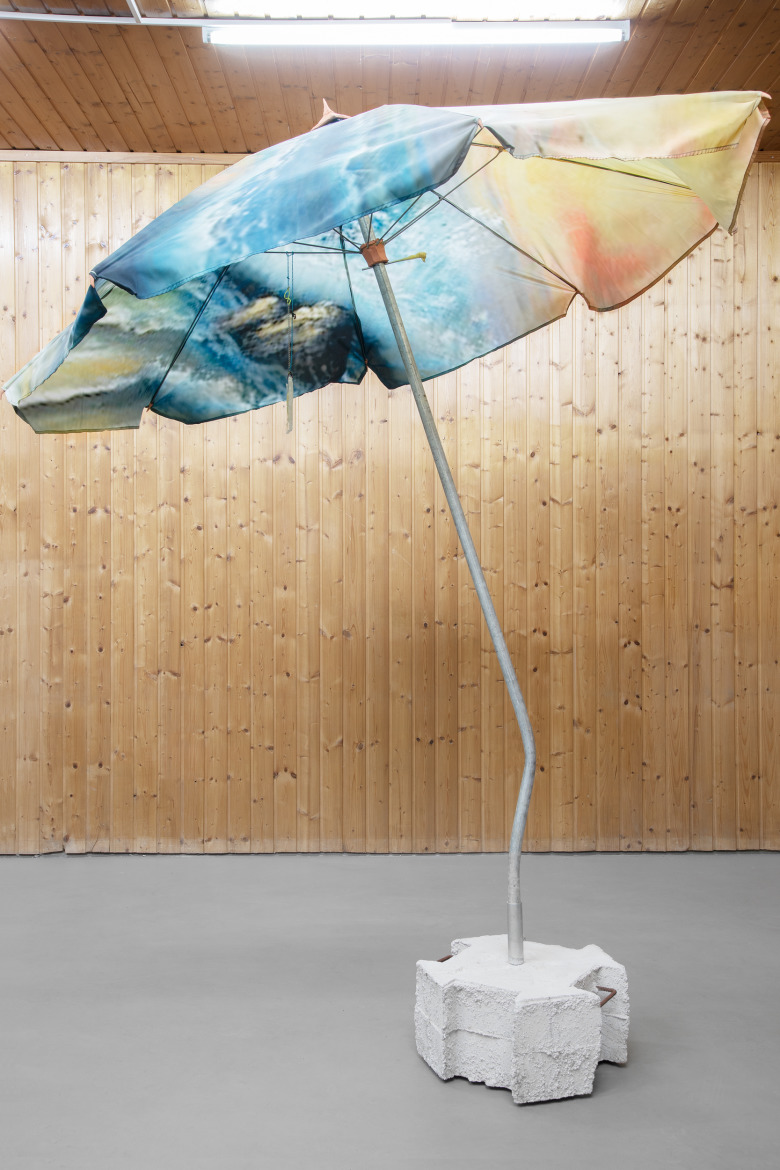
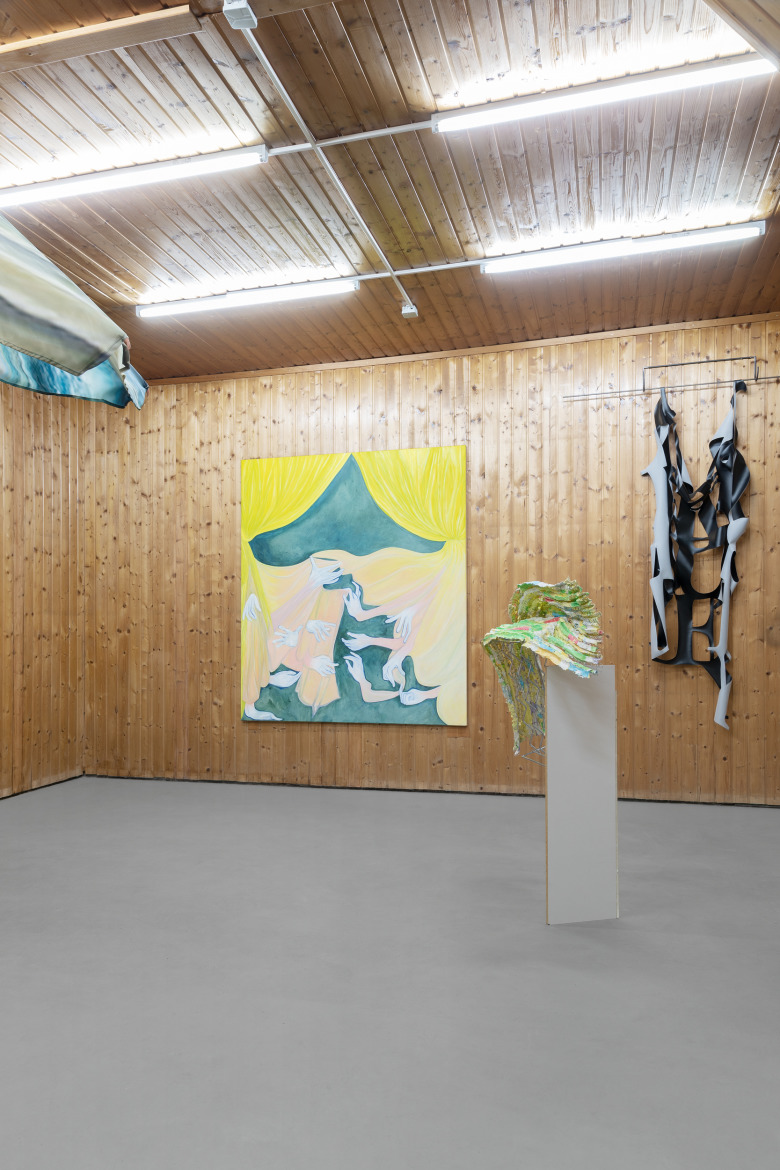
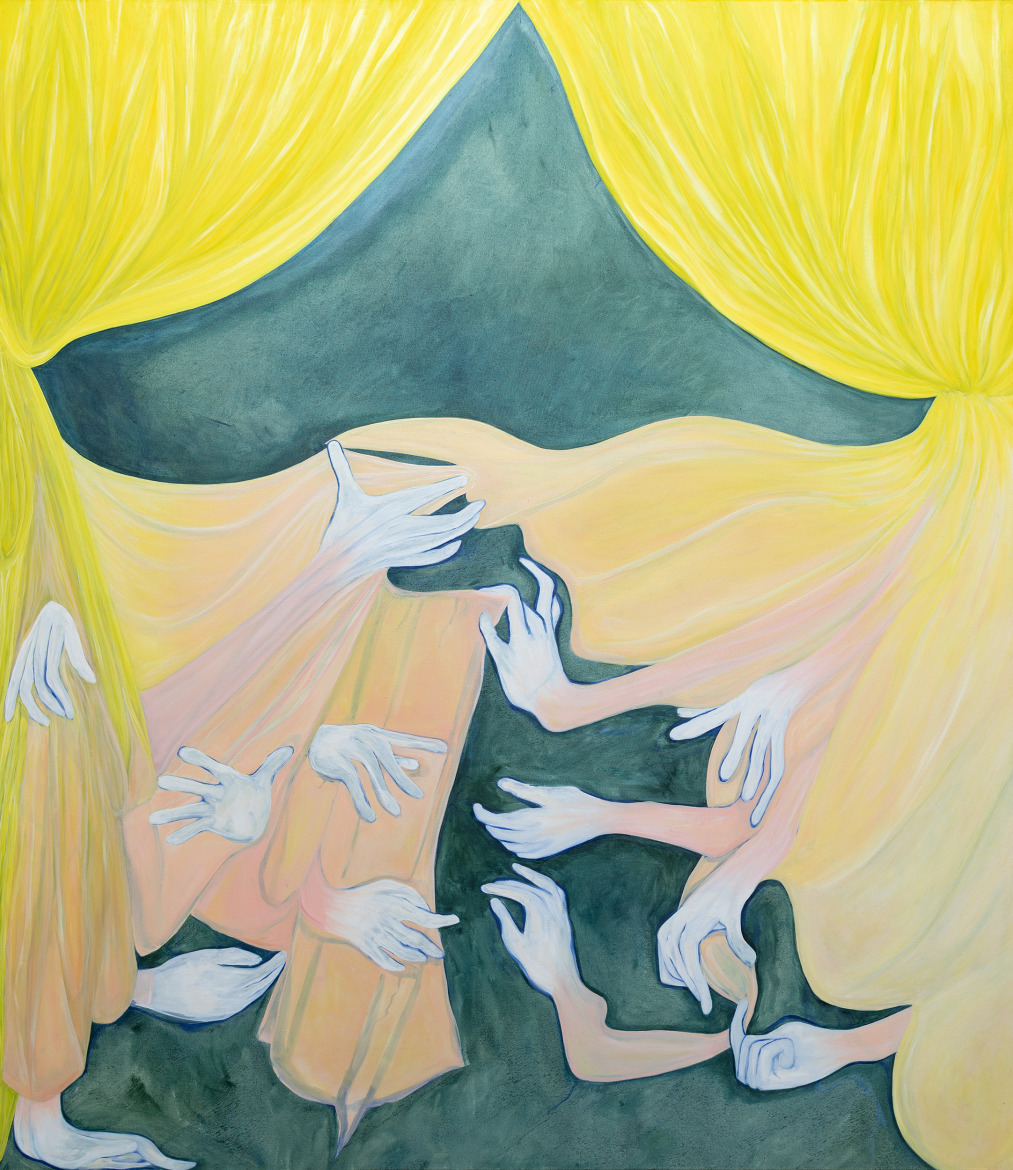
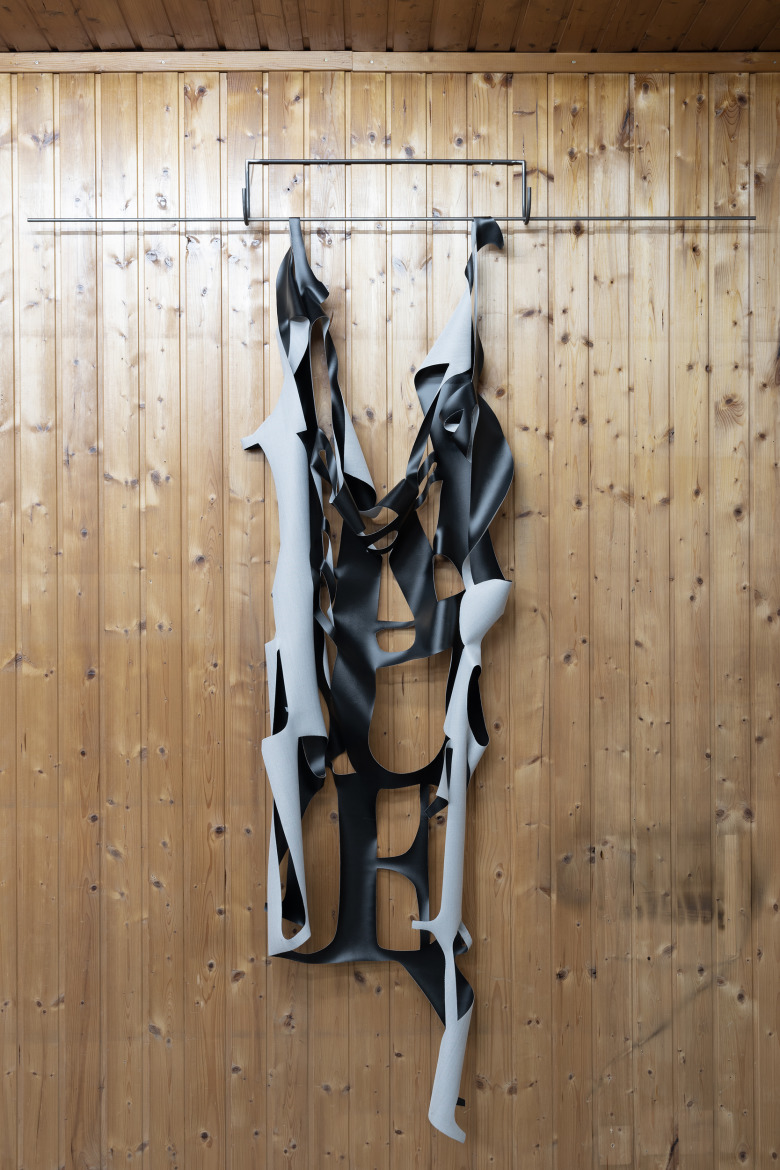
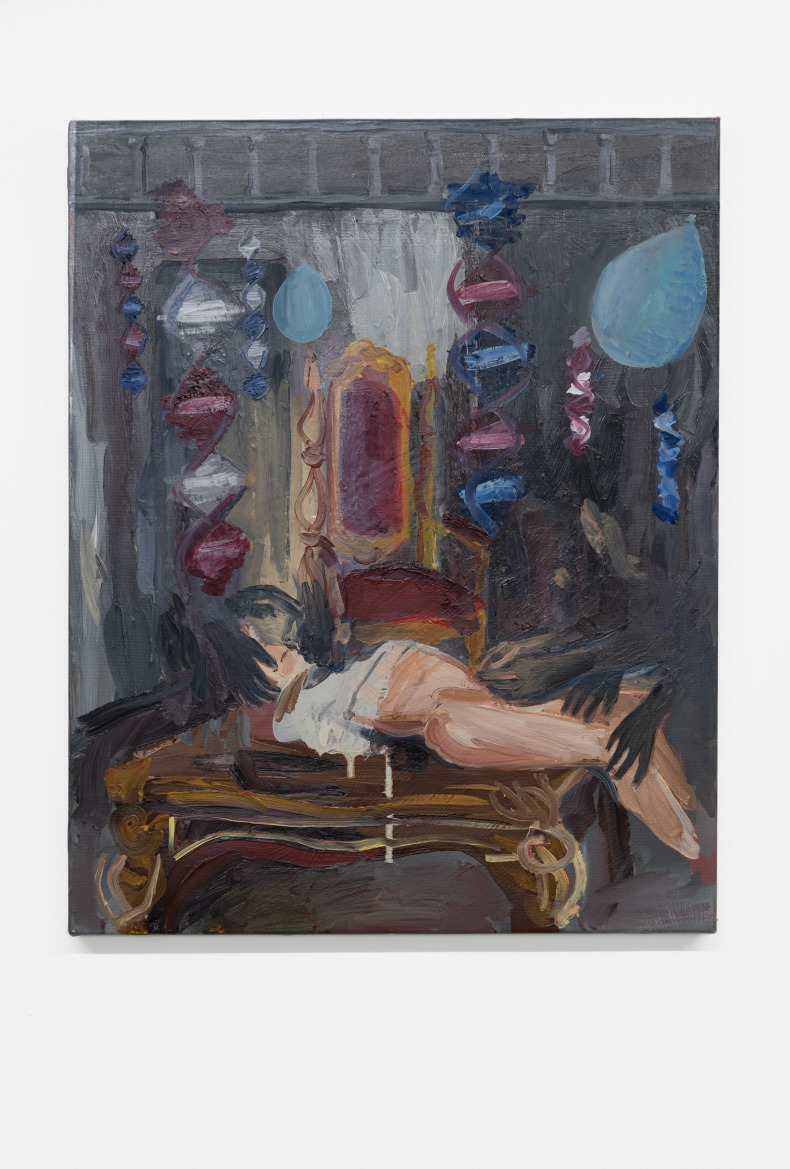
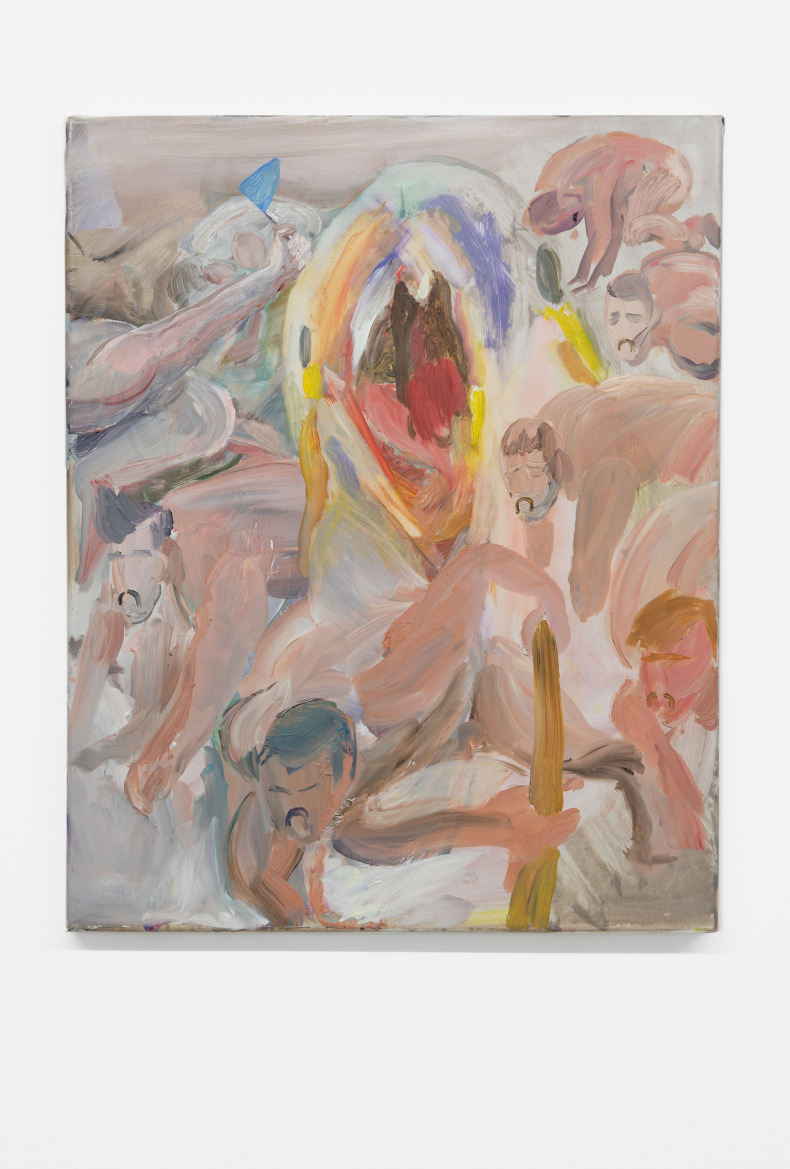
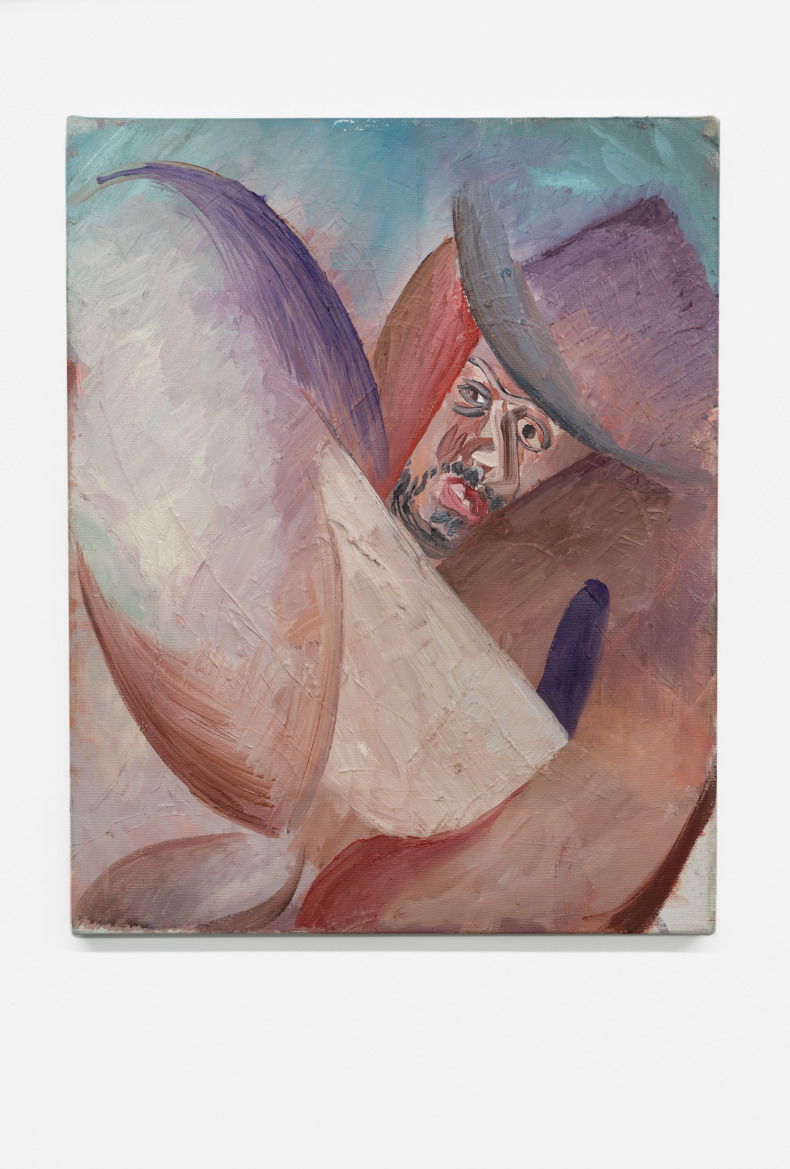
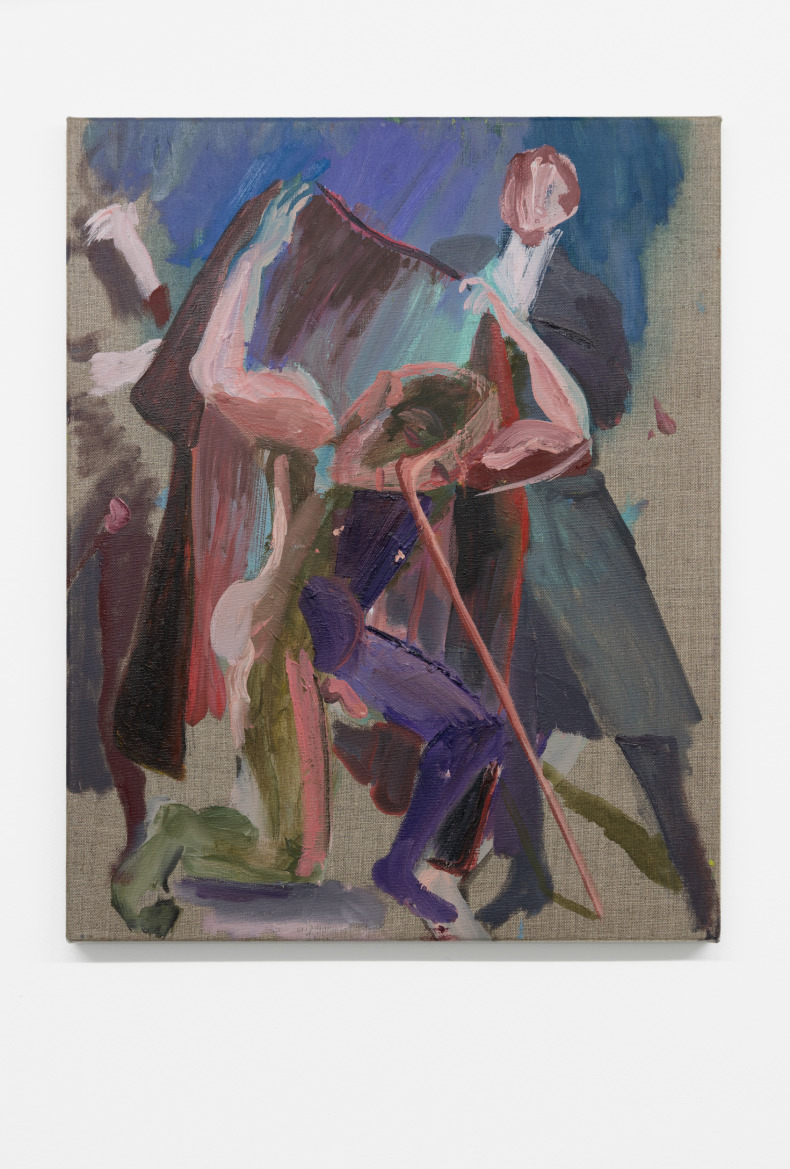
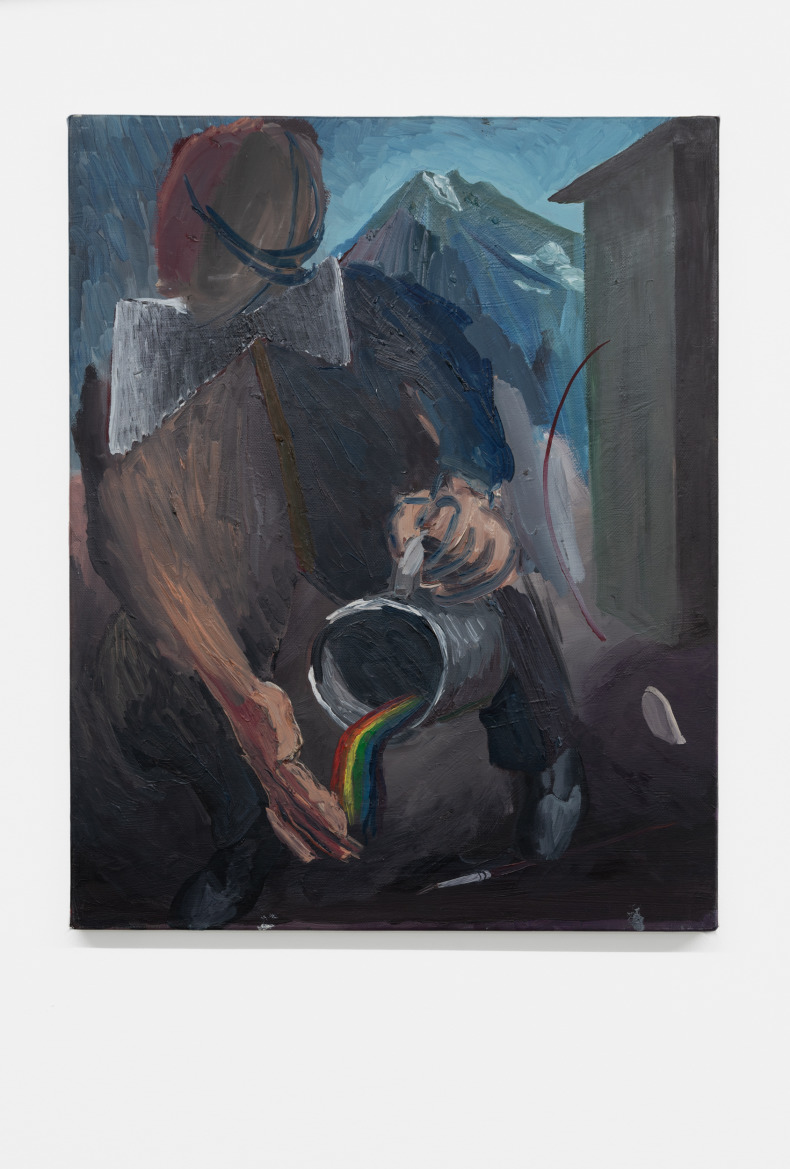
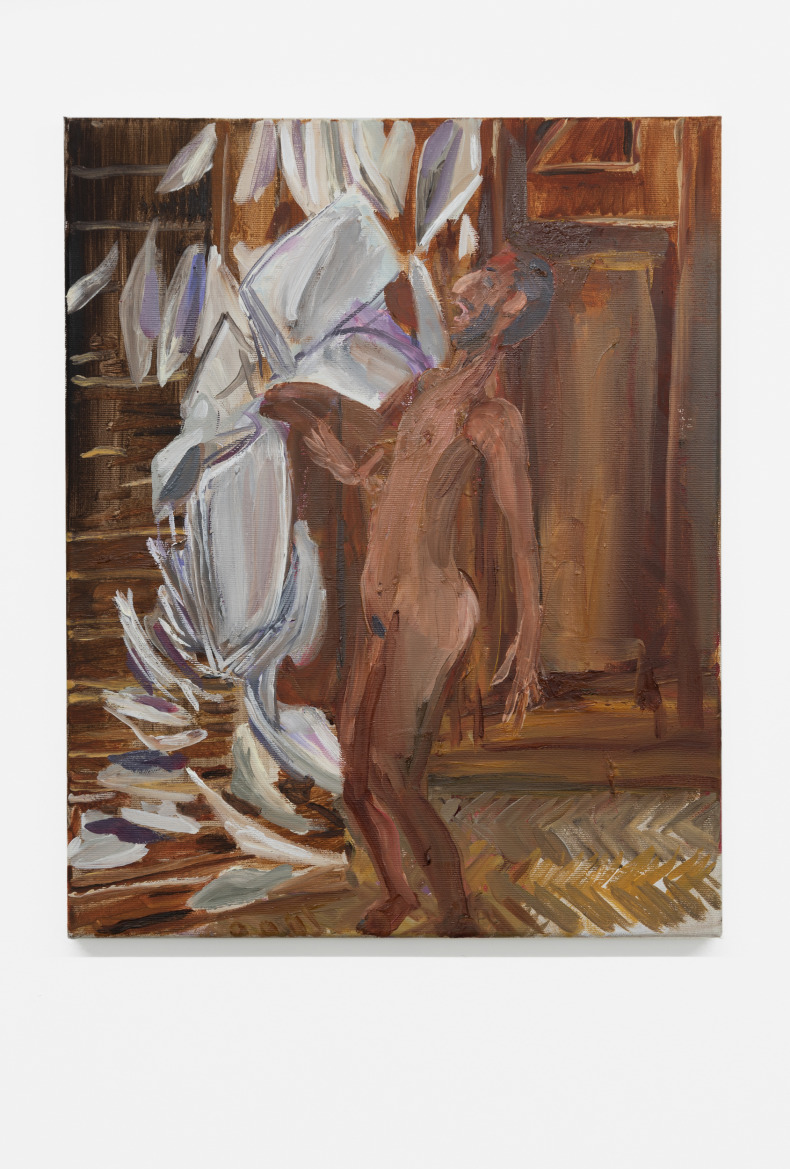
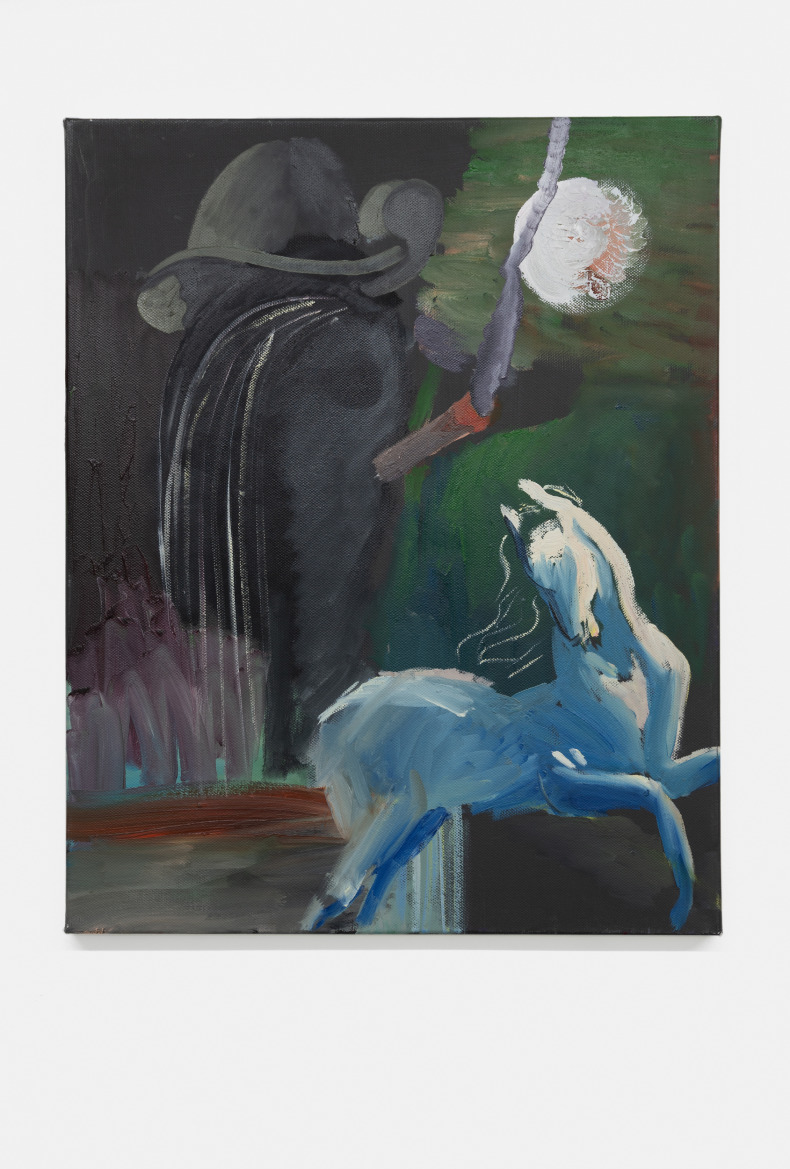
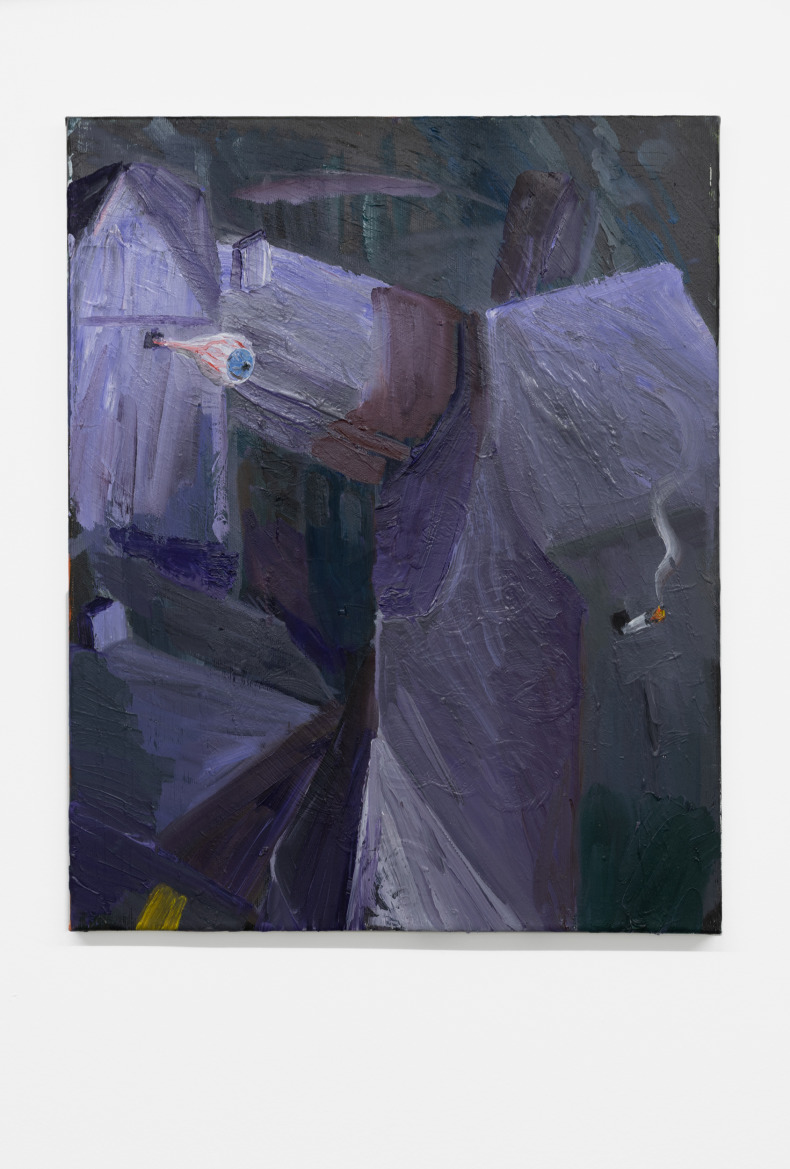
It is in this spirit that Nazim Ünal Yilmaz paints a sharp critique of the analytical universe, and the awkward moment where it comes into contact with the physical world. The title of the exhibition Theological Time, Mean Landscape, Circumcision Throne, Burping Bird, Auto-censure, Nose as a Walking Stick, Tare, Nite Smoking, W15, Measuring the Corner, Dolphin with the Woman and The Big Fish, Small Fish replaces the absurd encyclopaedic boxes for all the different types of animals quoted above. His subjects and colours, contours and shadowy purple hues continue the lineage of Borges’ magical realism through the narrative construction of painting and installation. A wave of chaotic eruptions, ever-moving evolutionary changes, biological degradation, and the will to break out of the confines of definition give his compositions explosions of colour – a proper parallel to the circular drama of a planetary society that lives from pain, survival, and death.
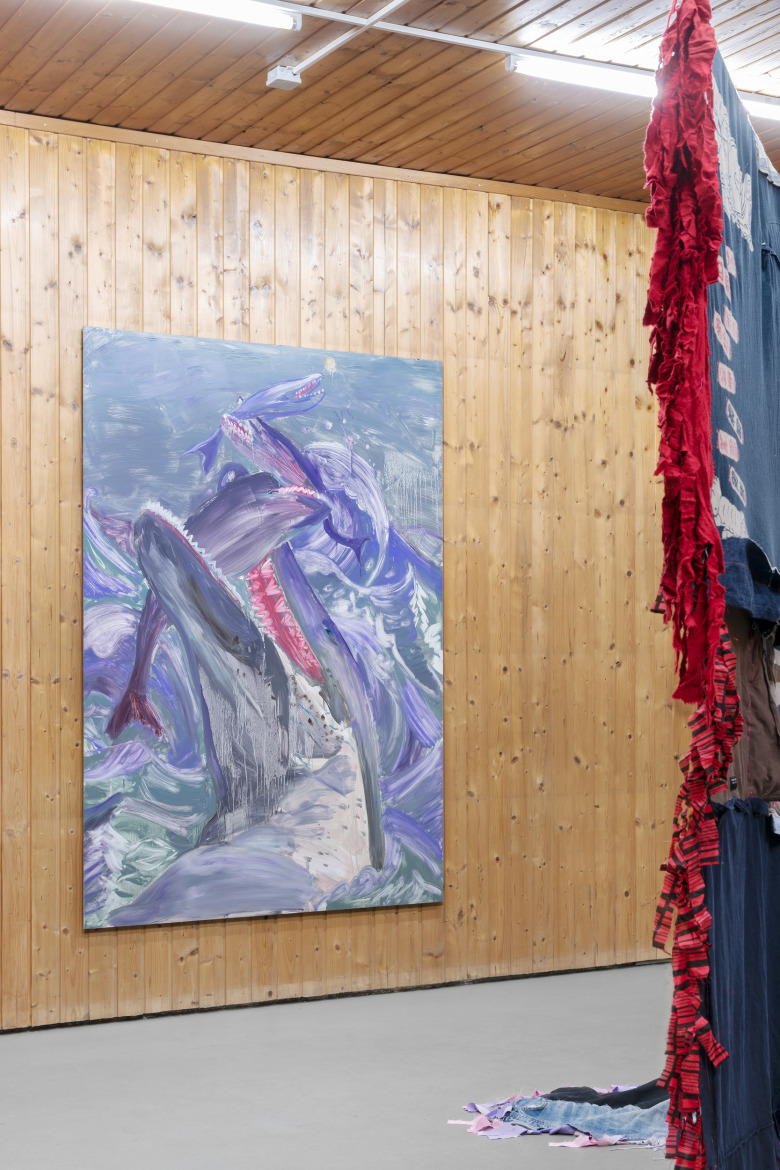
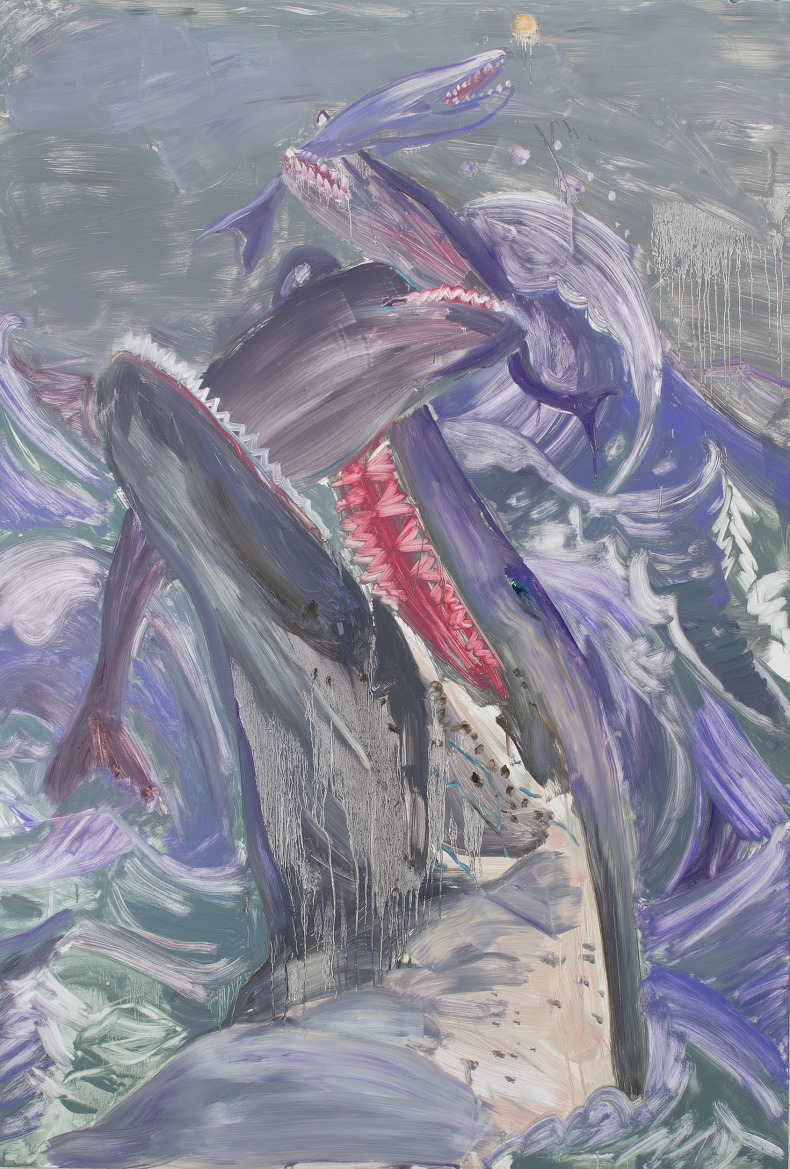
The whole exhibition is a cinematic construction. The succession of pieces builds a compilation of stories that tie a string from point A to point B. The first room introduces this logical formula through the connection between two large canvases of dolphin and human species. In Big Fish, Small Fish (2019), a chain of dolphins catches increasingly smaller dolphins in mid-air. Leaping from the waves, the dolphins appear choreographed and recall the use of dolphins in aquatic circuses or theme parks. As they catch each other with their sharp teeth, the spectacle becomes a circuit of violence inflicted from the outside on each and every member of this choreography of abuse. The image parallels the structure of our capitalistic society, all of us participants with no option but to grind to the rhythm of exploitation of this dog eat dog world.
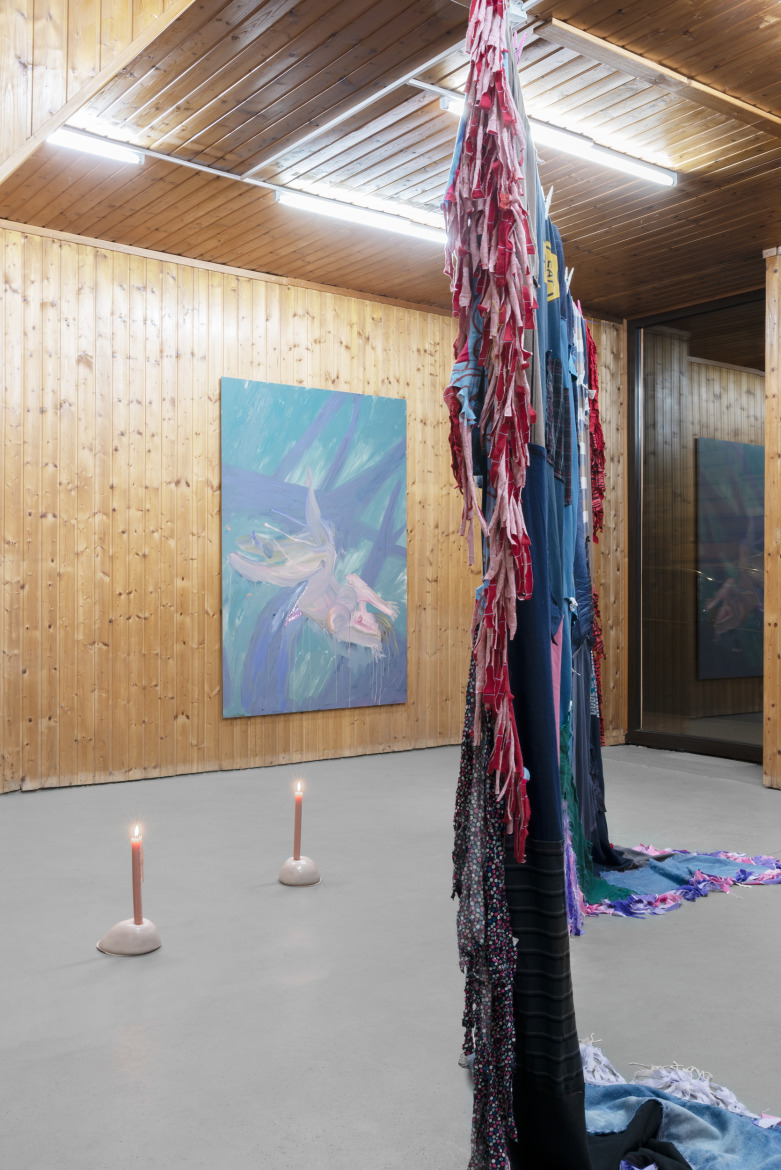
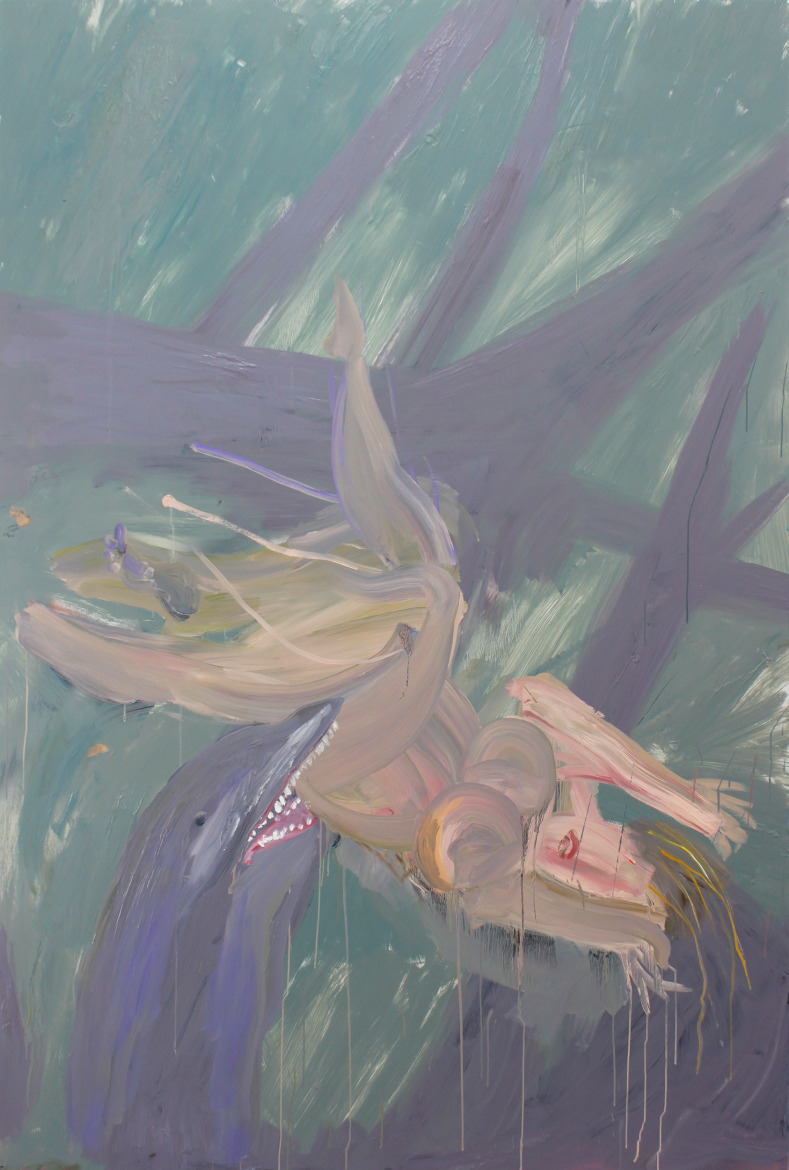
Across the way is Dolphin with a Woman (2019). This painting follows the dolphin motif in a similar manner as the creature, itself a victim of exploitation, catches a nude woman in its powerful clutches. The woman, fleshy and full, is revealed to also be a participant in this violent entertainment business. Like the dolphins, it is the properties of her body that give her value to audiences to gape and gawk. This series of paintings reveals the oppressive regimes of physicality, the prisons of our bodies, and the classifications which make some of us uninteresting, and some of us valuable. Although at first glance both canvases are rife with violence, they also emit the coming of a new era, one of inter-species solidarity between the oppressed, the rejection of the label and the show, and the acceptance of the other. An insurrection is rising.
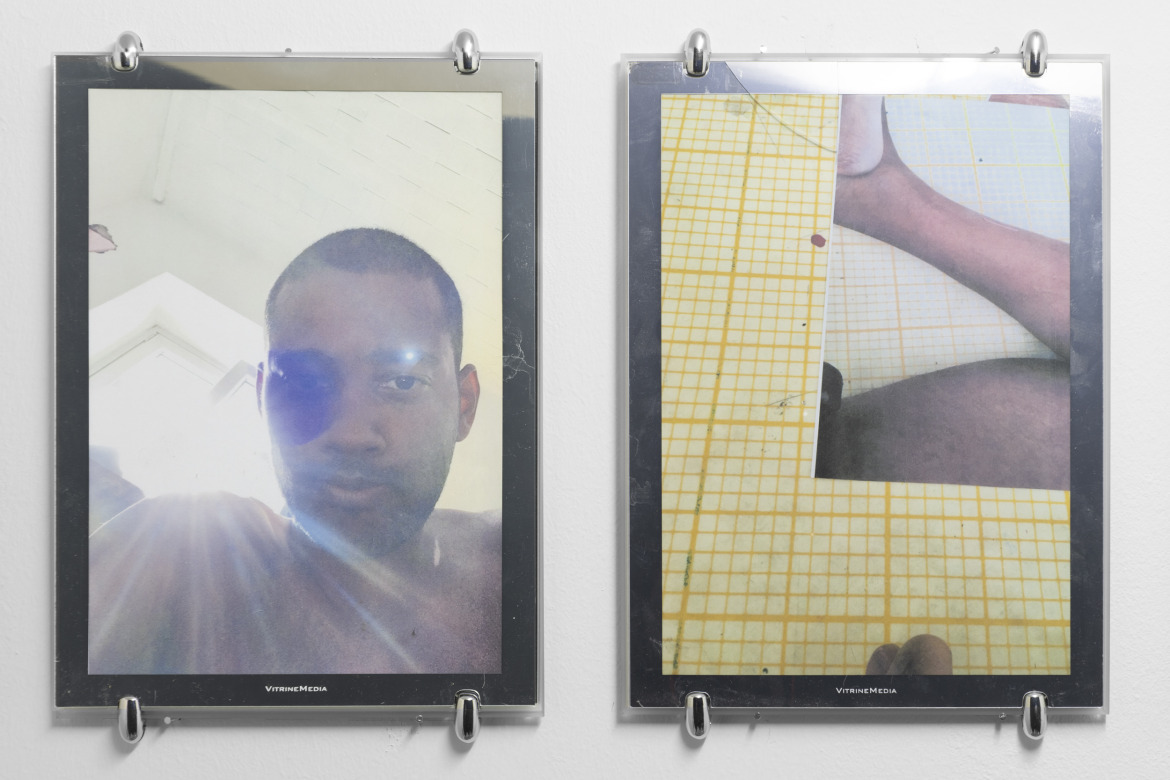
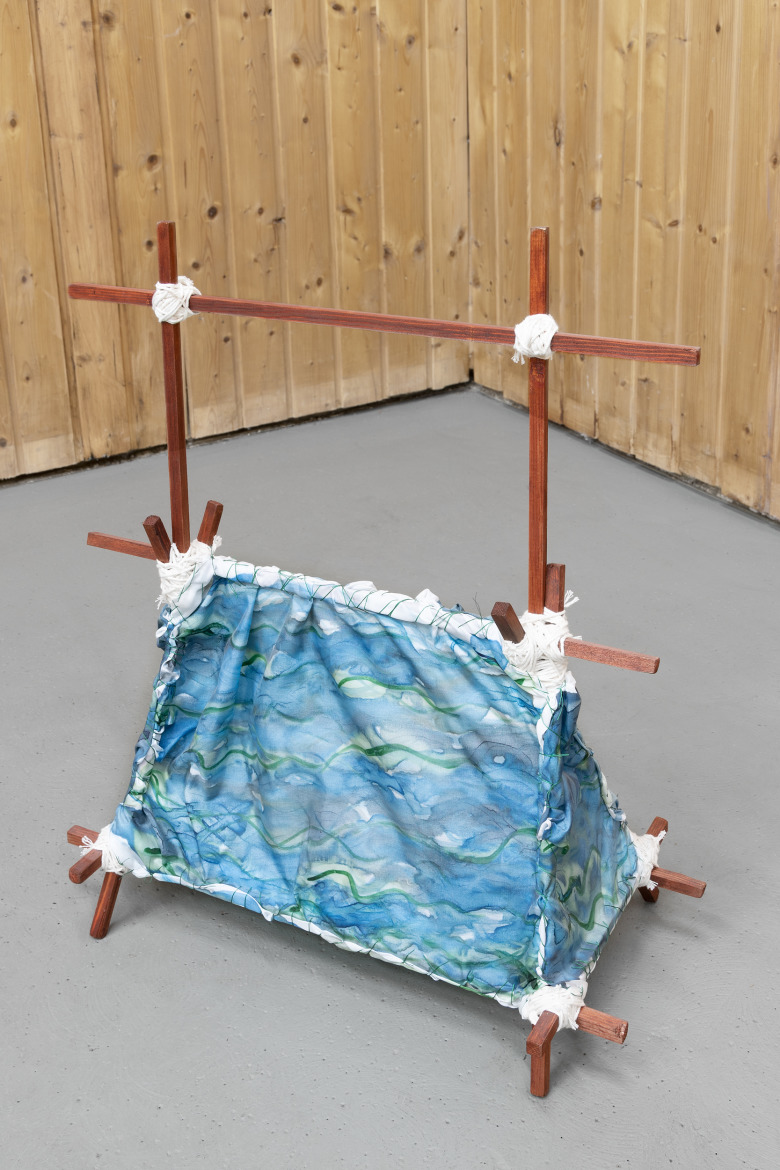
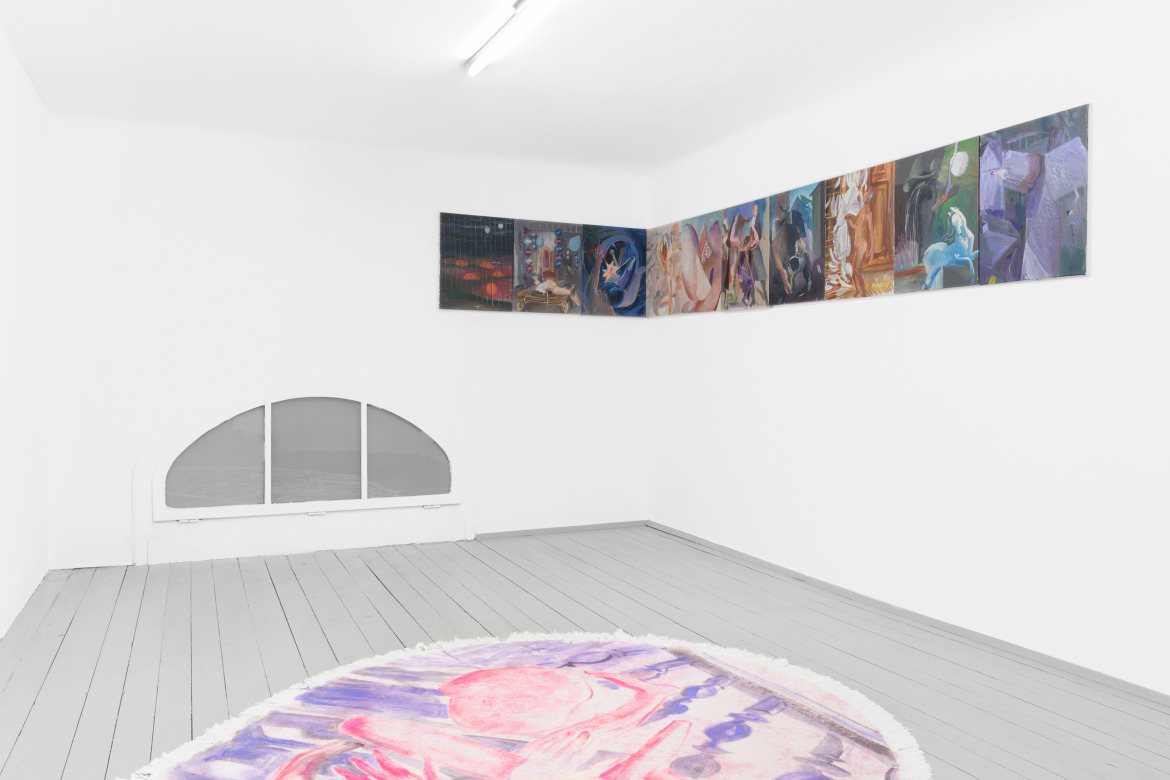
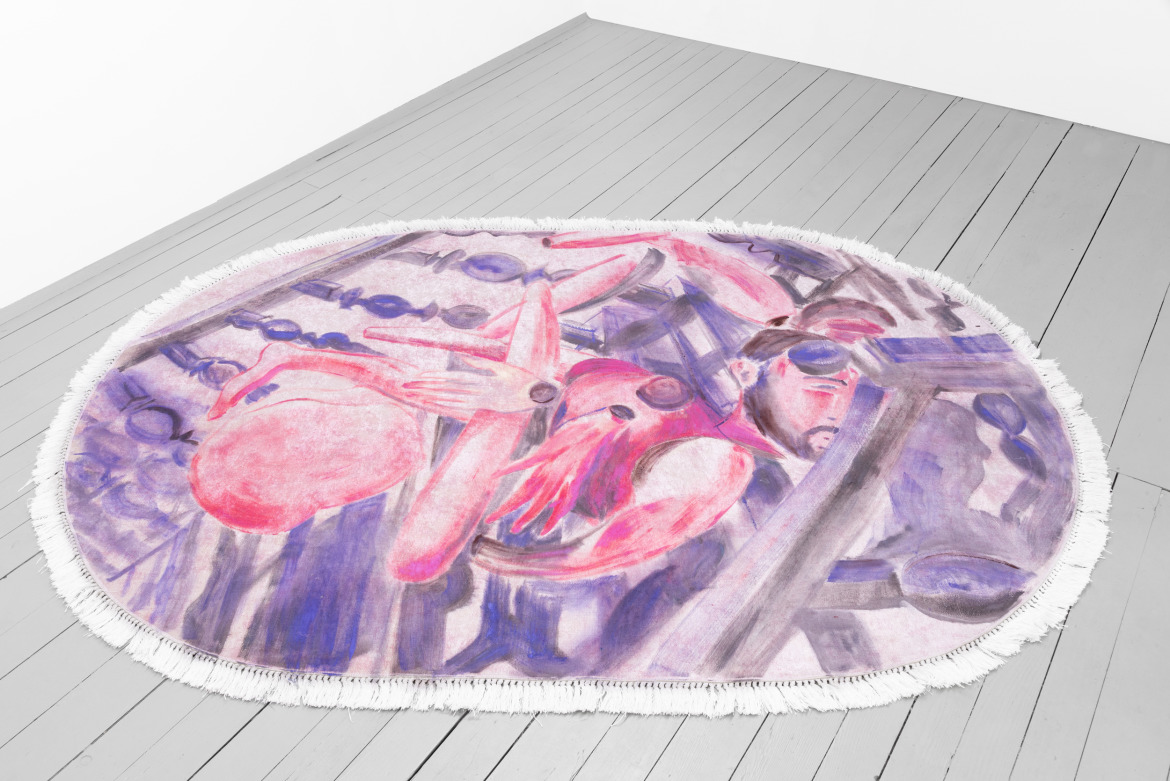
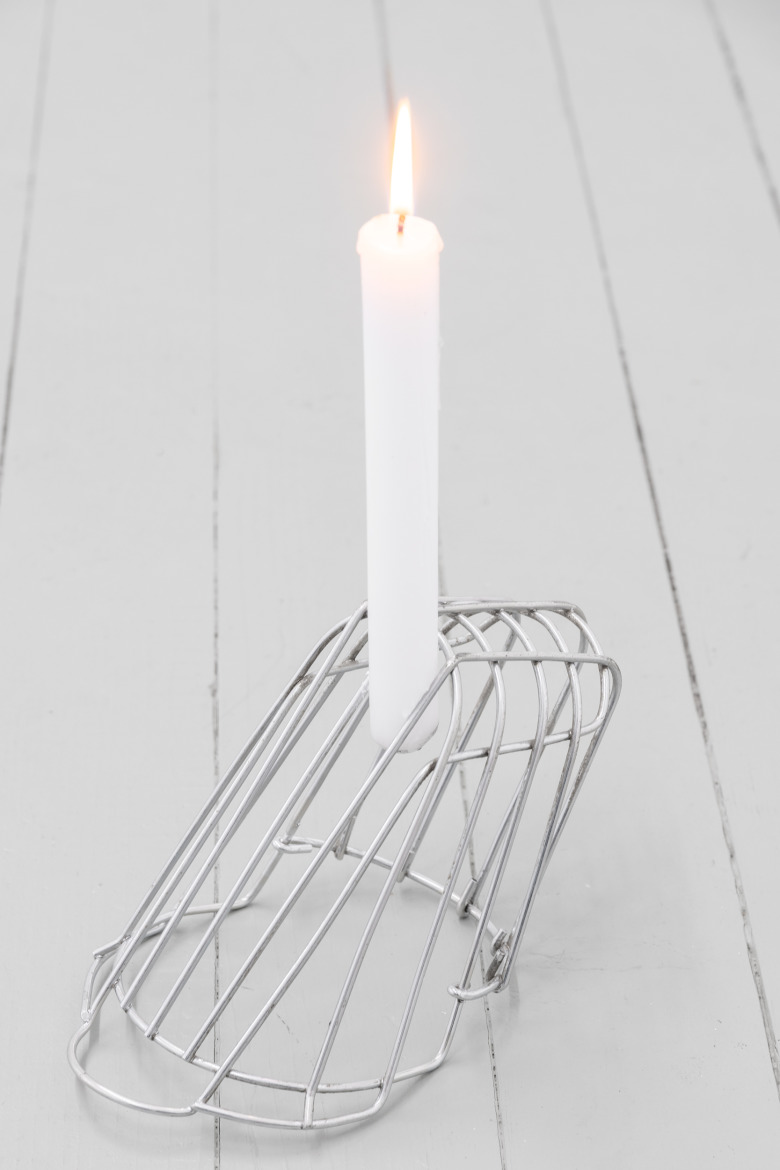
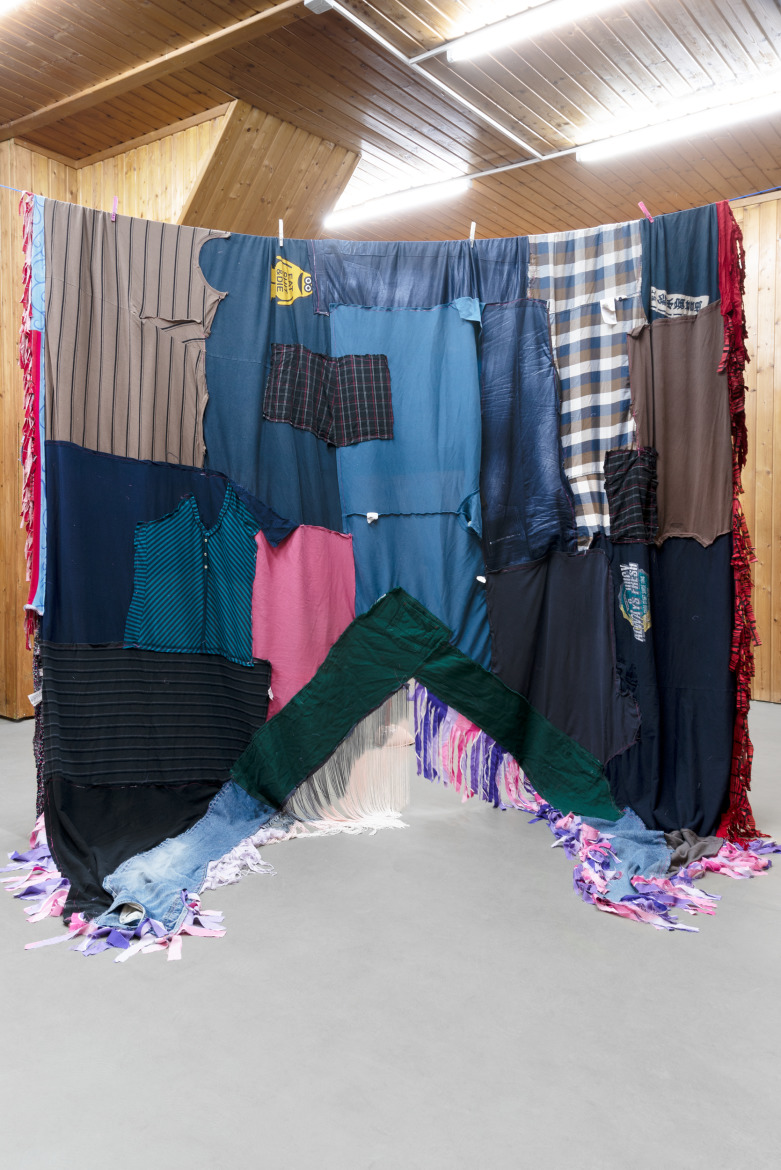
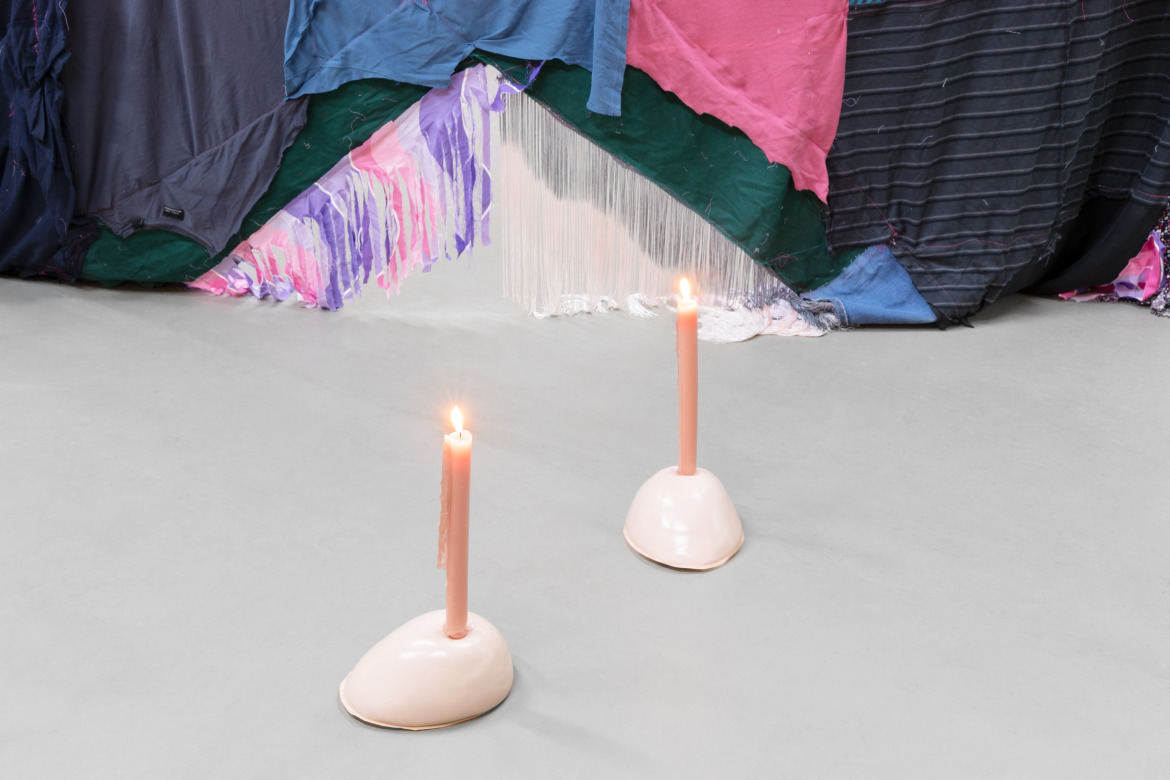
Unique in this selection of paintings is the absence of Yilmaz’s typical self-portraits. He is staunchly opposed to representing the other and normally insists on the gesture of self-portrait. In this room however, he is present in other forms. A pink carpet and a casual clothing line represent the stereotypically feminine labour of the interior. He creates gestures of the domestic space and transversal identification with his subjects. The critique of spectacle rests on the pillars of feminism, animal rights, and queer theory all of which demand an end to the exploitation of bodies and express a common lack of freedom.
While the ground floor introduces the intersection between gender and species-based exploitation, the exhibition as a whole has the form of an expanded film. While criticising the spectacle, Yilmaz is conscious of the history of painting with its loaded implications and its role as image-making. One of painting’s most painful associations for him is that to the Catholic church. Religious organisations have been at the forefront of persecution of otherness for centuries, but the Catholic church also gave rise to the most famous compositions and artists whose legacy in painting is undeniable. How to confront this inner contradiction to denounce exploitation through a medium which has benefitted from its implementation?
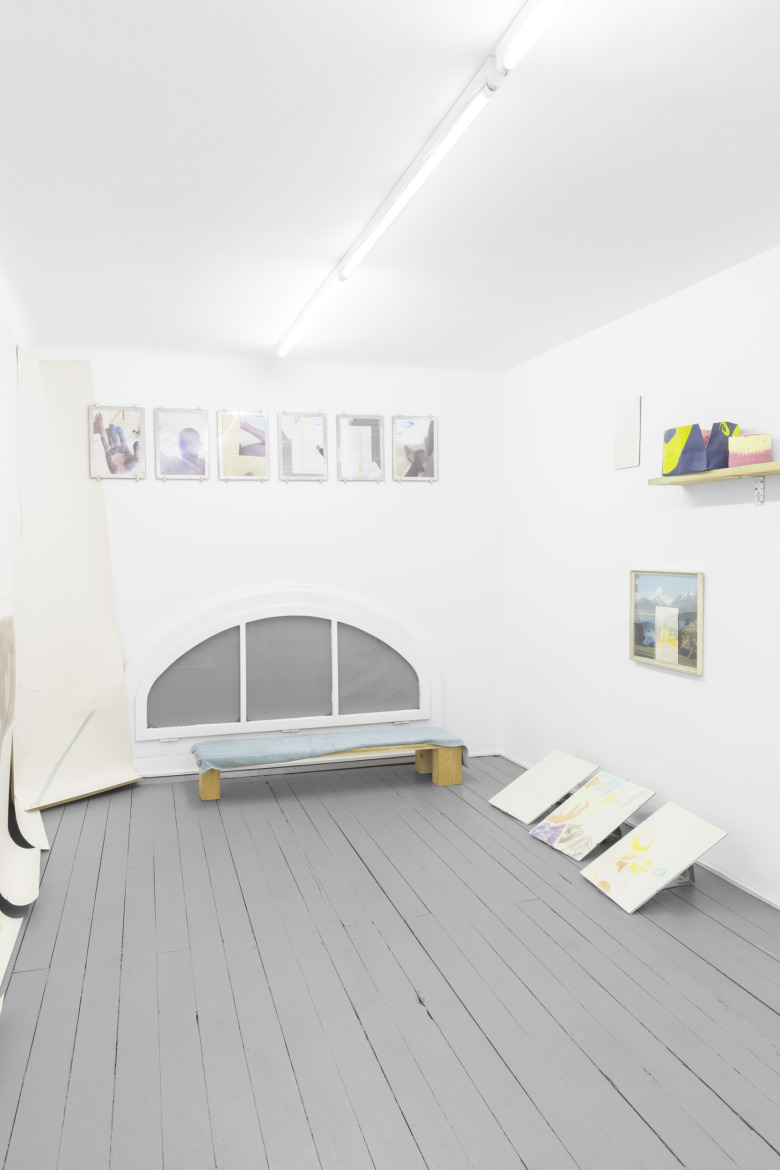
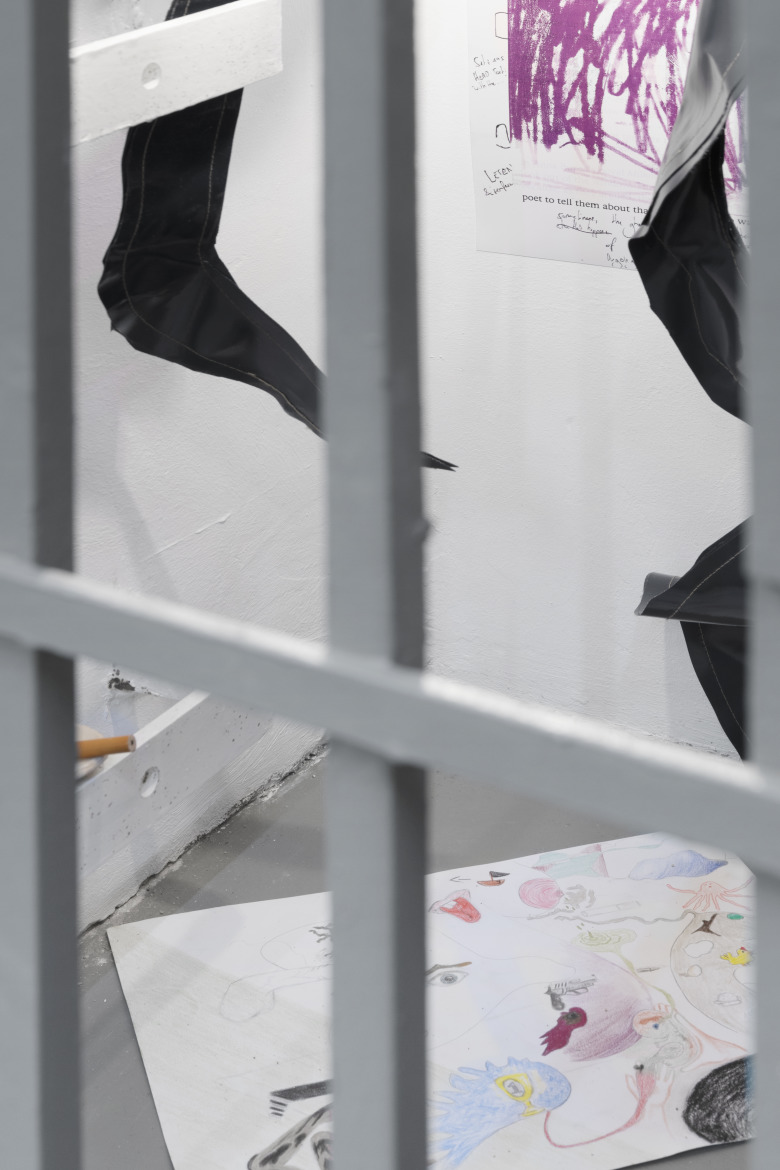
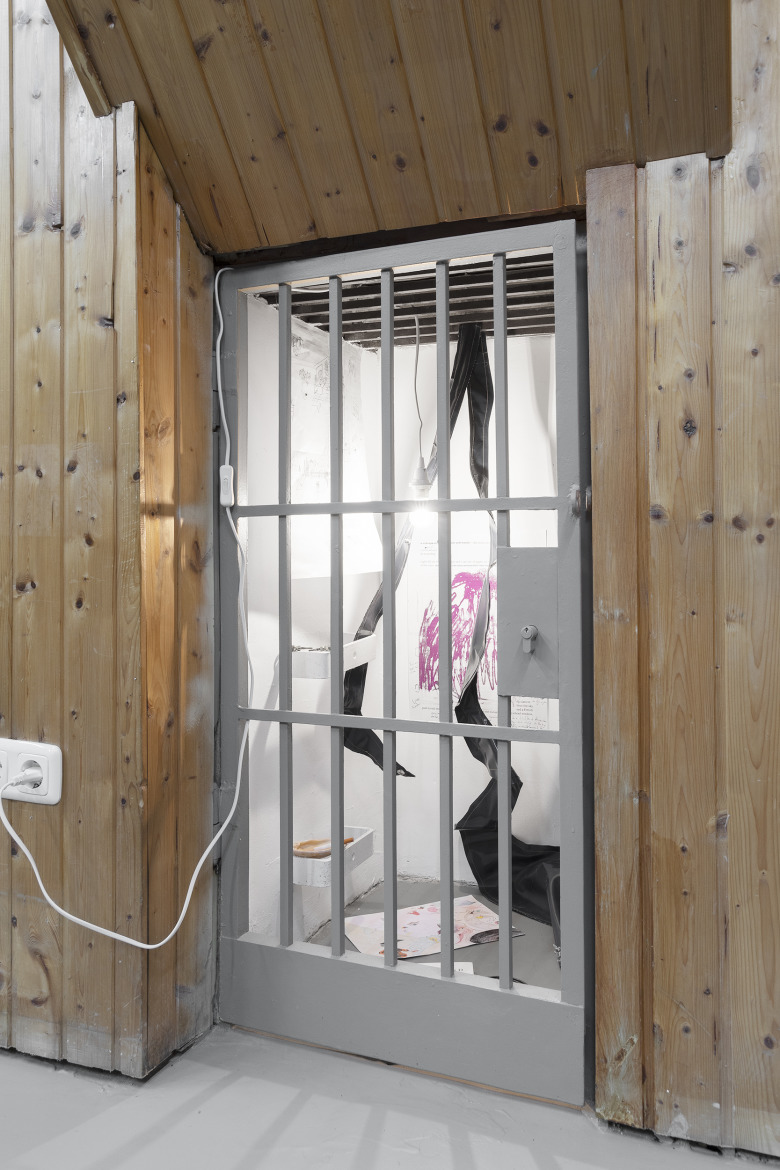
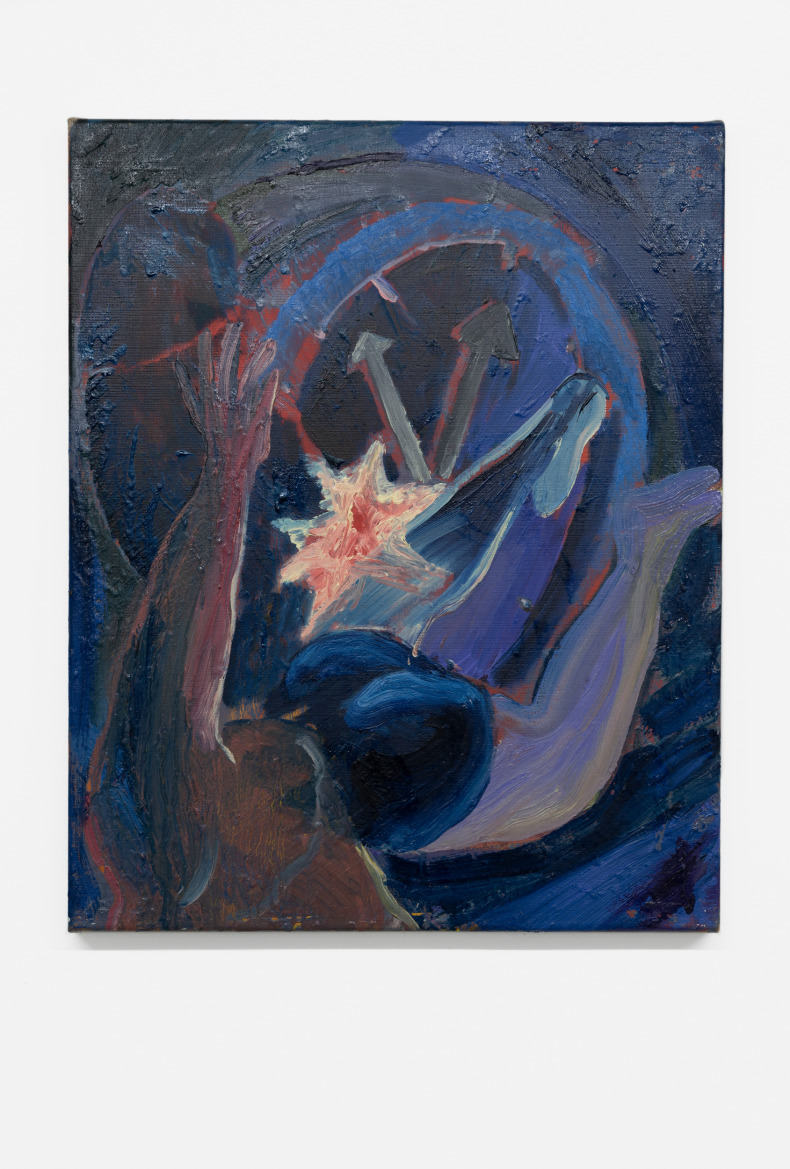
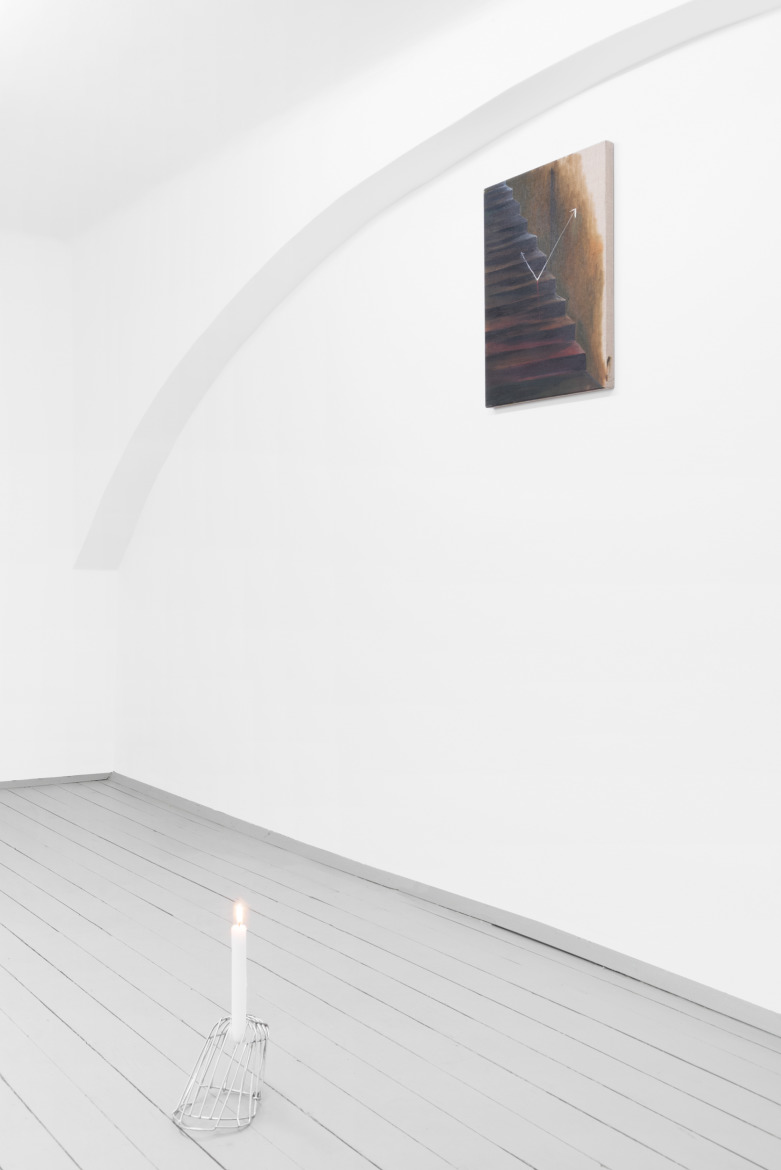
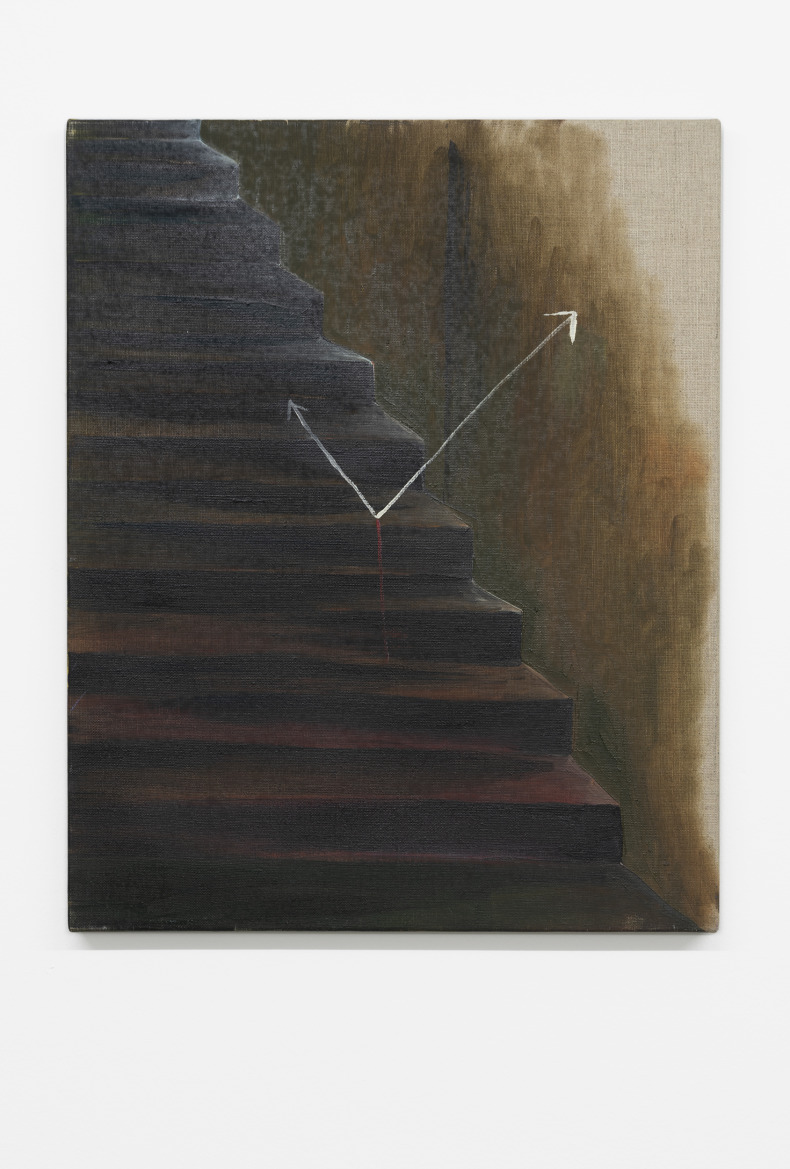
Moving up the stairs, a minimal room presents the painting Theological Time (2014), one of the namesake pieces of the exhibition’s title. Yilmaz describes of this painting as a symbol of the crossroads between truth, reality, religion, fiction, and the cycle of life. It reveals the depth of each canvas which traverses the social structures from today back to the dawn of time. The painting shows the still hands of a clock stuck in time.
In the time of the Ancient Egyptians, time was believed to be kept by the destruction of energy. Time based on the oscillation between night and day, digestion, life, and death, came from theological principles and became science. As a result of the industrial revolution, capitalist time took on a strikingly similar meaning described as secular wear and tear.(c)
Today, seconds are based on the vibration frequency of the cesium atom in the construction of an atomic clock. Here, Yilmaz sees a reversal of thought processes in which science comes first, and Christian and Muslim theologies try to prove the existence of God through scientific fact. The silent clock hands in Theological Time neither create nor destroy energy. They are frozen on Duchamp’s staircase in reference to his nude which recurs in Yilmaz’s symbolic reservoir. These stairs go neither up nor down. For Yilmaz, it is a symbol of stoppage and flow, the coexistence of heaven and hell, the cycle of life and death. In this painting, all life happens at once without any trace of linear progress.
The relation of theology to everyday life is consistent in all of Yilmaz’s works, and it is from where this void emerges. Although it is said we live in a secular world, traces of theology remain rooted all around us, and Yilmaz dissects and questions this lineage that still surrounds our everyday.
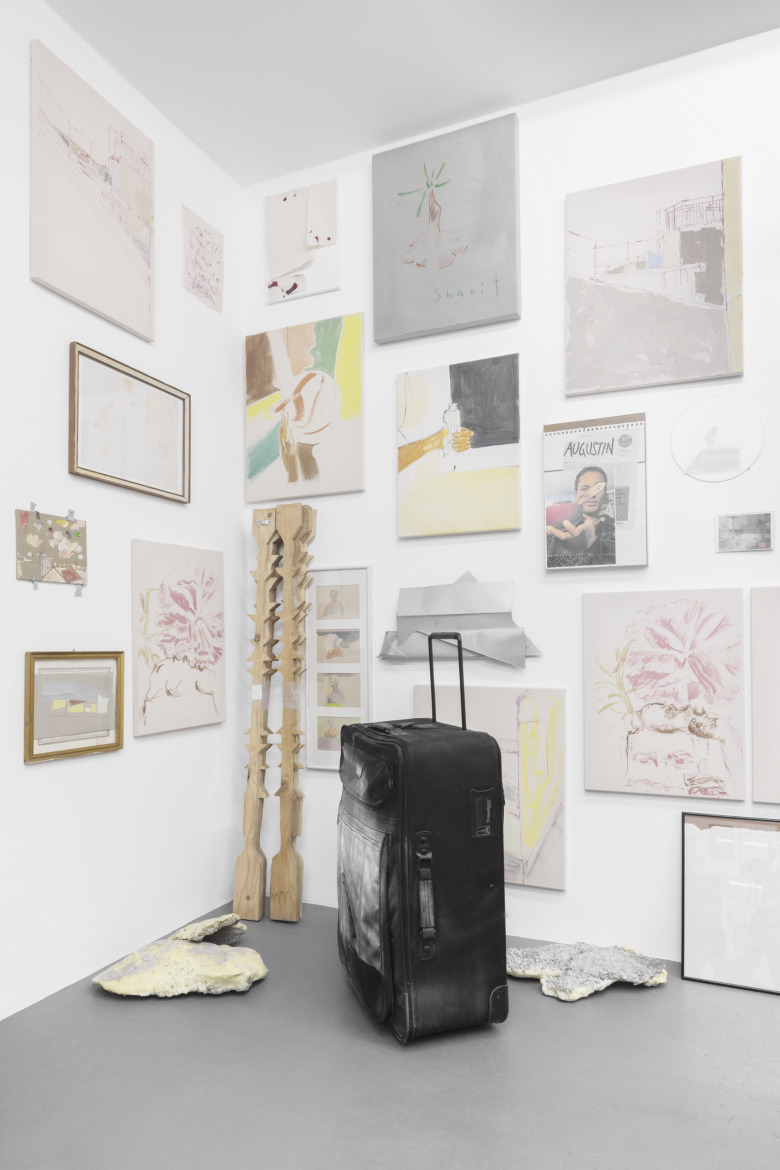
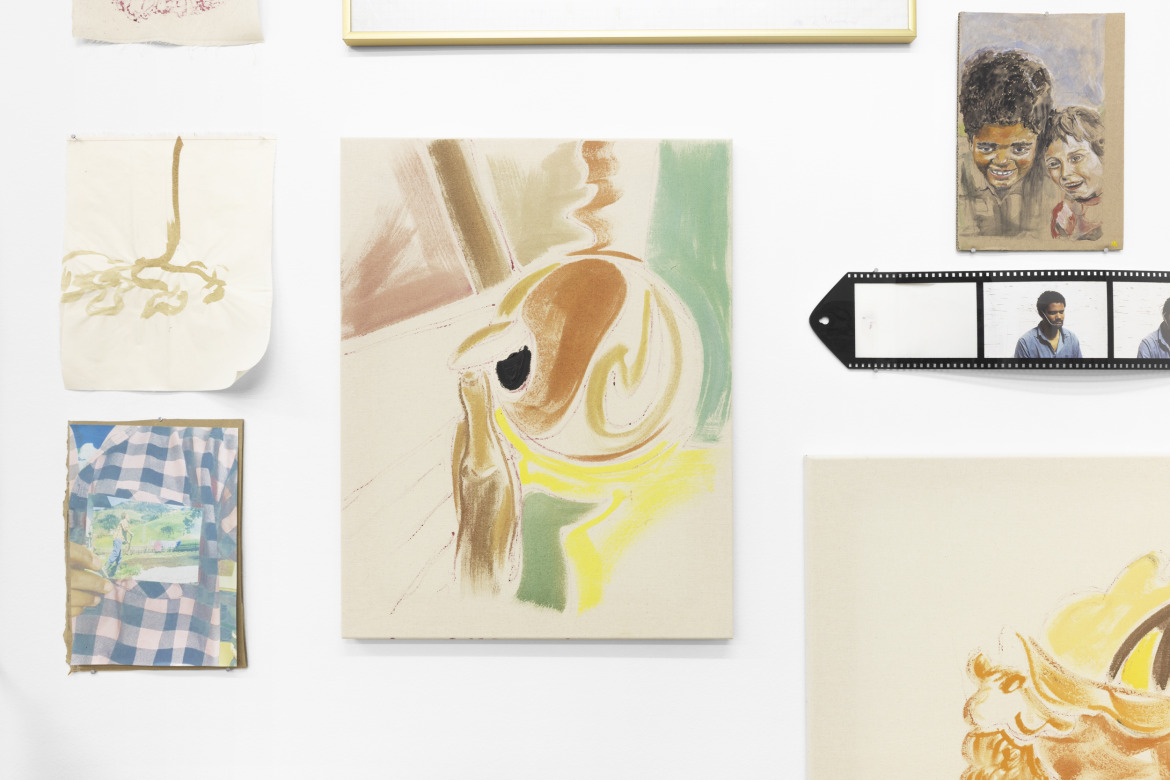
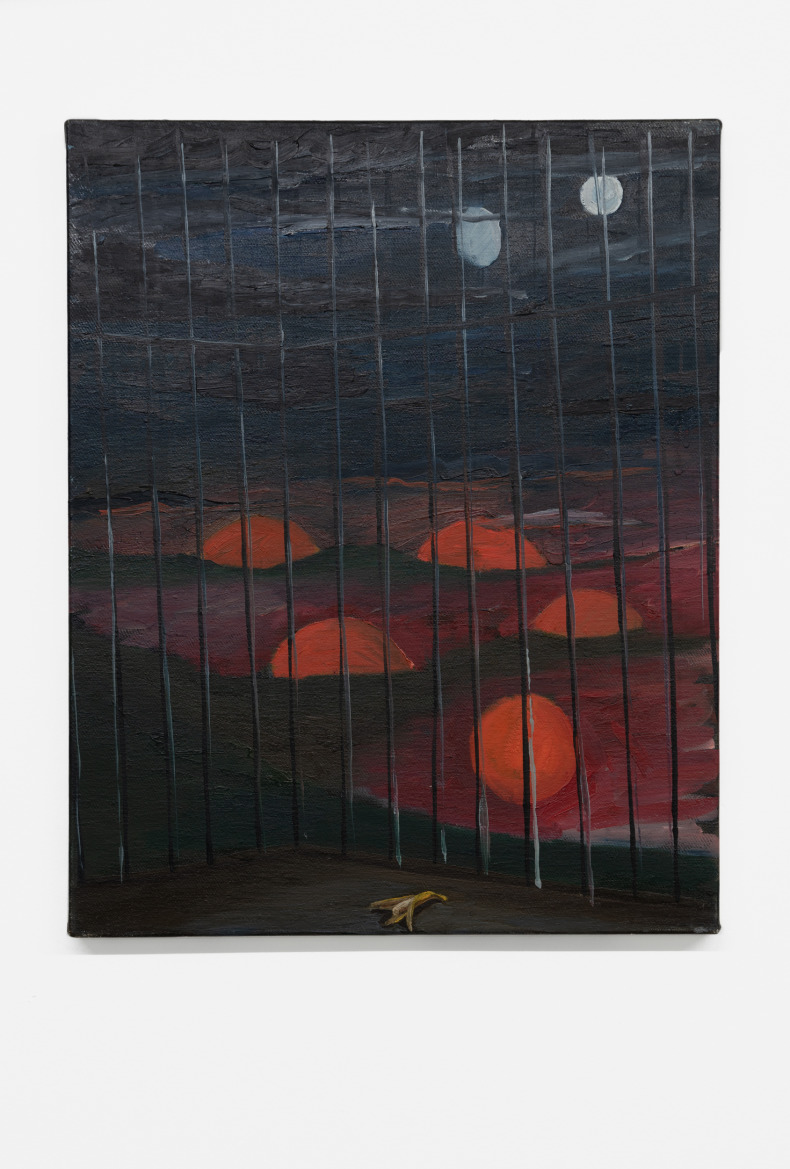
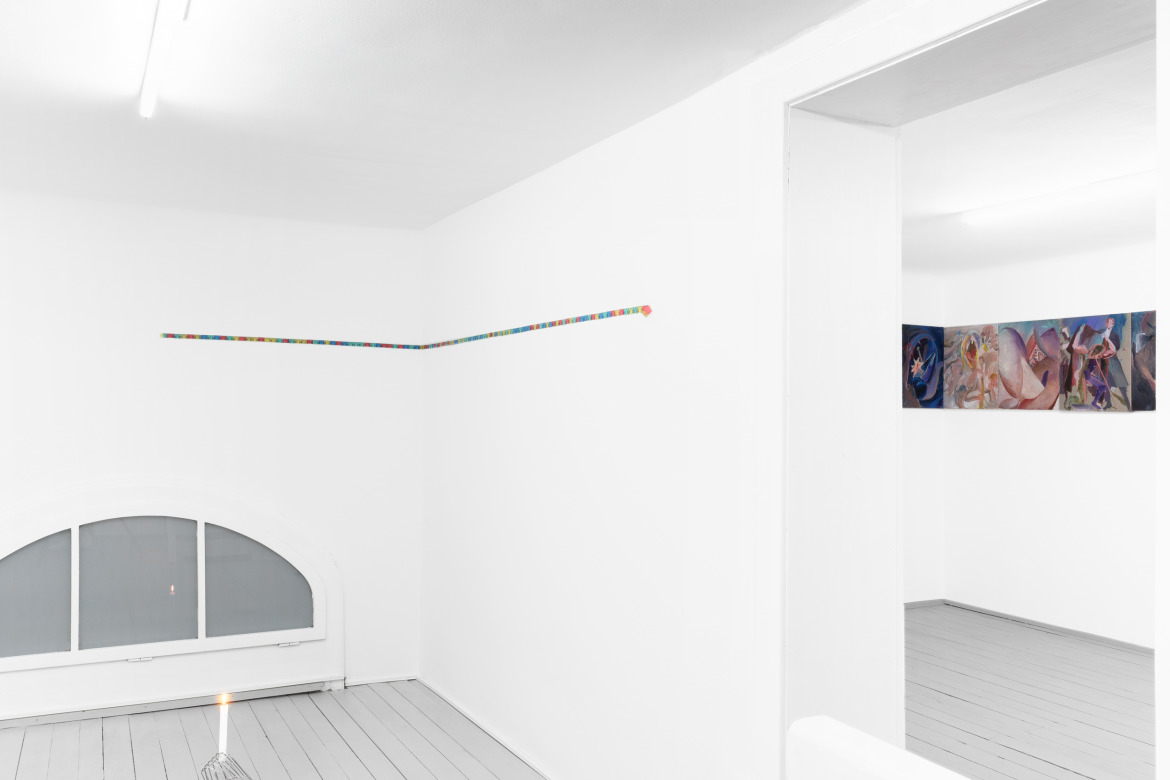
The final room presents a series of canvases arranged like stills of a film. Hung tightly together, the installation incentivises a narrative reading to the chosen selection. Each painting acts like a short story within a compendium of tales. Here, recurring signifiers in Yilmaz’s work collide off each other. The rapid succession of wild drooping paint sets the film reel in motion. The compendium simultaneously compresses and expands each individual short story into a contemporary Decameron (d) or Canterbury Tales (e,f).
The title of the exhibition is a simple list but the content of the paintings expands its meaning into the boundless possibilities of short narration. If the compression of time into a constant and the strange coexistence between queer theory, popular culture, and the Catholic Church, existed within one person, it could well reside in the camera-holding, film-making, tableau-vivant of Pier Paolo Pasolini (g). A thinker too complex to define in any straightforward way. Delicate philosophical criticism and an eye for raw aesthetics of popular life proliferate his cinematic sequences, as do the short stories of Borges. Full of contradictions and interspersed with jokes, these are stories that speak of the true qualities of poetry – creating not the simplicity of dry analysis, but the infinite complexity of life’s imagination.
If the title of the exhibition is a replacement of the absurdity of categories, it is then the singularity of painting which ends this exhibition in the form of the brilliant sunset of the apocalypse. All the boxes explode into one. Art has become the religion of modern times. The very medium of painting, in its art historical uniqueness, as the pinnacle of what is called Art and enmeshed in its dramas of image-making and power is the format chosen in which the broken human and animal marionettes of the individual tumble. Broken and unhealed, they plummet towards the audience.
Text by Àngels Miralda
a) Jorge Louis Borges: The Analytical Language of John Wilkins, 1952 (https://www.crockford.com/wilkins.html)
b) Ludwig Wittgenstein: Tractatus Logico-Philosophicus, 1921.
c) In a long passage quoting Lardner, Marx discusses the progress of time on the constant capital of machinery this section introduces the need of maintenance and, complementary, additional labour power. There is a striking similarity with the ancient Egyptian understanding of the “destruction of energy” and their quest to build monuments that could last into eternity. Karl Marx: Capital: Volume II, Penguin Classics. (pg. 260)
d) Boccaccio: The Decameron, 1353.
e) Chaucer: The Canterbury Tales, 1392.
f) In an exhibition I curated in January 2020, I set up the metaphor of curator as compiler. Based around the figure of Pier Paolo Pasolini and his series of films under the title The Trilogy of Life. The Sea Monster, The Bear, (Jüri Arrak, Nadia Barkate, Vytenis Burokas, Beth Collar) lítost, Prague. January – March 2020. (https://litost.gallery/en/programme/smb/)
g) Pasolini’s profile has persistently puzzled academics, as a queer communist, he was awarded by the Vatican for his filmic interpretation of the Gospel according to Saint Matthew – regardless of the fact that the Church had officially excommunicated all communist sympathisers. He created for himself an awkward yet forceful position both antagonising and recognising the Catholic church for its sins and for its cultural importance.