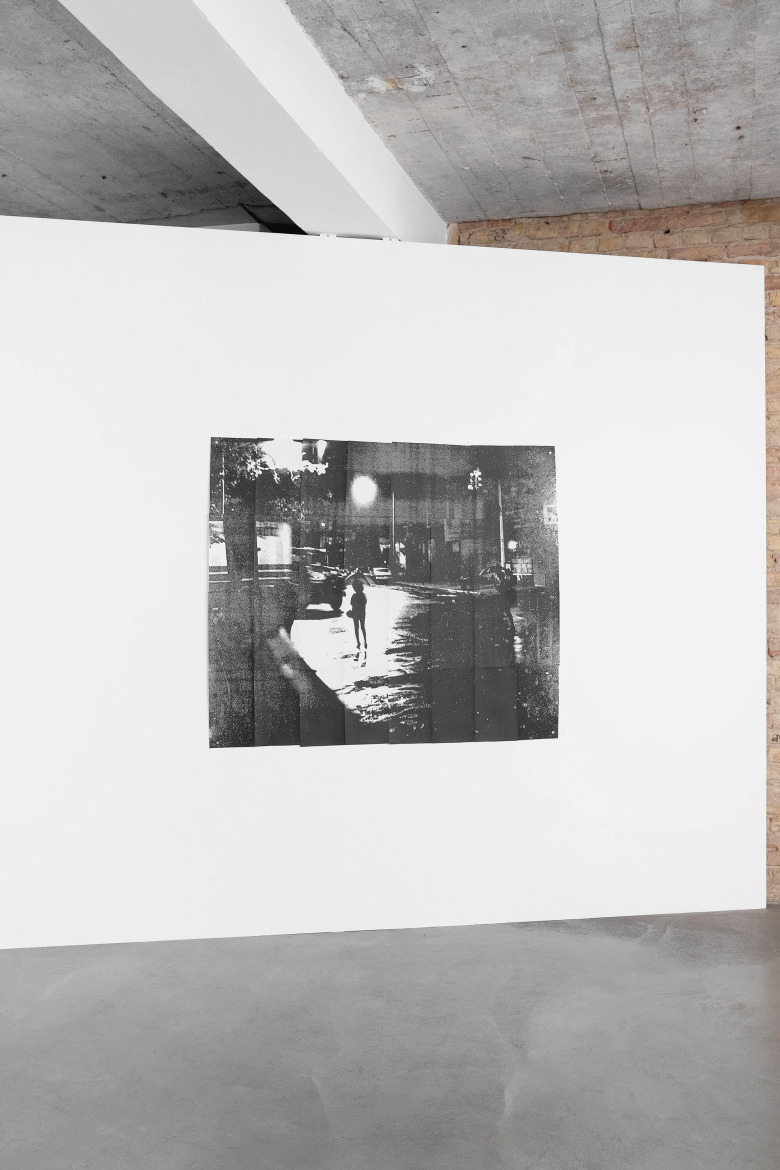
Kazuko Miyamoto, Photocopy enlargements, 1982-88, installation view, EXILE Berlin, 2025
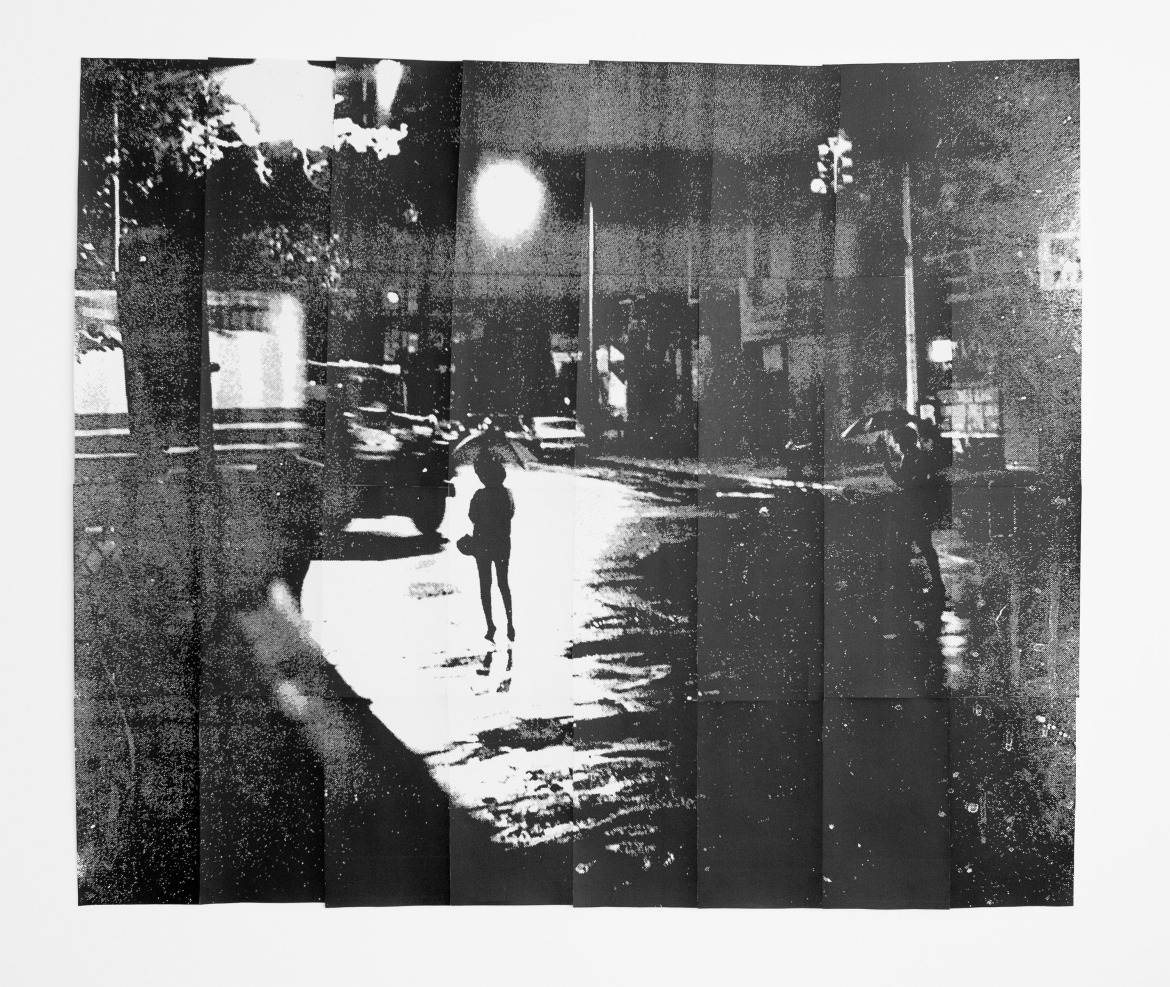
Kazuko Miyamoto, Lower East Side by Night, 1982-88, photocopy enlargement, 123,5 x 141 cm
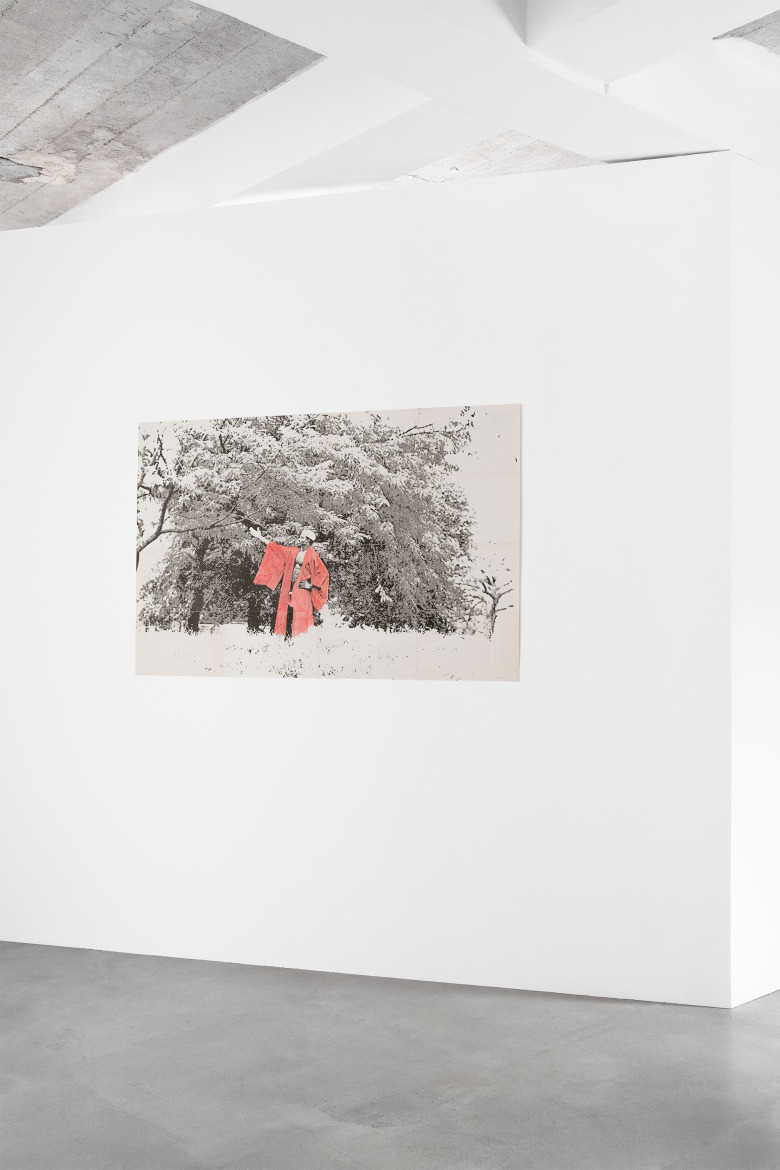
Kazuko Miyamoto, Photocopy enlargements, 1982-88, installation view, EXILE Berlin, 2025
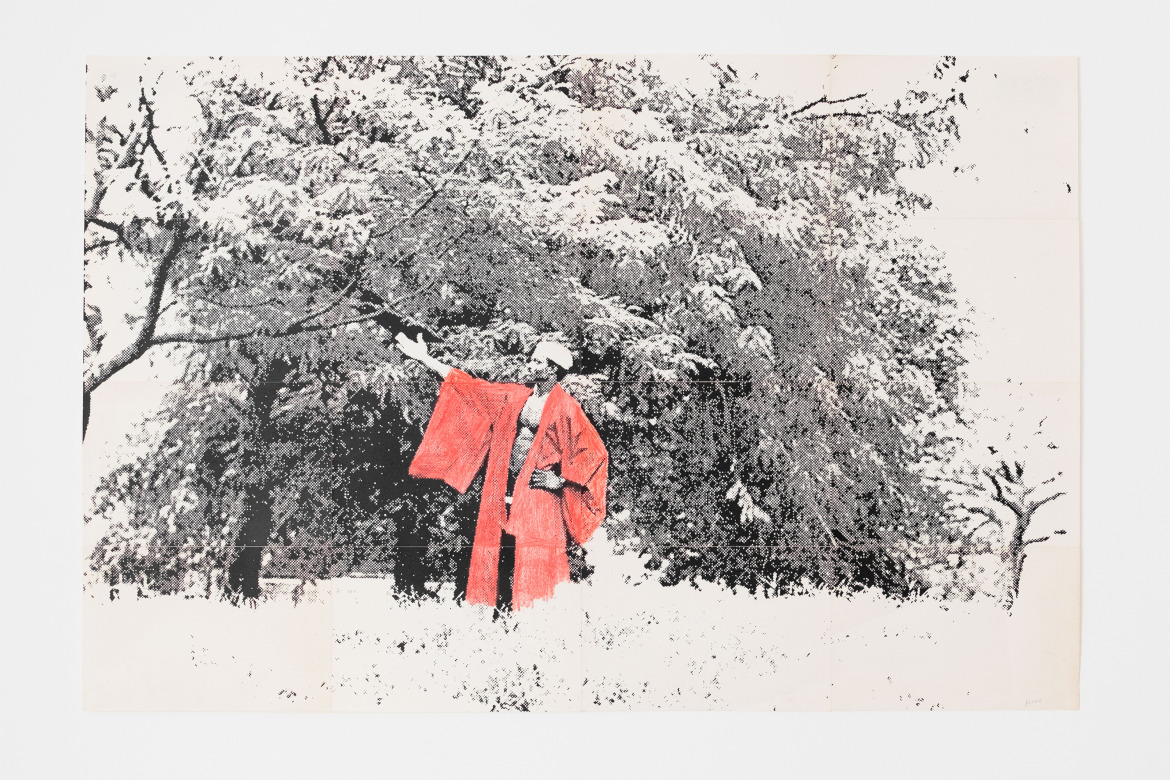
Untitled (Fred Brown in Tompkins Square Park), 1982-88, color crayon on photocopy enlargement, 94 x 142 cm
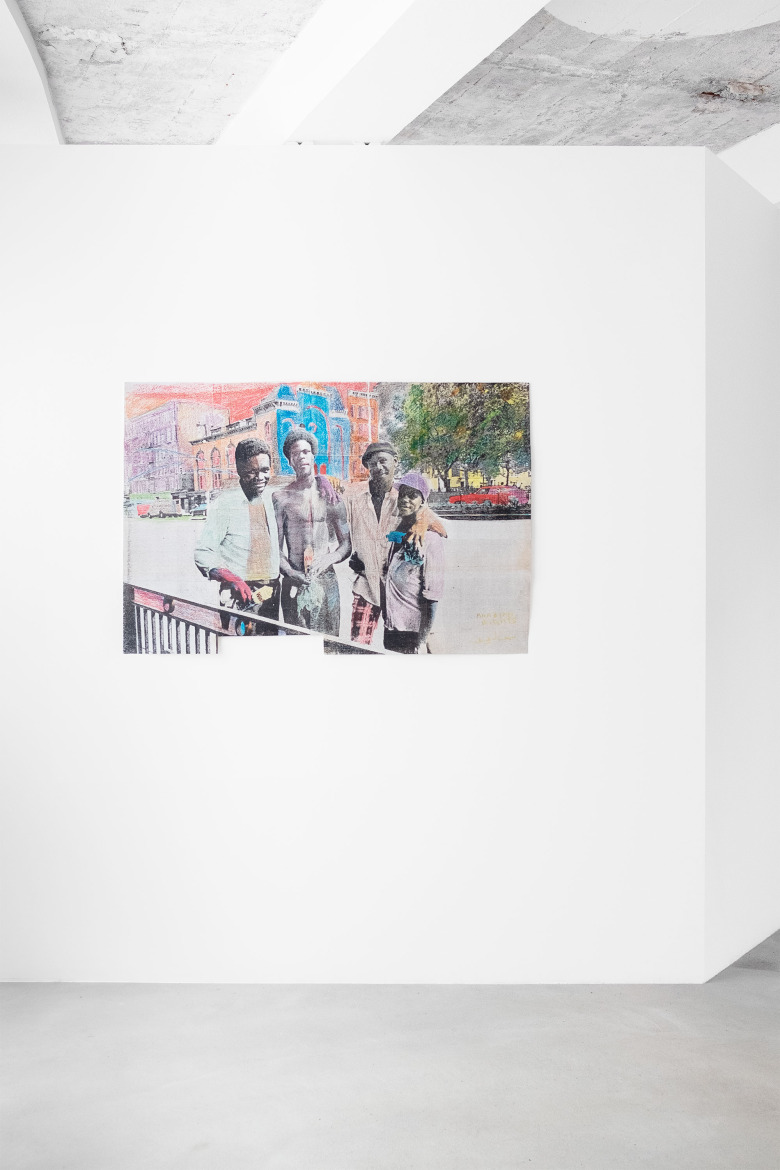
Kazuko Miyamoto, Photocopy enlargements, 1982-88, installation view, EXILE Berlin, 2025
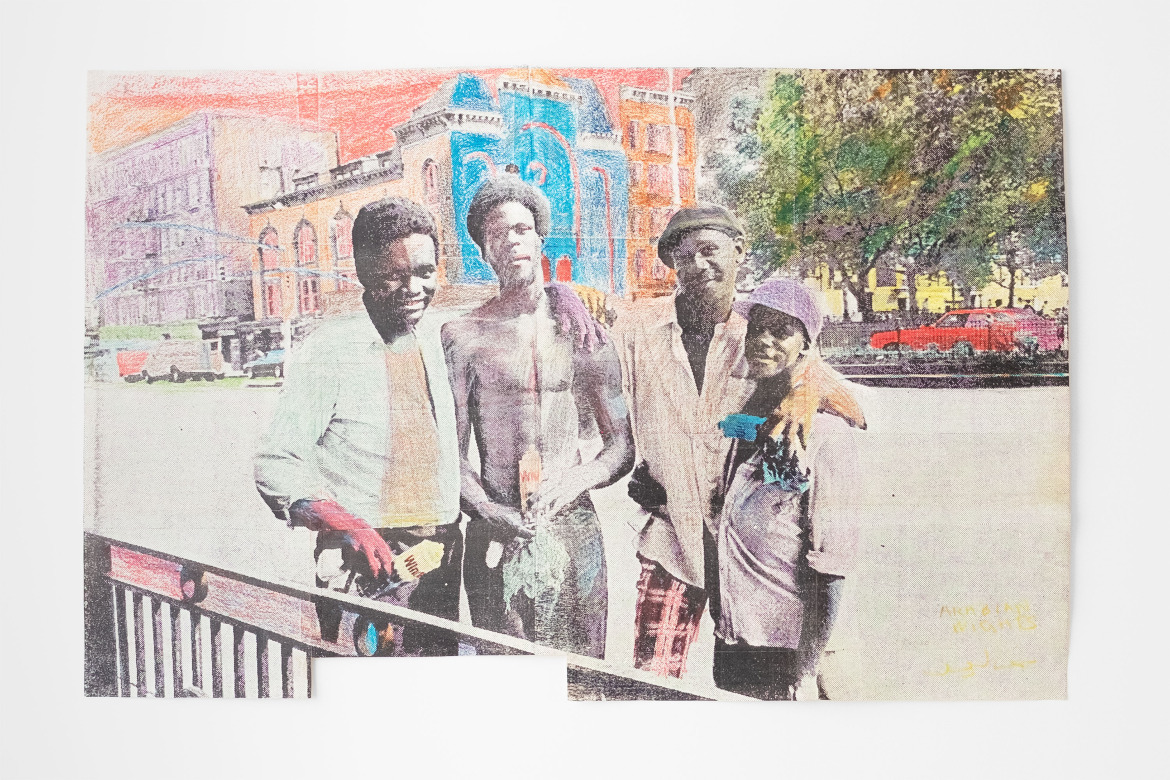
Kazuko Miyamoto, Four car window washers on Delancey, 1982-88, color crayon on photocopy enlargement, 88,5 x 134 cm
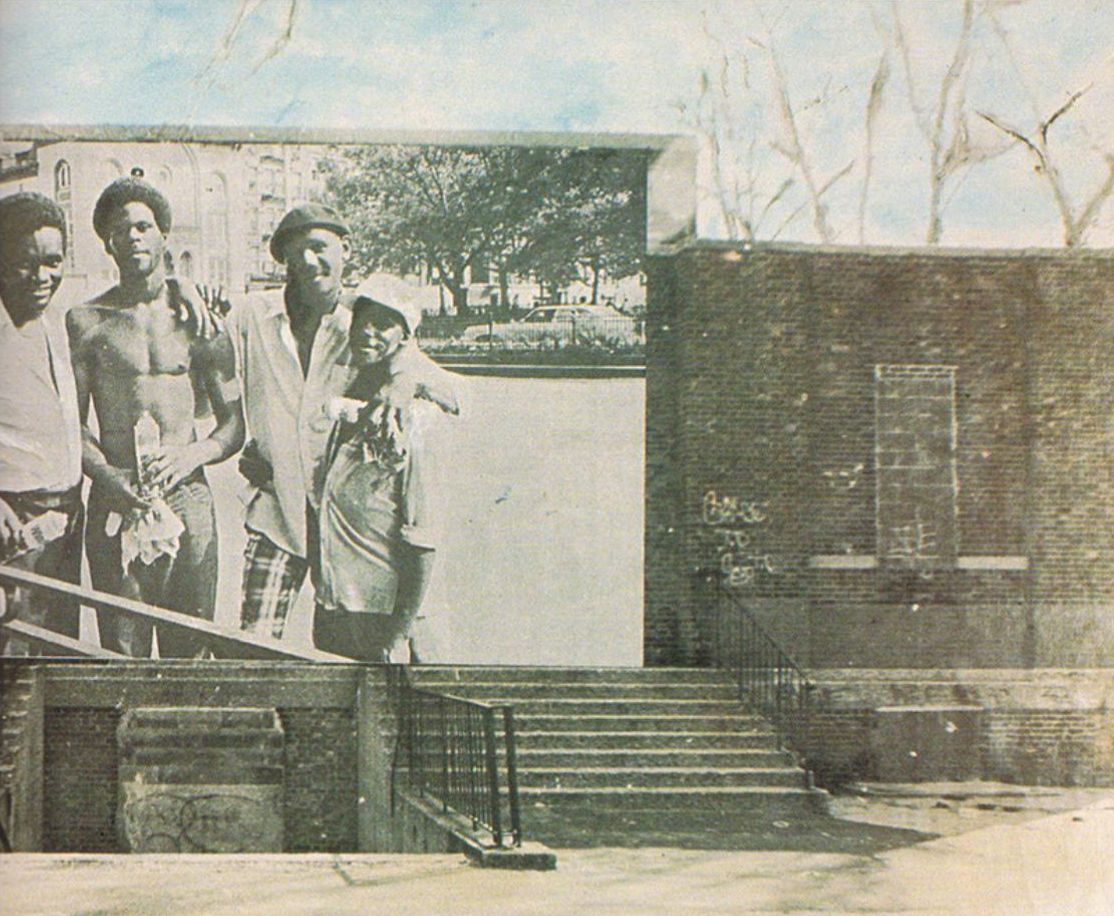
Kazuko Miyamoto, Four car window washers on Delancey (detail), Proposal for Public Art in Chinatown, 1988 (source: Artention International, No 1, July - August 1988, pp 52-53)
EXILE Berlin is pleased to present a second research exhibition into a specific time and body of work by Kazuko Miyamoto. Beginning with the first photocopy enlargement Stunt, 1982, now in the collection of the Museo d’Arte Contemporanea Donna Regina in Napoli, Italy, the exhibition presents for the first time Miyamoto’s three consecutively produced photocopy works. Further, new research into Miyamoto’s use of photocopy for documentation and enlargement techniques until 1988 is introduced.
Notes on Miyamoto’s photocopy enlargement process
As a source Miyamoto used a silver-gelatin, black and white photograph, most likely in 8×10 or 11×12 inches format. The photograph has been developed from film either by herself or by collaborating artists. The source photograph Miyamoto placed on readily available photocopy machines using the enlargement function which was usually up to 200% depending on the type of photocopier used.
Due to the enlargement setting and the limited output paper size, the source photograph had to be moved around on the photocopier as the enlargement function split the source photograph up into segments. These segments Miyamoto placed back onto the photocopier and enlarged them again. She repeated this process until the maximum sized version of each photograph was finished.
Of the four motives Miyamoto chose to enlarge she only assembled the largest version of Stunt (1982) at the time. All other enlarged motives Miyamoto kept in folders, yet some of these folders contained incomplete sets. These folders were found in her archive in 2024. All folders containing complete sets were consequently assembled. Miyamoto authenticated each of these works in the presence of her archivist Ilona Pachler and Christian Siekmeier.
Further, of each of the four motives Miyamoto kept only certain amounts of interim enlargement stages. Therefore of each motive a different number of versions survived. Miyamoto also experimented with different paper sizes, hence some of the collaged enlargements are vertical, some horizontal, some on US Letter and some on larger US document paper sizes.
It is currently only possible to date the motive of Stunt precisely as the large version of the work was dated by Miyamoto at the time of production. All other works are dated 1982-1988 as at the current state of research we cannot clearly know when Miyamoto enlarged these. It can though be said that the process ended in 1988 with her proposal for Sara D. Roosevelt Park.
Curated by Christian Siekmeier
→Chiara Lupi, Inhabiting the Grid: Kazuko Miyamoto’s Counter-Cartographies (PDF, 1,7 mb)